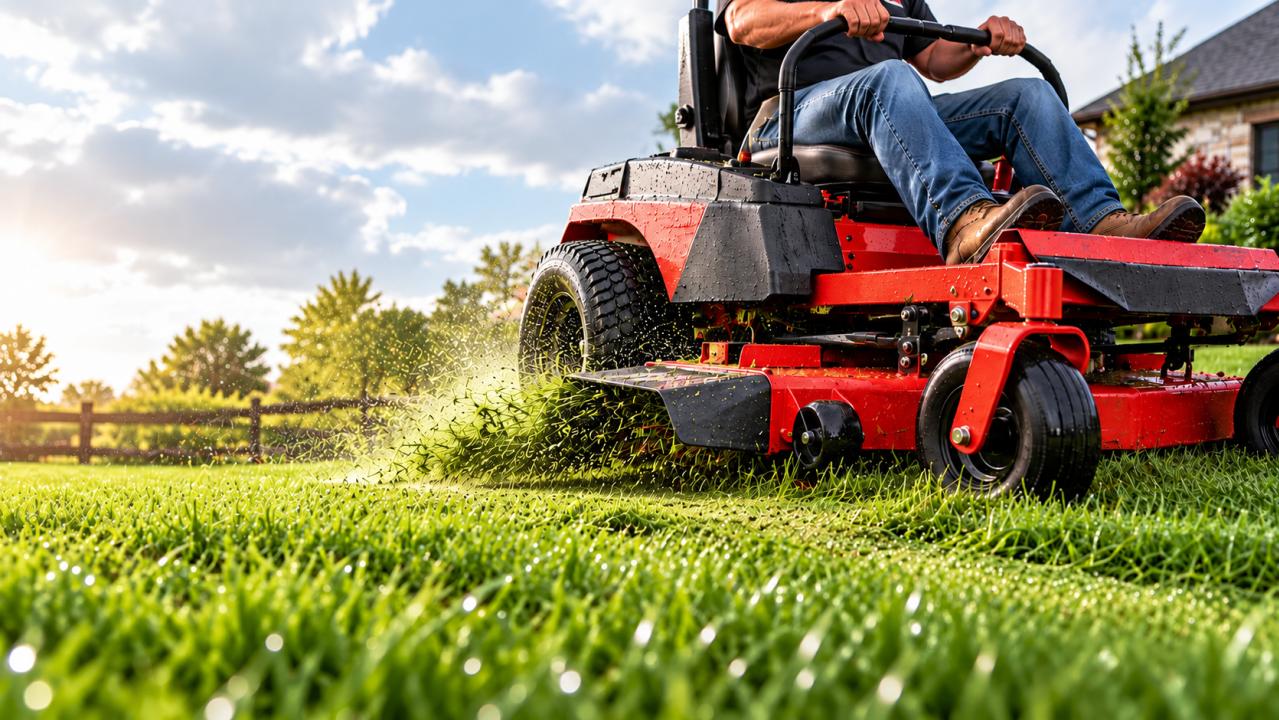
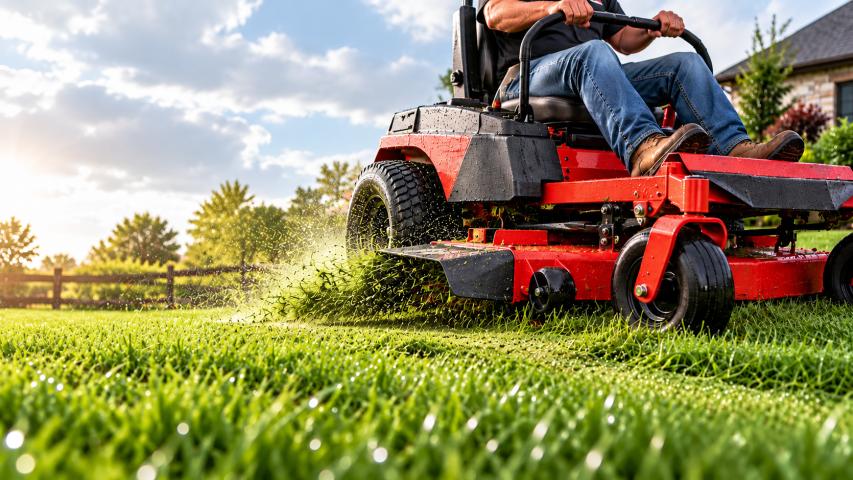
Mowing wet grass is generally best avoided, especially when the soil is soft or waterlogged. Wet blades can clump under the mower deck, create an uneven cut, and increase the risk of slipping or damaging the turf.
Many homeowners feel the need to mow before the grass becomes overgrown, especially after purchasing a lawn mower from a reliable Bad Boy equipment dealer. However, mowing wet grass requires extra care. Cutting at the wrong time can result in clogged mower decks, poor cutting performance, and unnecessary lawn damage.
The University of Minnesota Extension recommends avoiding mowing wet turf because it can contribute to soil compaction and uneven cutting, particularly when the ground is saturated.
Understanding when it is safe to mow and what precautions to take can help protect both your lawn and equipment. This guide explains the challenges, potential consequences, exceptions, and practical tips for mowing after rainy weather.
Why Wet Grass Is Harder To Mow
If you have ever mowed shortly after rainfall, you may have noticed that wet grass behaves differently from dry turf.
Moisture makes grass blades heavier, causing them to bend rather than stand upright. This makes it harder for the mower to achieve an even cut.
These clumps can block sunlight and airflow from reaching the turf. Wet ground can also reduce traction, especially when using riding and zero-turn mowers, making it harder to manoeuvre safely.
Can You Mow Wet Grass Safely?
Mowing slightly damp grass may be possible, but mowing a soaked or waterlogged lawn is best avoided. During extended periods of rain, waiting for completely dry conditions may not always be practical.
Some lawn care equipment can handle lightly damp grass when the soil remains firm and the turf is not excessively long. However, if the ground feels soft underfoot, contains standing water, or becomes muddy as you walk across it, it is better to wait.
The condition of the soil matters as much as the moisture on the grass. Even a mower designed to handle damp turf can leave ruts or compact the soil when used on saturated ground.
What Can Go Wrong When You Mow Wet Grass?
Before deciding whether to mow, consider these potential problems.
Uneven Cuts
Wet grass tends to bend instead of standing upright, which can cause the mower to miss some blades. The result may be a patchy lawn with inconsistent cutting heights.
Lawn Damage
Heavy equipment can leave ruts in soft soil and contribute to compaction. Repeated traffic over saturated turf can damage the overall soil structure and make it difficult for grass roots to receive adequate air and water.
Increased Disease Risk
Wet conditions can develop a favorable environment for some turf diseases. Mowing can also move infected grass clippings from one part of the lawn to another, potentially spreading disease.
Equipment Strain
Wet grass clippings can accumulate quickly beneath the mower deck and around the discharge area. This can interfere with cutting performance and increase cleaning requirements.
Damp grass and debris left on metal components can also contribute to corrosion over time. Cleaning the mower after use helps keep it in better working condition.
Using Various Lawn Mowers To Mow Wet Grass
Different types of lawn mowers can respond differently to damp conditions. Regardless of the mower type, avoid saturated soil and follow the manufacturer's operating and safety instructions.
Cut Damp Grass With A Gas-Powered Mower
A gas-powered mower may handle slightly damp and moderately thick grass when conditions are manageable. Sharp, clean blades are important because dull blades can tear the damp grass instead of cutting it cleanly.
If clippings start clogging the deck after only a few passes, it is a practical sign that conditions may be too wet for efficient mowing. Slowing down can help reduce clogging, but do not force the mower through dense or soaked grass.
If the engine starts struggling or the deck repeatedly becomes blocked, stop mowing and wait for the lawn to dry.
Use A Battery Mower For Mowing Wet Grass
Battery-powered mowers are convenient and quiet, but dense wet grass can place additional load on the motor. This may increase energy consumption and reduce battery runtime.
Actual performance varies by mower model, grass conditions, and the manufacturer's recommendations.
If the grass is only slightly damp, mowing smaller sections at a moderate pace may be manageable. Avoid using a battery mower on very thick or soaked turf, particularly if the machine is struggling to maintain normal performance.
Using A Zero-Turn Mower In Damp Conditions
Zero-turn mowers provide quick, precise manoeuvring, but wet conditions can reduce traction. Sharp turns on slippery turf may leave tyre marks or damage the grass.
If mowing slightly damp grass is necessary, reduce your speed and make gradual turns. Avoid steep slopes and areas where the ground feels unstable.
Mowing Wet Grass With An Electric Mower
Electric mowers require additional caution around moisture. Never mow during active rain, and don't use a corded mower where water is accumulating.
Follow the manufacturer's safety instructions and keep electrical connections away from wet areas. When conditions are very wet, waiting for the lawn to dry is the safer choice.
What About Ride-On Mowers?
Ride-on mowers are useful for maintaining large lawns, but their weight can be problematic when the soil is saturated. Their tires can leave deep tracks and compact the ground.
Watch the ground behind the mower. If the tires are leaving clear tracks, the soil is still too soft. This can help prevent unnecessary damage to turf and soil. A simple way to judge conditions is to walk across the lawn before mowing. If your shoes sink into the soil or leave obvious impressions, the ground is probably too soft for heavy mowing equipment.
Tips For Mowing Wet Grass Safely
If mowing cannot be postponed and the grass is only slightly damp, a few adjustments can help improve the results.
Raise The Cutting Height
A higher cutting height puts less stress on wet turf and can reduce the amount of grass entering the mower deck at once. It may also help limit clumping.
Use Sharp Blades
Sharp mower blades make a smoother, cleaner cut and reduce tearing. Check the blades regularly and maintain them according to the manufacturer's recommendations.
Mow Slowly
Reducing your mowing speed gives the mower more time to process damp grass and can help limit clogging. It also gives you better control when the surface is slippery.
Clean The Deck After Mowing
Once mowing is complete, follow the manufacturer's instructions for safely removing buildup. Cleaning the mower can help maintain performance and reduce the chance of moisture-related corrosion.
When Should You Definitely Wait?
Some conditions are too wet for mowing. Wait until the lawn has dried sufficiently if:
- The lawn is muddy or waterlogged.
- There is standing water on the surface.
- The grass is extremely long, dense, or heavy.
- The mower is struggling to move or cut properly.
- The tires are leaving deep tracks in the soil.
- The ground feels soft or unstable underfoot.
Allowing the lawn to dry can make mowing easier and reduce the likelihood of turf and equipment damage.
Maintain A Healthy Lawn With Proper Mowing Practices
Mowing slightly damp grass may occasionally be unavoidable, but waiting until the soil becomes firm will generally produce better results. When conditions are manageable, adjusting the cutting height, using sharp blades, and reducing mowing speed can help you maintain a cleaner cut.
The key is to assess the lawn before starting the mower rather than following a fixed schedule after every rainfall. If the soil is soft or the equipment is struggling, waiting is often the better option.
Regular mower maintenance also plays an important role in keeping equipment reliable. If you need help choosing suitable equipment for your lawn, a trusted Bad Boy mowers dealer can help you select a mower and provide guidance on proper maintenance.