In today's fast-paced software development world, Agile methodologies have become the go-to approach for delivering high-quality digital products. Simultaneously, ReactJS has emerged as a leading front-end library for building dynamic user interfaces. But how do these two trends intersect?
This blog explores how top ReactJS development companies integrate Agile practices into their workflows to deliver scalable, responsive, and user-focused applications efficiently.
Introduction to Agile Methodologies in Software Development
Agile methodologies emphasize iterative development, customer collaboration, and rapid delivery of functional software. Unlike traditional waterfall models, Agile promotes flexibility and continuous improvement through sprints, standups, and retrospectives.
For companies specializing in front-end technologies like ReactJS, Agile provides the framework to remain adaptable to changing requirements and market needs.
Agile provides the flexibility and responsiveness that ReactJS projects need, allowing companies to deliver better results faster.
Why ReactJS and Agile Are a Perfect Match
ReactJS thrives in fast-evolving environments where UIs must be dynamic and adaptable. Agile complements ReactJS perfectly by supporting continuous iterations, A/B testing, component reusability, and performance tuning.
Top ReactJS development companies leverage this compatibility to break down large features into smaller, manageable tasks—perfect for Agile sprints.
Agile and ReactJS share a common goal—speed, adaptability, and scalability—making them ideal partners in modern front-end development.
How Top ReactJS Development Companies Structure Agile Teams
A strong Agile implementation begins with the right team structure. Top ReactJS development companies typically organize cross-functional teams consisting of:
- Frontend ReactJS Developers
- Product Owners
- Scrum Masters
- UI/UX Designers
- QA Engineers
These teams ensure that everyone from concept to deployment is on the same page, encouraging collaboration and faster decision-making.
Structured Agile teams empower ReactJS companies to deliver client-centric solutions while maintaining high standards and speed.
Sprint Planning and ReactJS Feature Development
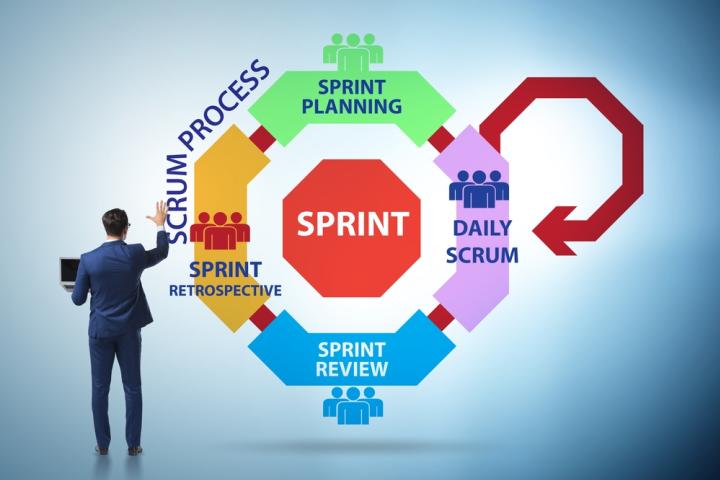
Agile sprints are time-boxed cycles (usually 1-2 weeks) where specific tasks are planned and executed. ReactJS companies use sprint planning to define the scope of UI components or pages they will develop during the sprint.
They use tools like Jira or Trello to allocate tasks and maintain visibility. Modular design in ReactJS allows developers to build and test components quickly during each sprint.
Sprint planning enables top ReactJS companies to align short-term tasks with long-term product goals, increasing delivery efficiency.
Daily Standups and Communication Flow
Communication is a critical part of Agile, and daily standups keep the team synchronized. Top ReactJS development companies conduct short daily meetings to discuss:
- What was done yesterday
- What is planned for today
- Any blockers or dependencies
These meetings help identify problems early, facilitate code reviews, and ensure that every team member is aligned.
Daily standups improve accountability and reduce miscommunication, which is essential for Agile ReactJS development success.
Continuous Integration and Deployment in Agile React Projects
One of the key aspects of Agile development is Continuous Integration/Continuous Deployment (CI/CD). Top ReactJS development companies adopt CI/CD pipelines to automate testing and deployments.
Tools like GitHub Actions, Jenkins, or GitLab CI are used to push code, run unit and integration tests, and deploy to staging or production environments—all without manual intervention.
CI/CD enables faster releases, higher code quality, and seamless integration—all essential to Agile and ReactJS synergy.
Agile Testing in ReactJS Projects
Agile doesn't just prioritize development; it also transforms the testing process. ReactJS development companies incorporate Test-Driven Development (TDD) and Behavior-Driven Development (BDD) to build reliable, bug-free components.
Popular testing tools like Jest, Enzyme, and Cypress are often used to write unit tests, integration tests, and end-to-end tests as the code is developed—not after.
Agile testing practices ensure that each ReactJS component works as intended, reducing bugs and improving user satisfaction.
Backlog Grooming and ReactJS Feature Prioritization
The product backlog is a central part of Agile. Top ReactJS development companies regularly conduct backlog grooming sessions to:
- Re-prioritize features
- Break down epics into smaller stories
- Estimate effort and complexity
- Ensure alignment with business goals
For example, a ReactJS feature like a real-time dashboard may be broken into components like data fetching, charts, and UI elements.
Backlog grooming keeps the development focused, lean, and aligned with evolving client needs and user expectations.
Retrospectives: Continuous Improvement for ReactJS Teams
After every sprint, Agile teams conduct retrospectives to evaluate what went well, what didn’t, and what could be improved. This helps ReactJS teams:
- Identify bottlenecks
- Improve team collaboration
- Optimize coding practices
- Enhance sprint planning
ReactJS being modular, allows companies to refactor specific components without disrupting the whole system—ideal for implementing retrospective feedback.
Retrospectives foster a culture of learning and agility, improving both team performance and code quality over time.
The Role of Product Owners in ReactJS Agile Projects
A product owner plays a crucial role in guiding Agile teams. In ReactJS projects, they:
- Define the vision
- Prioritize features based on user feedback
- Maintain the product backlog
- Validate deliverables
Top ReactJS development companies rely on product owners to bridge the gap between business goals and technical execution.
A proactive product owner ensures that every sprint delivers real value to the end user while staying aligned with the project’s roadmap.
Benefits of Agile Methodologies for Clients Working with ReactJS Companies
Clients partnering with Agile-oriented ReactJS companies enjoy many advantages:Transparency through regular updates and demos
- Faster time-to-market through sprints
- Higher quality through automated testing and code reviews
- Greater flexibility to accommodate changes mid-project
Agile methodologies enable close collaboration, giving clients more control and satisfaction over the development process.
Agile ReactJS teams deliver more than just software—they deliver business value with flexibility, speed, and quality.
How to Choose Agile-Focused ReactJS Development Companies
If you’re looking for reliable partners, consider the following when choosing from top ReactJS development companies:
- Do they follow Agile principles (Scrum, Kanban)?
- Do they have transparent sprint cycles?
- Are CI/CD pipelines part of their process?
- Do they emphasize testing and QA from the start?
- Do they offer regular demos and feedback loops?
Choosing a company that aligns with Agile ensures better outcomes and higher ROI for your ReactJS project.
A company’s Agile maturity can significantly impact the success of your project, so it’s essential to choose wisely.
Final Thoughts
Agile methodologies have redefined how modern software is built. When combined with ReactJS—a powerful, flexible, and component-based library—they create a winning formula for digital product development.
Top ReactJS development companies leverage Agile not just as a process, but as a mindset. From sprint planning and CI/CD to continuous feedback and improvement, Agile enables them to deliver high-quality, scalable solutions in record time.