In today's sharp-cross-transpendent digital age, facial identification has gone into a practical tool as future concept, which is re-shaping the way of operating businesses. When paired with Artificial Intelligence (AI), companies are securing, enhancing efficiency and simplifying everyday business processes. Since the smartphone unlock button became possible to verify the identity of customers in financial applications, such an innovation is a significant aspect of commercial growth. But many people still ask: What is the identity of the face, how does it really work, and why is it becoming so important for organizations?
What is Facial Identification and AI in business?
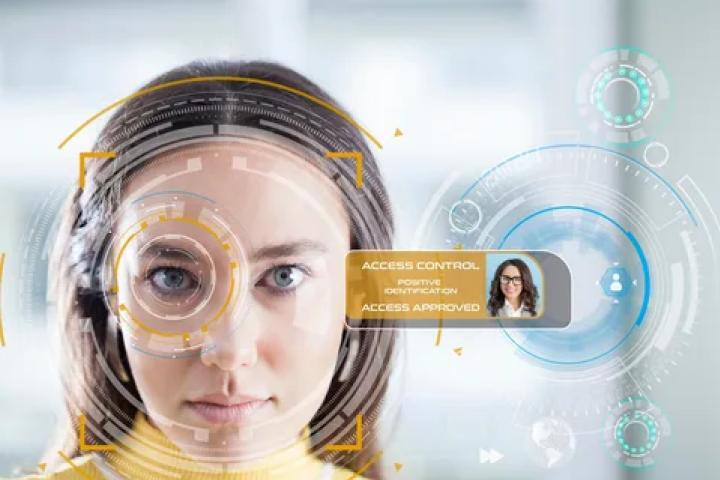
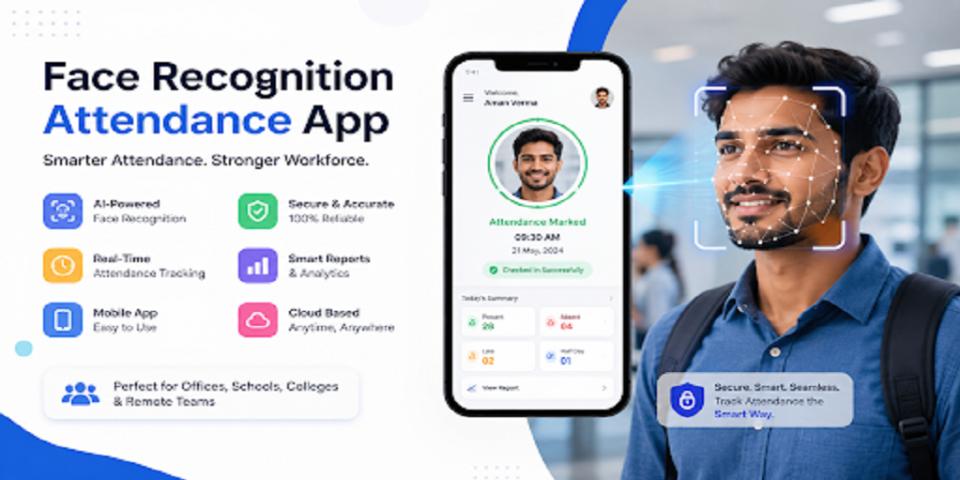
Simply put, the identity of the face is a type of biometric system that identifies or verify a person by analyzing the unique characteristics of his face, such as the size of the eyes, nose or joline. It acts like a digital fingerprint but focuses on the face. Businesses use it for various purposes. For example, employees can reach workplaces without using ID cards, banks can confirm customer identification during online transactions, and retail stores can study shopkeepers behavior to increase customer service and prevent theft. In airports and hotels, passengers are able to examine more quickly because their faces serve as an immediate identity.
When the business is combined with AI, this technique becomes even more powerful. Artificial intelligence allows facial identification systems to adapt, learn and improve over time. The results are sharp, smart and more accurate identification processes. Technology facial identification and this mixture of AI ensures that companies can promote both safety and efficiency by offering better customer experiences.
When was facial identification technique invented?
Many people believe that facial recognition is a new idea, but its history goes back for many decades. So, when was facial identification technique invented? The origin of the first research was in the 1960s when scientists developed simple programs that were able to map facial features. More developed models emerged in the 1990s that enabled computers to match facial data in a better way. The advancement of digital cameras and clean processors in the 2000s lead to technology being more convenient in the daily lives of the population. Nowadays AI has made technology facial recognition highly precise and able to scan millions of faces in several seconds.
How does facial identification technology work?
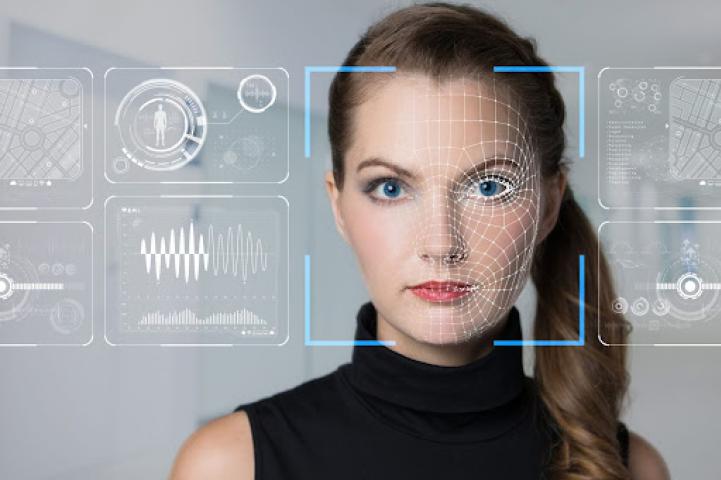
Another common question is: How does the identity of the facial identification technology work? The process is quite simple to understand. First, a camera captures a person's face image or video. The system then maps the characteristics of the specific facial, such as the distance between the shape of the eyes or the chin. This information is translated into a mathematical coding referred to as faceprint, which compares with pictures placed in the database. Lastly the system determines face match against an existing record.
AI improves this process, helps the system identify faces in different circumstances, such as when a person wears glasses, has changed his hair>
How AI in business benefits from facial identification
The advantages of integrating AI with facial identification are important. For one, it greatly enhances security. It is easy to steal or forge traditional means of identification like passwords, ID cards but a face is unique and hardly reproducible. This provides a good guard against fraud and access restrictions. It also speeds up operation, as employees, customers or passengers can be verified immediately without long delay.
Another major benefit is the improvement of customer experience. Businesses can use AI in business systems run by facial identification to offer individual services. For example, a retail store can identify loyal customers and provide them immediately. Hotels and airports can examine the guests rapidly, making a smooth service experience. At the top of it, automation reduces the need for manual checks, saving both time and money for organizations, reducing human error.
Challenges of facial identity in business
Facial recognition has a number of challenges despite the numerous advantages it possesses. One of the biggest issues is privacy, where customers are interested in the process of collecting, storing and usage of their facial data. Other factors that can influence accuracy can be poor lighting or low quality cameras, but AI is currently progressing to overcome these restrictions. Also, the utilization of technology facial recognition can be strictly regulated in most countries, and in this context, businesses are expected to adhere to legal norms to prevent violations of customer rights.
In a bid to eliminate these obstacles, organizations are required to exercise transparency, seek adequate consent on the part of users and have their systems be morally and obedient to the privacy laws.
Facial recognition in business and future of AI
Looking forward, the future of facial recognition will be shaped by AI progression. The new systems will be able to work effectively in a rush or dark environment, identify emotions to increase customer interactions, and other smart tools such as voice recognition and internet of things (IOT) devices will be integrated with devices. Business adopting these solutions responsibly will not only improve security and efficiency, but will also get a competitive lead in their industries.
Conclusion
Finally, the identity of the face is no longer a future dream. It has become a practical, AI-powered technology that is changing how business secures their operations and serve their customers. From banking and retail to travel and corporate offices, technology using facial identification is rapid, safe and more reliable. As companies continue to embrace AI, people who balance innovation with responsibility will make a way to create a trust and driving success in the digital age.