
Hiring a blockchain development company to build a decentralized application or system requires careful planning to control expenses and prevent unexpected budget increases. The key to avoiding overspending lies in clearly defining your project's scope, selecting the correct technology platform, and managing the development stages with precision. By treating the project as a series of controlled investments rather than one large, unpredictable cost, businesses can secure the necessary blockchain application development services while maintaining financial control. This guide walks you through the main factors that drive project expenses and offers practical methods for smart budget management.
Accelerate Your Blockchain Journey – Partner with Us Today!
1. Project Complexity and Feature Set: The Biggest Cost Driver
The primary factor dictating blockchain project development cost is the complexity of the solution you want to build. A simple application, like a basic cryptocurrency wallet or a digital certificate system, costs much less than a full decentralized exchange (DEX) or a custom supply chain platform. The more features you add, and the more intricate those features are, the higher the overall investment will be.
Defining the Minimum Viable Product (MVP) Scope
A common mistake that leads to overspending is attempting to build every possible feature in the first version. To manage the cost of building a blockchain app, a business must strictly define its Minimum Viable Product (MVP). An MVP includes only the core features necessary to solve the main business problem and test the idea in the market.
By focusing on an MVP, you reduce the initial development time and budget. Later, after the MVP proves successful, you can add more advanced features in subsequent phases. This cost-effective blockchain solution approach limits financial risk and prevents resources from being spent on non-essential elements.
Advanced Functionalities and Their Impact on Budget
Specific advanced functionalities significantly increase the required budget. These typically include:
Custom Smart Contract Logic: Simple token contracts are straightforward. Complex smart contracts, like those used for automated lending, governance models, or intricate financial transactions, demand more specialized coding and extensive security testing.
Third-Party Integrations: Connecting the blockchain solution with existing systems (like ERP, CRM, or legacy databases) or external services (like oracles for real-world data) adds considerable development time and difficulty. Each integration point needs custom work and rigorous testing.
User Experience (UX) and Design: Simple, template-based interfaces are cheaper. Custom, highly polished, and complex user interfaces for decentralized applications (dApps) require dedicated design and front-end development teams, increasing the expense.
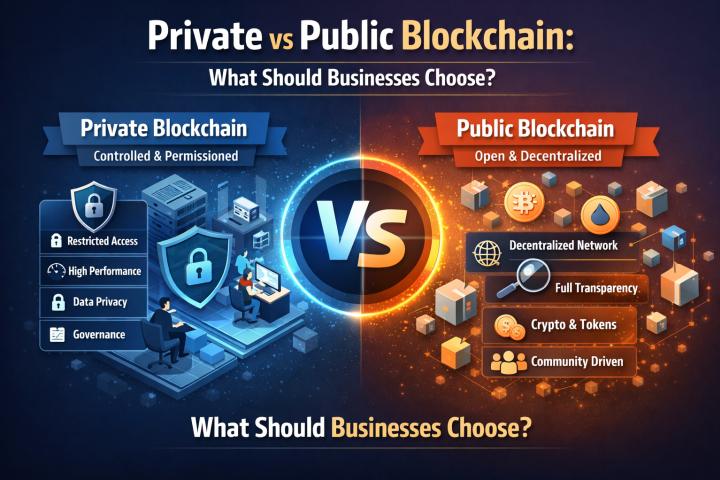
2. Choosing the Right Blockchain Platform: Public vs. Private Networks
The type of blockchain platform selected directly affects the development hours and future running expenses. The platform is the foundation, and the choice depends on the project's specific needs for speed, security, and access control.
Understanding the Differences in Network Type Expenses
Public Blockchains (e.g., Ethereum, Solana): Building on a public network offers transparency and decentralization but comes with unique costs. Transaction fees (often called "gas") are a recurring expense. More importantly, securing smart contracts on these high-value networks requires extremely rigorous and often expensive smart contract audit services. Development may be faster due to large communities, but the cost per hour for experts in these popular platforms can be high.
Private/Permissioned Blockchains (e.g., Hyperledger Fabric): These are built for enterprise use, where access is restricted. Development often involves more setup and configuration for nodes, governance, and user identity layers. While the per-transaction costs are usually zero or very low, the initial setup and the need for specialized enterprise developers can make the initial project budget higher.
Selecting a platform that is too complex or too costly for the intended use case is a common way to overspend. An honest assessment of whether the project truly needs public decentralization or can function effectively on a private, permissioned chain is key to reducing blockchain implementation costs.
The Effect of Programming Language on Rates
The platform choice determines the programming languages used (like Solidity for Ethereum or Go/Java for Hyperledger). The availability and demand for developers proficient in a particular language influence the hourly rates of the blockchain development team. Projects requiring developers skilled in less common languages may face higher rates due to scarcity.
3. The Development Team Structure: Models for Engagement
How you hire and structure the development team has a significant impact on your overall financial outlay and predictability. Hiring a blockchain development company gives you flexibility in choosing a suitable payment model that aligns with your project's certainty and duration.
Comparing Pricing Models for Budget Control
There are three primary engagement models that affect budget management for decentralized application development:
Fixed Price: This works best for projects with an extremely clear, unchanging scope, such as a simple token creation or a Proof-of-Concept (PoC). The total price is agreed upon upfront. Benefit: Maximum budget predictability. Drawback: Zero flexibility; any small change to the scope will result in extra costs and contract renegotiation.
Time and Materials (T&M): This model is billed based on the actual hours and resources spent. It is best for complex projects, startups, or solutions where the requirements are expected to change as the project evolves. Benefit: Maximum flexibility and speed; work can start quickly. Drawback: Budget predictability is lower; requires close monitoring and a trusted partner to avoid unexpected overruns.
Dedicated Team: This involves hiring a fixed team of developers, designers, and project managers for a set monthly fee to work solely on your project for an extended period. This is often used for long-term projects or when the client wishes to have direct management over the remote team's day-to-day work. Benefit: High control and consistent resource availability. Drawback: Less cost-efficient for short-term or small projects; you pay for the team whether they are at maximum capacity or not.
Choosing the model that matches your project's definition and risk tolerance is essential for controlling blockchain development expenditures.
4. Hidden and Post-Launch Costs: Budgeting Beyond Deployment
Many businesses fail to budget for critical expenses that occur outside the core coding phase, leading to unforeseen financial strain right before or right after launch. Effective blockchain development budget estimation must include these elements.
The Non-Negotiable Cost of Security Audits
For any application that deals with financial value or sensitive data, a third-party security audit of the smart contracts is absolutely necessary. Skipping this step to save money is a massive risk. An audit identifies vulnerabilities that could lead to losses or system failure. These services involve specialized security firms and come at a distinct cost that must be factored into the overall project budget from the very beginning. This is a key step in securing smart contract development at a reasonable cost.
Infrastructure and Maintenance Expenses
The launch is not the end of spending. A blockchain application requires ongoing financial support:
Node and Server Costs: Even if you use a public network, the user interface, APIs, and off-chain data storage components must be hosted on cloud services (like AWS or Azure). These costs are recurring and scale up as user traffic increases.
Maintenance and Upgrades: The core blockchain technology is always being updated. Your application will need patches, bug fixes, and compatibility updates to remain secure and functional. Budgeting for a dedicated support team or an annual blockchain maintenance agreement is necessary to prevent technical debt and ensure the solution's longevity. A good rule is to set aside a yearly budget for maintenance equal to about 15-25% of the initial development cost.
5. Planning and Documentation: Reducing Future Re-Work
Lack of thorough planning and documentation creates ambiguity, which inevitably translates into wasted development hours and higher overall project expenses. A cheap estimate based on vague requirements will cost far more in the long run.
The Value of a Detailed Discovery Phase
A proper blockchain project discovery phase is an initial, smaller investment that pays off immensely. During this phase, the development company works with you to formally define:
The exact business requirements.
Detailed technical specifications.
The system architecture and user flows.
A clear, staged roadmap for delivery.
A well-documented set of requirements drastically reduces confusion and the need for constant, time-consuming changes during the main coding phase. This upfront investment is essential for obtaining accurate blockchain development quotes and ensuring the project meets expectations on time and within the original financial plan.
Insisting on Comprehensive Handover Materials
If you later wish to switch vendors or bring the project in-house, having incomplete or poorly organized documentation will force your new team to spend countless hours figuring out the existing code. This re-work is extremely expensive. A cost-conscious business must contractually require the development company to provide:
Clean, commented source code.
Detailed API and system architecture documents.
Clear deployment and setup guides.
This complete documentation guarantees you maintain long-term control over your digital asset and minimize long-term blockchain operational costs.
6. Development Strategy: Focusing on Iteration and Efficiency
The way the project is managed on a daily basis also contributes to budget control. Adopting smart development practices with the blockchain consulting firm is a strategic way to get the best value for money.
Utilizing Agile and Short Iterations
The Agile methodology, which breaks the project into small, manageable cycles (sprints), allows for continuous testing and feedback. This is far better than a "waterfall" approach, where the final product is delivered months later. Short, two-week sprints allow you to catch errors or misalignment early, before they become expensive fixes. This method ensures that all spending is focused only on features that meet the business need. Efficient blockchain project management is a direct money-saving technique.
Leveraging Existing Tools and Open Source
Whenever possible, look for opportunities to use existing open-source blockchain frameworks, libraries, or pre-built software development kits (SDKs). Building every component from scratch is the most expensive path. A good development company will suggest ways to utilize existing, secure components rather than recreating them. This strategic use of readily available resources is a powerful way to optimize decentralized application development spending.
7. Quality Assurance and Testing: Avoiding Relaunch Expenses
Inadequate quality assurance (QA) is a false economy. Rushing the testing phase to save a few dollars can lead to a disastrous launch, forcing a costly re-do or emergency patches.
Budgeting for Rigorous Testing Cycles
A clear blockchain quality assurance budget should cover several types of testing:
Unit Testing: Checking individual components of the code.
Integration Testing: Ensuring all components, including the front-end, back-end, and smart contracts, work together.
User Acceptance Testing (UAT): Having business users test the system to confirm it meets the original requirements.
Each round of testing needs dedicated time and resources. A professional development firm builds this time into the estimate. Allowing this time prevents the huge financial and reputational cost of launching a buggy product.
Post-Launch Monitoring and Emergency Funds
Even with the best testing, real-world usage often exposes unexpected issues. It is wise to set aside a small contingency fund (e.g., 10-20% of the total budget) to cover immediate post-launch support and any critical bugs found in the first month of operation. This financial buffer ensures a smooth response to unexpected events, maintaining the stability of the enterprise blockchain solution.
Conclusion: Making Informed Financial Decisions in Blockchain Development
Hiring a blockchain development company without overspending is achieved through thoughtful preparation, clear communication, and financial discipline. By meticulously defining the project's scope (MVP), making informed decisions on the platform and pricing model, budgeting for non-coding costs like security audits and maintenance, and adopting efficient development practices, a business can control its investment in blockchain technology. Smart budgeting, driven by precise planning and a focus on long-term stability, is the path to a financially successful and stable blockchain deployment.