
Customer support has become one of the largest recurring expenses for enterprises and well funded startups. Growing ticket volumes, global user bases, and expectations for instant responses create rising pressure on support teams. Many organizations now view automation as a strategic priority rather than a digital experiment. As part of this shift, AI chatbot solutions are being adopted to streamline service operations and reduce dependency on large human support teams. The growing interest in AI Chatbot Development Services reflects how seriously businesses now consider automation as a long term cost management strategy.
Why enterprises see automation as a cost control necessity
Support teams face the challenge of meeting high service expectations while keeping operational budgets stable. For many enterprises, this balance is difficult without technology that can handle large volumes of routine inquiries. AI driven chat systems take on predictable, repetitive tasks so human agents can focus on issues where judgment, empathy, or domain expertise are needed.
Automation reduces the load on agents and limits the need for constant hiring cycles. It also improves overall service consistency because the responses do not vary by shift, region, or experience level.
Some of the immediate cost related outcomes include:
- Lower average handling time across common issues
- Decline in ticket volumes routed to human support
- Reduced onboarding and training requirements
- Increased agent productivity and specialization
- Better utilization of support budgets across global locations
Enterprises with high inquiry volumes stand to benefit most, especially when maintaining 24 by 7 support is expensive and difficult.
How an AI Chatbot Development Company contributes to long term ROI
Building effective support automation requires far more than deploying a simple bot. Enterprise grade chat systems demand strong NLP capabilities, integration depth, security alignment, and ongoing performance tuning. This is where an experienced AI Chatbot Development Company becomes a strategic partner rather than a vendor. Their involvement helps reduce the time required to design, build, train, and refine chat systems that reflect real world customer journeys.
A strong development partner ensures the system adapts as user needs evolve. This ensures enterprises maintain predictable support efficiency without increasing internal development overhead.
Key contributions often include:
- Intent modeling and domain specific training
- Integration with CRMs, ticket systems, and internal databases
- Error handling and escalation flows
- Data privacy and compliance alignment
- Monitoring, analytics, and continuous optimization
These foundations make automation more stable, reducing the long term cost disruptions caused by performance failures or inaccurate responses.
The advantage of using custom automation for support workflows
Generic chatbot tools often fall short in enterprise environments. Support teams need consistent responses, accurate workflows, and context aware interactions. This is where Custom Chatbot Development Solutions offer value by aligning the system with internal terminology, processes, and decision rules. When workflows reflect real customer and agent behavior, automation becomes significantly more effective at reducing workload.
Custom systems can support the following:
- Guided troubleshooting for technical products
- Automated account or subscription updates
- Password reset flows and user verification
- Order status tracking and operational requests
- Multilingual support without increasing staffing
A well designed custom chatbot can deflect a large percentage of repetitive inquiries, helping enterprises stabilize or reduce staffing costs during peak seasons. This gives leaders more control over hiring, outsourcing, and resource planning.
Where Generative AI Chatbots change the economics of support
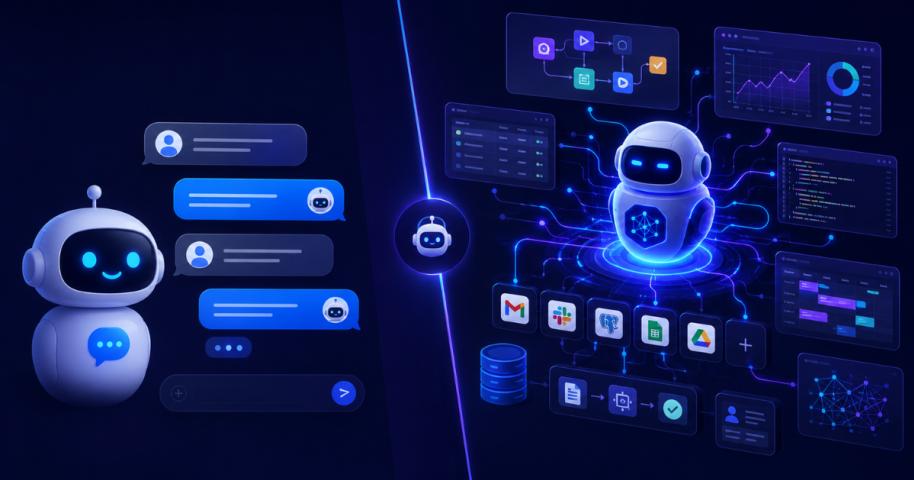
Earlier chatbot systems relied on predefined rules and structured flows. Generative AI Chatbots move beyond this by handling broader conversations with context awareness. For enterprises, this means fewer escalations and a higher percentage of resolved inquiries handled entirely by automated systems.
These solutions can interpret user intent more accurately, summarize multi turn interactions, and generate responses that feel more conversational. The impact becomes even more visible in industries with complex product lines or high customer variability.
Cost advantages include:
- Handling complex issues without expanding support teams
- Reducing human involvement in ticket triage
- Improving user satisfaction scores
- Offering round the clock support without shift management
- Supporting global markets with linguistic flexibility
Generative systems help enterprises scale faster than they could with traditional support structures, especially when expanding into new regions or product categories.
How digital commerce and service platforms benefit from modern chatbot capabilities
Industries with high customer touch points often experience rapid increases in support costs. For digital commerce, subscription businesses, and marketplaces, automation has become a primary driver for operational efficiency. With E commerce chatbot development, brands can manage inquiries related to orders, refunds, payments, delivery timelines, inventory availability, and account issues without large support teams.
Conversational AI development contributes further by improving how users navigate platforms, search for products, and troubleshoot issues. These improvements lead to fewer abandoned carts, quicker resolutions, and lower strain on human agents. Businesses operating across multiple regions benefit significantly because maintaining staff in each time zone is expensive.
Success in digital commerce often depends on how quickly customers receive answers. Automation helps maintain this speed while keeping cost structures under control.
Frequently Asked Questions
1. How do AI Chatbot Solutions reduce support costs in large enterprises?
They reduce support costs by automating high volume and repetitive interactions, lowering the need for large support teams. They also improve response accuracy, decrease wait times, and allow human agents to focus on complex cases. This creates measurable reductions in staffing and operational expenses.
2. What factors make AI Chatbot Development Services valuable to enterprises?
These services provide advanced NLP training, secure integrations, and system optimization that generic tools cannot deliver. Enterprises gain reliable automation that matches internal workflows, which improves service quality and reduces long term maintenance costs.
3. Why should enterprises work with an AI Chatbot Development Company instead of building internally?
A specialized company brings domain expertise, prebuilt frameworks, and proven conversational design practices. This shortens deployment time and reduces risk while ensuring scalability. Internal teams often need additional training and resources, which increases long term costs.
4. How do Custom Chatbot Development Solutions support complex enterprise workflows?
They interpret industry specific language, automate structured tasks, and provide guided processes that reduce ticket volumes. Their alignment with internal systems improves accuracy and reduces repetitive tasks for agents, making them especially effective in large support environments.
5. What impact does Generative AI Chatbots adoption have on support performance?
Generative models improve context understanding and reduce escalations by resolving more inquiries independently. They also improve the consistency of user experience, which leads to stronger satisfaction scores and lower cost per interaction.
Conclusion
Large enterprises and growth focused startups are under pressure to manage rising support costs without affecting customer experience. Modern automation offers a practical path by reducing repetitive workloads, improving resolution speed, and scaling support operations efficiently. When implemented with the right expertise, AI driven support becomes a long term cost advantage rather than a short term experiment.