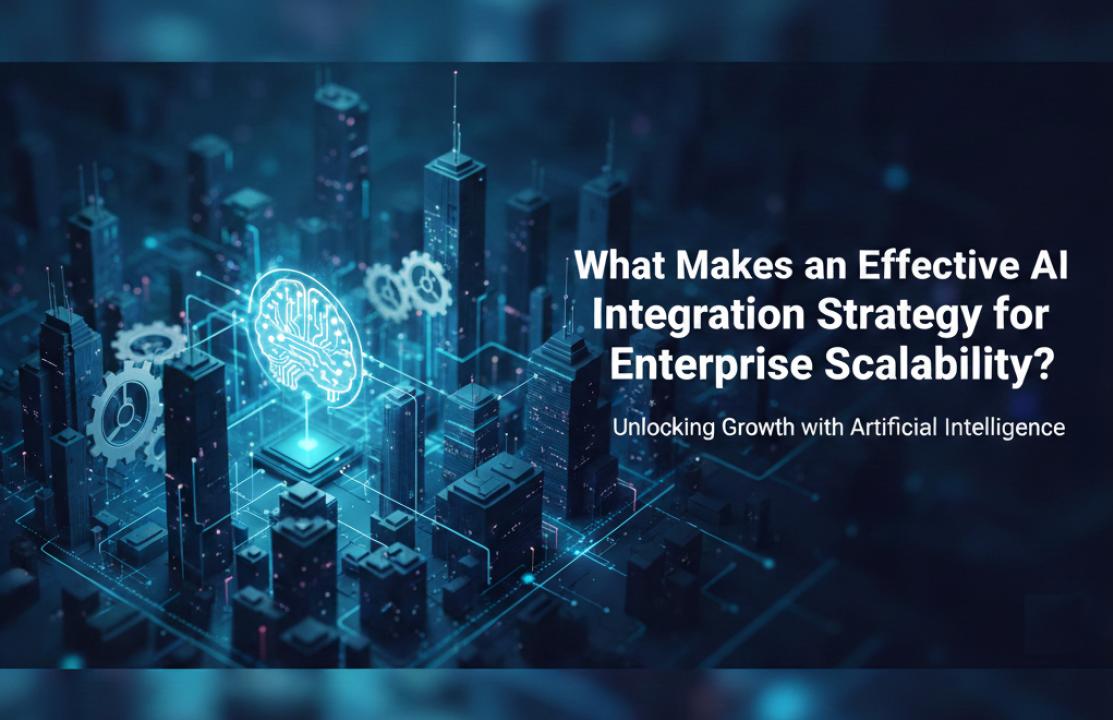
Enterprise leaders are moving past experimentation with artificial intelligence. The focus now sits on scale, reliability, and measurable business impact. Many organizations invest in AI pilots that show promise yet fail to grow beyond isolated use cases. The difference between short term success and long term value often comes down to one factor. A clear and practical AI integration strategy.
An effective strategy connects data, systems, people, and governance into one operating model. It ensures AI supports core business objectives rather than existing as a side initiative. This is where AI Integration Services play a central role. Enterprises and strong startups rely on structured integration planning to turn AI from a tool into a growth engine.
This article explains what makes an AI integration strategy effective for enterprise scalability, with a focus on execution, risk control, and return on investment.
Why AI integration strategy matters more than AI models
Many organizations begin their AI journey by selecting models or platforms. While model selection matters, real enterprise value comes from integration across workflows, infrastructure, and decision systems.
Without a strategy, companies face fragmented deployments, duplicated efforts, and rising operational costs. Teams build separate AI solutions that do not share data pipelines or governance standards. Over time, this limits scalability and increases security exposure.
An AI integration strategy solves this by defining how AI systems connect with existing applications, databases, cloud environments, and user interfaces. It also sets rules for performance monitoring, compliance, and lifecycle management. Enterprises that approach AI with integration first see higher adoption rates and faster realization of business outcomes.
Core pillars of an effective AI integration strategy
1. Business alignment before technology selection
Successful enterprises begin with clear business goals. AI integration initiatives must link directly to revenue growth, cost reduction, customer experience, or risk management. This alignment prevents investment in solutions that look innovative but deliver limited business value.
AI Integration Consulting helps leadership teams map priority use cases to operational realities. This includes identifying high impact processes, estimating ROI, and setting success metrics before development begins.
2. Data readiness and architecture planning
AI systems depend on clean, accessible, and governed data. Many enterprises struggle with data silos, inconsistent formats, or legacy databases that restrict AI performance.
An effective strategy includes a data architecture roadmap. This may involve data lake modernization, API layer development, real time data pipelines, and unified governance models. Artificial Intelligence Integration Services focus heavily on preparing data environments before deploying production AI workloads.
Enterprises that invest in data foundations reduce AI maintenance costs and improve long term scalability.
3. Integration with existing enterprise systems
AI must operate inside the digital ecosystem already in place. This includes ERP platforms, CRM systems, HR tools, customer portals, analytics dashboards, and internal knowledge bases.
AI integration solutions connect new AI capabilities with these platforms using secure APIs, microservices, event driven architectures, and cloud orchestration. This approach prevents disruption while extending existing investments.
An experienced AI integration company ensures compatibility across legacy and modern systems, avoiding expensive rebuilds.
4. Governance, security, and compliance frameworks
As AI expands across departments, governance becomes critical. Enterprises must manage data privacy, auditability, explainability, and regulatory compliance. This is especially important in finance, healthcare, logistics, and government sectors.
An effective AI integration strategy defines:
- Access controls and identity management
- Model versioning and audit trails
- Data lineage tracking
- Risk management protocols
- Human oversight procedures
Generative AI Consulting also plays a growing role as organizations adopt large language models. These models require additional safeguards around data exposure, hallucination risk, and content moderation.
Strong governance allows enterprises to scale AI adoption without increasing operational risk.
5. Change management and workforce enablement
AI integration is not only technical. It changes how employees work and how decisions are made. Teams need training, workflow redesign, and trust in AI outputs.
AI Integration Consulting supports leadership in designing adoption programs, internal communication, and performance feedback loops. When people understand how AI supports their roles, adoption accelerates and productivity gains follow.
Building for scalability from day one
Scalability depends on repeatable frameworks. Instead of building isolated AI projects, enterprises benefit from creating standardized integration patterns. This includes shared data pipelines, common deployment templates, and centralized monitoring dashboards.
AI Integration Services help establish these reusable frameworks so new AI use cases can be launched faster and with lower incremental cost.
Scalable strategies also rely on cloud infrastructure planning. Hybrid and multi cloud environments allow enterprises to balance performance, compliance, and cost control. AI workloads can scale based on demand without overinvesting in hardware.
Measuring ROI and operational impact
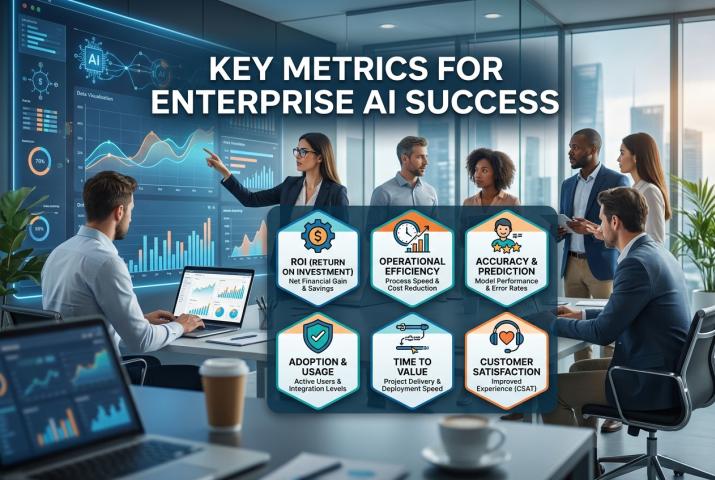
Decision makers expect measurable outcomes from AI investment. An effective integration strategy includes continuous performance tracking. Common enterprise metrics include:
- Reduction in manual processing time
- Improvement in customer response speed
- Lower error rates in operations
- Increased revenue per employee
- Faster decision cycles
External industry reports indicate enterprises that implement structured AI integration frameworks see significantly higher returns compared to isolated AI pilots.
By tying AI performance to business KPIs, leadership teams maintain visibility and accountability.
Common challenges enterprises must address
Even strong organizations encounter obstacles during AI expansion. Typical challenges include:
- Legacy system limitations
- Data ownership conflicts between departments
- Talent gaps in AI engineering
- Security and compliance constraints
- Vendor lock in risks
An experienced AI integration company anticipates these issues early. Artificial Intelligence Integration Services focus on phased rollouts that minimize disruption and maintain operational continuity.
Generative AI Consulting also supports safe adoption of emerging AI models while keeping infrastructure stable.
Choosing the right AI integration partner
Enterprises benefit from working with specialists who combine technical expertise with business understanding. A strong partner brings experience across data engineering, cloud architecture, model deployment, cybersecurity, and enterprise software integration.
Key evaluation factors include:
- Proven enterprise scale deployments
- Cross industry experience
- Strong governance and compliance knowledge
- Transparent implementation roadmaps
- Post deployment support models
The future of enterprise AI depends on integration
AI adoption is no longer optional for competitive enterprises. The differentiator now is execution quality. Organizations that invest in thoughtful integration strategies move faster, scale smarter, and manage risk effectively.
AI Integration Services, AI Integration Consulting, and Artificial Intelligence Integration Services provide the frameworks enterprises need to operationalize AI at scale. AI integration solutions that connect data, systems, governance, and people create lasting business value rather than short term innovation wins.
For global enterprises and high growth startups, the path forward is clear. Focus on integration first, scale with confidence, and build AI capabilities that grow with the business.