Enterprises across every major industry are moving toward advanced automation and data-driven decision models, which has made strategic AI integration a priority for CIOs and CTOs. As demand rises, organizations are looking for structured consulting frameworks that reduce implementation risks, shorten adoption timelines, and help them derive measurable business value from AI initiatives. While platforms and models evolve quickly, the frameworks guiding enterprise adoption remain the backbone of successful transformation.
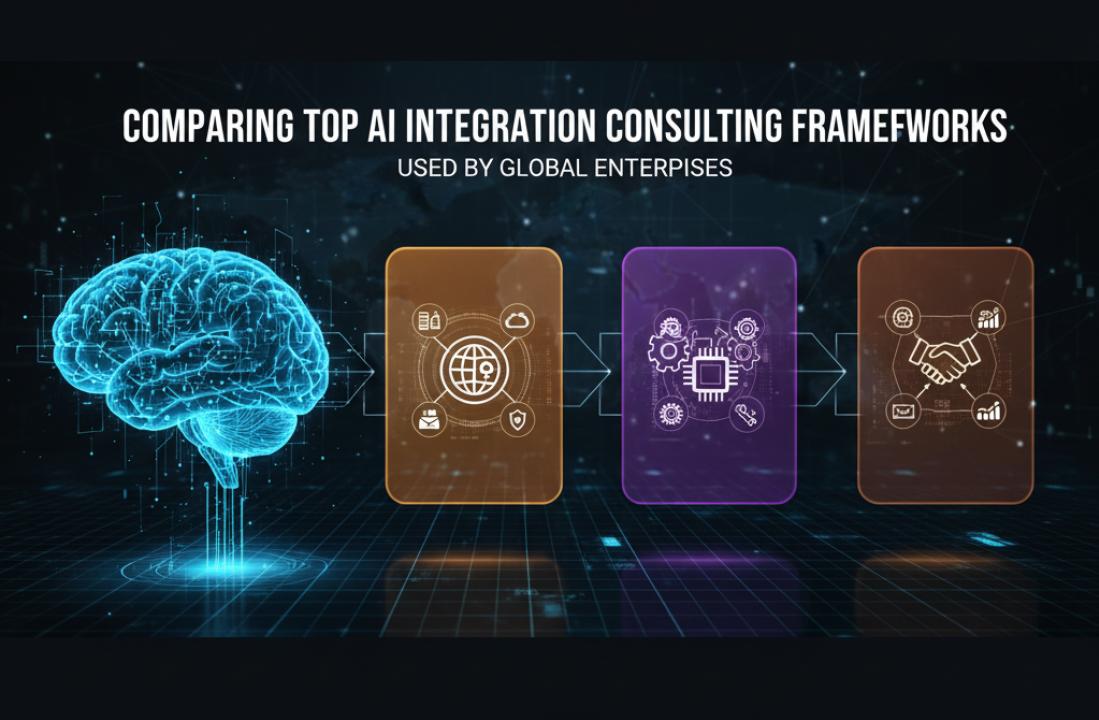
This article compares the most widely used AI Integration Consulting frameworks adopted by global enterprises and high-growth startups. It also highlights how an AI integration company applies these models to deliver scalable outcomes through AI Integration Services.
Why Enterprises Rely on Formal AI Integration Frameworks
AI integration at scale is never a plug-and-play effort. It often influences mission-critical systems, workflow design, talent structure, governance, risk models, and customer experience strategies. Decision-makers prefer structured frameworks because they offer clarity in planning, dependency management, and ROI analysis. These frameworks also create predictability, which is essential for enterprises navigating multi-year AI roadmaps while maintaining system reliability.
Modern frameworks typically support three core goals: increasing operational efficiency, improving forecasting accuracy through data intelligence, and helping leadership make more informed investment decisions. As the scope grows, frameworks also incorporate ethical considerations, observability, and long-term performance management.
Framework 1: The Data-to-Value Lifecycle Model
This framework is widely used by enterprises undergoing modernization of legacy systems or shifting toward a unified data architecture. It emphasizes four major phases: data readiness, model design, integration into operational systems, and value measurement.
Data readiness involves cataloging sources, addressing gaps in data quality, and preparing structured and unstructured datasets for model consumption. Most AI integration solutions rely on this foundation because inaccurate or inconsistent data can distort outcomes. Enterprises that adopt this lifecycle model often gain better visibility into their data ecosystem, which supports more reliable forecasting and automation.
Model design follows with the selection of algorithms, training approaches, validation cycles, and performance benchmarks. Integration into business systems requires coordinated collaboration between data teams, software engineering, and operational leadership. The final phase focuses on quantifying ROI through business KPIs such as reduced cycle time, lower operational cost, or improved service delivery metrics.
Consultancies offering Artificial Intelligence Integration Services frequently use this framework when clients are scaling analytics programs or reworking core data platforms.
Framework 2: The Human-Machine Collaboration Blueprint
This model prioritizes how AI augments teams, not just systems. Global enterprises with large workforces often choose this blueprint because it provides clear guidance on task reallocation, workflow improvements, and compliance standards.
The framework begins with task mapping to identify activities suitable for automation versus those requiring human oversight. Consulting teams then develop policies around data usage, controls, ethical boundaries, and audit requirements. The final component involves workforce readiness. This includes upskilling programs, operational playbooks, and change-management processes designed to help employees interact confidently with AI tools.
This approach is gaining traction in industries such as financial services, healthcare, supply chain, and customer operations where regulatory boundaries and workforce participation remain essential. As enterprises integrate more Generative AI Consulting use cases, this blueprint provides the clarity needed to balance innovation with accountability.
Framework 3: The AI Governance and Risk Control Model
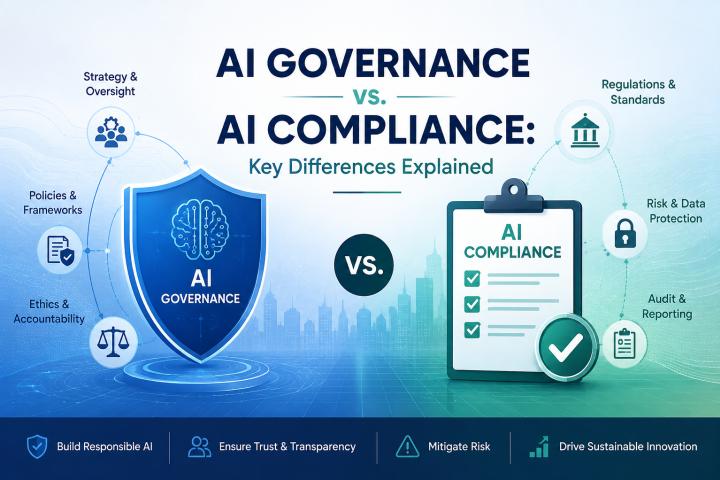
Enterprise leaders recognize that AI is not only a technological investment but also a governance challenge. As AI systems become more autonomous, the need for strong oversight increases. The AI Governance and Risk Control Model offers enterprises a structured method to mitigate operational, regulatory, and ethical risk.
The model includes policy creation, model audit processes, data lineage tracking, bias and fairness checks, and security assessments. It aligns with emerging regulations across the EU, US, and APAC, providing organizations with a consistent operating model even as laws evolve. Many enterprise AI integration teams apply this framework during early planning phases to avoid compliance issues later in the deployment cycle.
This framework is especially important for advanced AI Development Services where models interact with sensitive information or influence decisions involving financial risk, healthcare recommendations, or customer identity verification.
Framework 4: The End-to-End Automation and Optimization Architecture
Enterprises running large operational systems often turn to this framework to gain clarity on automation opportunities across their ecosystem. It is commonly used by manufacturing, logistics, telecommunications, retail, and banking organizations scaling AI initiatives beyond pilot phases.
The architecture covers system assessment, workflow modeling, automation mapping, model orchestration, and performance tracking. It helps enterprises design a connected automation layer that spans data ingestion, predictive intelligence, and action engines. The framework's strength lies in its ability to visualize cross-departmental dependencies that are difficult to identify through isolated AI projects.
AI Integration Consulting providers rely on this architecture to demonstrate how investments in automation generate cost advantages, reduce process variability, and strengthen business continuity during fluctuating market conditions.
Framework 5: The Value-Acceleration Roadmap
This roadmap is popular among startups and enterprises looking to shorten implementation cycles and demonstrate early business value. It focuses on identifying the fastest path to operational impact without compromising long-term strategy.
The roadmap includes short-term wins, scalable pilot design, phased rollouts, infrastructure planning, and value measurement checkpoints. It enables leaders to confirm business outcomes early while establishing a long-term AI strategy that supports growth across regions or divisions.
This framework is particularly useful when organizations need to justify investment, secure stakeholder confidence, or align technology decisions with revenue goals.
How Enterprises Select the Right Framework
Enterprises typically evaluate frameworks based on four factors: system complexity, data maturity, regulatory requirements, and business goals. For instance, if operational risk is the main concern, governance frameworks take priority. If rapid value creation is the goal, decision-makers may lean toward the value-acceleration roadmap.
Working with an experienced AI integration company helps organizations select and customize frameworks that match their strategic objectives. The right partner provides clarity, technical depth, and ongoing support throughout implementation.
Why Framework-Driven Integration Matters for Enterprise ROI
Enterprises that apply structured frameworks report stronger ROI compared to organizations that adopt AI on a project-by-project basis. Frameworks reduce misalignment, avoid technical debt, and improve long-term scalability. According to industry analyses, enterprises that use formal AI integration models experience higher project success rates and faster cost recovery.
AI frameworks also support transparency for board-level reporting. Leaders can present clear roadmaps, risk profiles, and performance metrics, which strengthens confidence in long-term AI spending.
Final Thoughts
The pace of AI adoption continues to accelerate, and the enterprises achieving the strongest outcomes are those investing in structured methodologies. Whether the objective is operational excellence, stronger forecasting models, regulatory compliance, or rapid value acceleration, the right framework provides the foundation needed to scale AI responsibly.
For organizations evaluating their next phase of AI adoption, working with a consulting partner experienced in AI Integration Services ensures a strategy that supports innovation while protecting operational reliability. A strong partner helps define a long-term architecture, select suitable frameworks, and deliver business value across the entire integration lifecycle.