Puzzle games often look simple at first glance, but the difficulty curve can spike quickly. “That’s My Seat” is a good example — many players report getting stuck not because the levels are unfair, but because the logic changes subtly as the game progresses.
One common mistake players make is relying on trial-and-error. Early levels allow for experimentation, but later stages require pattern recognition and forward planning. Seats are not independent; one move often affects multiple positions indirectly.
Another reason players struggle is visual overload. As more characters and constraints are introduced, it becomes harder to mentally simulate outcomes. At this stage, successful players usually slow down and analyze the rule behind the level rather than reacting to what looks correct.
A practical approach is to break each level into three steps:
1. Identify fixed positions that cannot change.
2. Determine which seats influence others.
3. Work backward from the final required arrangement.
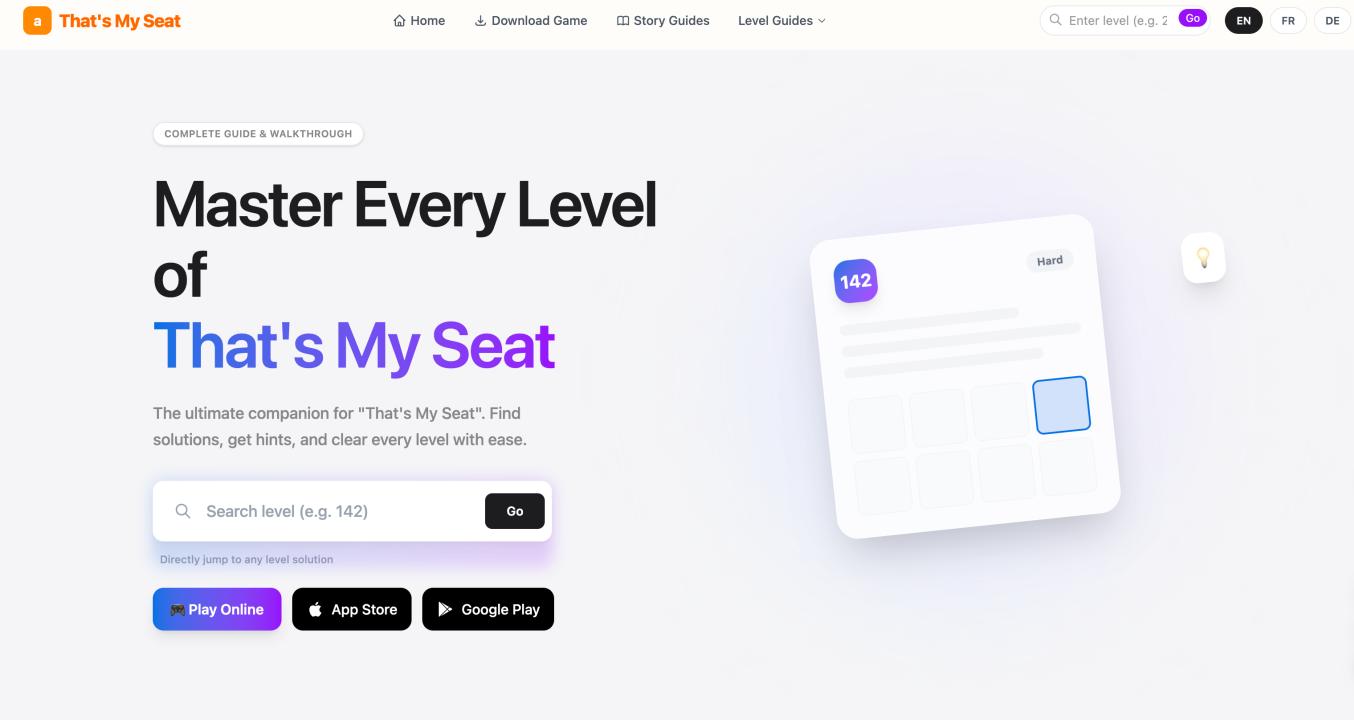
After seeing the same mistakes repeated across different levels, I started documenting clear, step-by-step solutions focused specifically on the stages where players most often get stuck. The goal is not to spoil the game, but to explain the underlying logic so players can progress without frustration.
If you’re currently blocked on a difficult level, you can find structured walkthroughs and explanations here:
The guides focus on logic patterns rather than random moves, helping players understand *why* a solution works — which makes future levels much easier to solve.