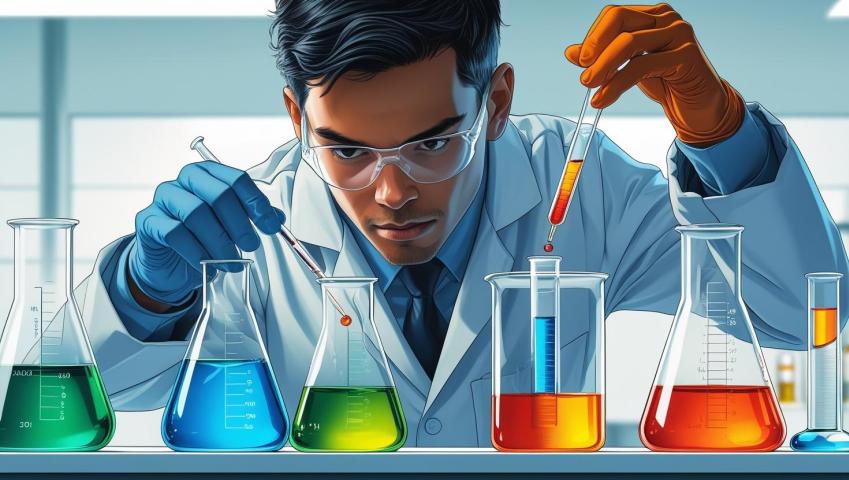
Learning chemistry is not only about learning the memorization of formulas but also learning complicated ideas and presenting them graphically, as well as using the knowledge in solving problems. Interactive online lessons have emerged as one of the most essential tools that help students and professionals understand and develop their skills that are practical. Online education turns the traditional learning to a dynamic and an interactive environment through the integration of multimedia content, virtual laboratories, and feedback in real time.
The Foundations of Obvious Difficulty in Chemistry.
Chemistry, and especially, organic chemistry, entails the study of reactions, intermolecular interactions, and structures in three dimensions. There are a lot of students who cannot understand abstract concepts, e.g. the movement of electrons, stereochemistry or reaction mechanisms. These subjects can be daunting and seem daunting through conventional classroom approaches that tend to depend too heavily on textbooks and unchanging figures.
Chemistry is also complex due to the sequentiality of the learning process. Every thought tends to be based on what has already been known and any gap in knowledge is higher. Students are likely to be challenged in relating theoretical concepts to real world behavior of chemistry without the aid of good visualization and practice.
The role of Interactive Learning.
An interactive lesson would be a solution because it involves active instead of passive learning among students. The simulators, animations, quizzes and interactive activities will stimulate the learners to explore, experiment and test their understanding in real time.
As an instance, reaction mechanism animations enable students to see the flow of electrons and the rearrangement of the bonds. Interactive games also allow learners to anticipate the results of reaction and view real results instantly as a means of consolidating conceptual knowledge and critical thinking.
Molecular Structures Visualization.
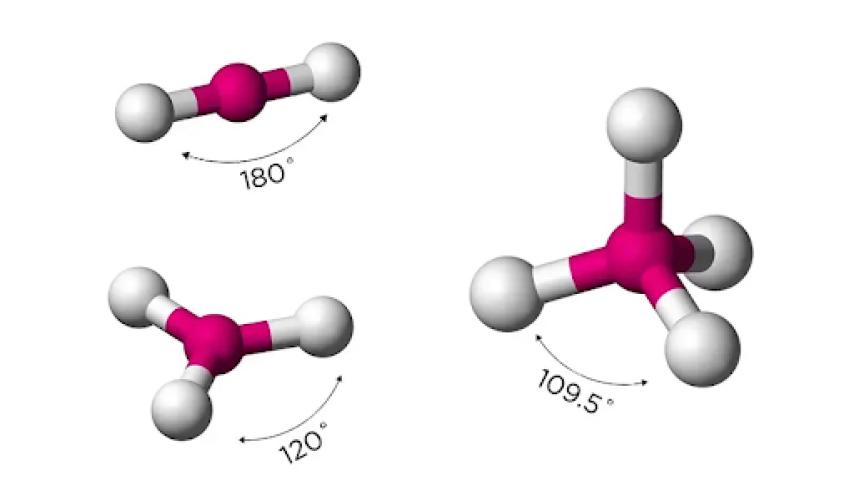
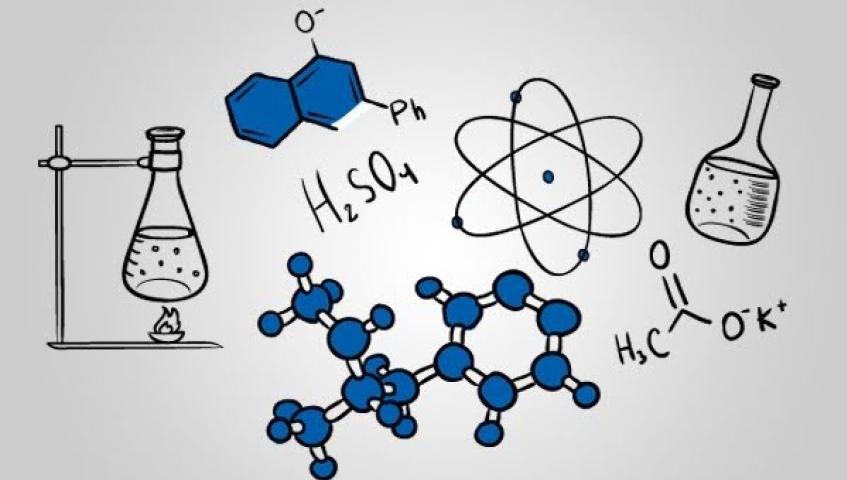
The manipulation of 3D molecule structures and ability to explore them is one of the biggest advantages of online chemistry education. Interactive models give a physical approach to the study of molecular geometry, functional groups and stereochemistry.
Students are able to make the rotation of molecules, enlarge certain atoms and study the pattern of bonding. This real-world digital process enables students to observe things that would be invisible in real world experiments or textbooks and understand more and remember more.
Mechanisms of Reaction (Step-by-Step).
Mechanisms of reaction may also be considered as one of the most difficult things in chemistry. The online lessons make them easy by splitting reactions into steps, demonstrating how to make and break bonds, and bringing into focus the movement of electrons.
Visualization in steps will assist the students in tracing the reasoning of each reaction and will decrease the confusion and instill confidence. Interactive lessons increase the learning process by making the complex reactions easier to comprehend and remember.
Individualized Learning to Successful Skills.
All learners study differently and online learning will accommodate the student in accordance with his/her learning >
An organic chemistry online course may be well-designed, and it is able to evaluate progress throughout the course with customized exercises, feedback, and materials to reinforce weak points. This individualistic method can see to it that students develop control of challenging concepts, which enhances their performance and their real-world abilities.
Virtual Laboratory and Secure Experimentation.
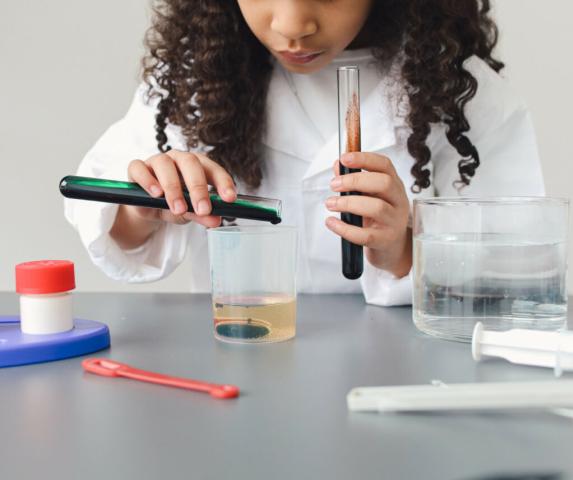
Virtual lab is a safe and non-hazardous means of performing chemical experiments. Students are able to vary variables e.g. concentration, temperature, and catalysts to see how reactions vary.
The simulations enable the learners to experiment with the results many times with no risks like those found in experiments in the real life. Studying virtually, the students solidify theoretical skills and become assured prior to transitioning into practical lab courses.
These are Immediate Feedback and Reinforcement.
Interactive online lessons provide instant response, which is very vital in learning. Students can get right solutions, explanations and other methods instantly, when they are trying problems or involved in simulations.
This instant reinforcement is practical in such a way that the erroneous ideas do not occur and the learners are able to change their comprehension real time. On-the-job feedback It is a learning method that enables individuals to learn on their own and maintain chemical principles over the long-term.
Experience: The Practice of Real-World Applications.
It is more valuable and encouraging to apply the study of theoretical chemistry to the real world. Examples of pharmaceuticals, environmental chemistry, and materials science are commonly used in online lessons to demonstrate how chemistry is used to innovate.
Their association of learning with the real world makes the students appreciate how relevant what they are learning is and this helps them acquire problem solving skills that go beyond the four four walls.
Flexibility and Availability to the Contemporary Learners.
Lessons through the internet offer the flexibility unavailable in physical classrooms. The students have a chance to access the content when they want it and repeat hard issues and learn on their terms. This can be of great benefit especially to the professionals in the job, foreign students or students who are doing their level best in their tasks.
Organic chemistry course with all relevant materials would provide a steady stream of material where the student can gain access to all the content and become a master with time.
Teamwork and Coaching
Interactive forums also help in the collaboration of students via group projects, discussion forums and live question and answer. Peer learning enables students to share ideas, discuss problems together and have various thoughts on chemical concepts.
Teamwork will improve knowledge, develop communication abilities and equip learners with team-based learning in both academic and professional life.
Acquiring Transferable Skills.
Online study of chemistry is not simply about knowledge acquisition. Students learn to think critically, be digital, manage time and learn independently. These abilities are critical to becoming a successful higher education institution graduate and professional scientist.
The use of interactive tools, virtual laboratories, and adaptive lessons make students ready to work in the digital workflow that is increasingly popular in research and industry.
Dismantling the Learning Barriers.
The online platforms help in removing the walls of conventional learning that might be physical laboratory, geographical distance or lack of good resources. It will be inclusive, adaptive, and multimedia so that every student regardless of their differences will be in a position to learn complex concepts.
Accessibility also ensures that students with disabilities enjoy chemistry education because it is fair and universal.
Important Preparations to Exams and Professional Applications
Online interactive lessons prepare the students with knowledge and skills that will be used to get exams and implement the same in real world scenario. Simulations, practice exercises, and quizzes strengthen learning at the same time enhancing problem-solving skills.
This is because exposure to diverse situations and usage will mean that the learners will be able to handle academic evaluations, lab activities, and work-related problems in the chemistry-related areas.
Future interactive Chemistry Learning
Online chemistry education will eventually become more interactive with the increased technology. One of the innovations that will offer easier and more enriching experiences to users includes virtual reality laboratories, AI-driven personalized learning, and augmented reality simulators.
Such developments will aid in the streamlining of learning more complex content like chemical reactions, molecular structures and organic mechanisms to the learner anywhere in the world.
Conclusion
Online interactive lessons have revolutionized how chemistry is delivered with the ability to visualise, practice, and offer individualised advice to the student, which conventional methods can be unable to achieve. The active use of content, the use of virtual laboratories, and the provision of feedback in real-time terms help learners to enhance their comprehension and develop practical skills. With digital education becoming increasingly popular, online chemistry classes offer a flexible, efficient, and exciting way of study to any person who desires to enhance his/her knowledge in chemistry.