Many homeowners assume that allergies are a problem of dirt, clutter, or visible neglect. If floors are vacuumed, surfaces are wiped, and trash is taken out regularly, the home must be healthy right? That assumption is wrong. Some of the most allergy-triggering environments are homes that look spotless. The issue isn’t cleanliness. It’s indoor air quality.
Poor indoor air quality (IAQ) exposes occupants to microscopic irritants that don’t show up on countertops or floors but constantly circulate through the air you breathe. These pollutants quietly trigger allergic reactions, respiratory irritation, and chronic discomfort even in homes that appear pristine.
Clean Doesn’t Mean Healthy Air
Most allergens that affect indoor air are invisible. Dust mites live inside mattresses and upholstery. Mold spores float freely before colonies are ever visible. Pet dander remains airborne for hours after cleaning. Volatile organic compounds (VOCs) off-gas from paints, furniture, and cleaning products long after installation or use.
This is why many homeowners seek professional air quality services only after symptoms persist despite obsessive cleaning. The problem isn’t what you can see. It’s what your HVAC system circulates and what your ventilation fails to remove.
The Allergens You Can’t See (But Breathe Every Day)
Dust mites
Dust mites thrive in clean homes just as easily as messy ones. They feed on dead skin cells, not dirt. Carpets, bedding, curtains, and upholstered furniture are prime habitats. Their waste particles are a leading trigger for allergic rhinitis and asthma.
Pet dander
Even hypoallergenic pets produce dander. These microscopic skin flakes are lightweight and remain airborne for long periods. Regular vacuuming removes what settles but not what circulates through return vents and ducts.
Mold spores
Mold doesn’t need visible growth to cause problems. High humidity in bathrooms, kitchens, crawl spaces, or HVAC systems allows spores to spread through the air. People often experience symptoms months before they ever see mold.
Pollen infiltration
Outdoor pollen doesn’t stay outside. It enters through doors, windows, clothing, shoes, and ventilation systems. Once inside, it recirculates repeatedly unless filtered out effectively.
Chemical irritants (VOCs)
Air fresheners, disinfectants, scented candles, paints, and new furniture release VOCs. These compounds irritate airways and can worsen allergy symptoms even when used “as directed.”
Why HVAC Systems Make Allergies Worse
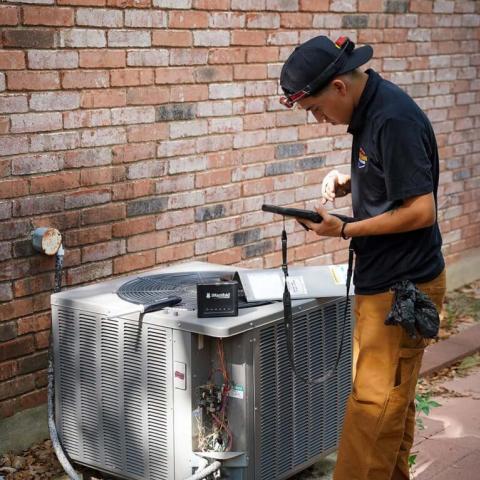
Your HVAC system is the lungs of your home. When it’s poorly maintained or improperly configured, it becomes a distribution network for allergens.
Low-efficiency air filters allow fine particles to pass through. Dirty evaporator coils trap moisture, encouraging mold growth. Leaky ductwork pulls contaminants from attics, crawl spaces, or wall cavities. Instead of removing allergens, the system redistributes them room by room.
This is why people often notice symptoms worsening when the system runs even though the house is clean.
Humidity: The Silent Allergy Multiplier
Relative humidity above 50% creates ideal conditions for dust mites and mold. Many clean homes unknowingly operate at 55–65% humidity, especially in warm or coastal climates. Standard air conditioners remove some moisture, but they’re not designed for precise humidity control.
Without proper dehumidification, allergens don’t just exist they multiply.
Ventilation Problems in “Tight” Homes
Modern homes are built to be energy efficient, which often means tightly sealed. While this reduces energy loss, it also traps pollutants indoors. Without controlled ventilation, allergens, moisture, and chemicals accumulate.
Older homes leaked air unintentionally. Newer homes require intentional ventilation strategies. When those systems are missing or misused, indoor air quality suffers regardless of how clean the space looks.
How Allergies Show Up Indoors
Poor IAQ doesn’t always feel dramatic. Symptoms are often subtle and chronic:
- Morning congestion or sneezing
- Itchy eyes or throat indoors but not outside
- Persistent cough without illness
- Headaches or sinus pressure
- Fatigue or poor sleep quality
Because these symptoms develop gradually, many people blame weather, stress, or seasonal allergies never suspecting their own home.
What Actually Improves Indoor Air Quality
High-efficiency filtration
Upgrading to properly rated HVAC filters captures fine particulates like pollen, dander, and mold spores. Filter selection matters; higher efficiency without proper airflow design can cause system strain.
Humidity control
Whole-home dehumidifiers or properly configured HVAC systems keep humidity in the safe 30–50% range, suppressing allergen growth.
Source control
Reducing VOC-emitting products, using low-emission materials, and addressing moisture intrusion prevents pollutants from entering the air in the first place.
Ventilation and air exchange
Balanced ventilation systems dilute indoor pollutants with fresh outdoor air without sacrificing energy efficiency.
System maintenance and duct integrity
Clean coils, sealed ducts, and correctly sized equipment prevent contaminant buildup and uncontrolled air intake.
What the Research Shows
Organizations like the U.S. Environmental Protection Agency repeatedly report that indoor air can be two to five times more polluted than outdoor air, even in homes that appear clean. The Centers for Disease Control and Prevention also links poor indoor air quality to increased allergy and asthma symptoms, particularly in children and older adults.
The takeaway is blunt: cleanliness alone does not protect your lungs.
The Hard Truth
If you’re constantly cleaning but still dealing with allergies, you’re focusing on the wrong problem. Floors don’t cause allergic reactions air does. Without addressing filtration, humidity, ventilation, and HVAC performance, a spotless home can still be an unhealthy one.
Improving indoor air quality isn’t about chasing dust. It’s about controlling what circulates through every breath you take.