Enterprise customers now expect instant answers, accurate guidance, and consistent digital experiences across every channel. Meeting these expectations at scale is no longer achievable with human teams alone. Intelligent conversational systems have become a practical investment for organizations seeking efficiency, stronger engagement, and measurable cost control.
This is why global enterprises and well funded startups are investing in AI Chatbot Development Services. Yet many decision makers enter such projects without a clear understanding of what the journey involves. A conversational initiative is not a simple software installation. It is a strategic program that touches data infrastructure, customer experience, security, and long term operational planning.
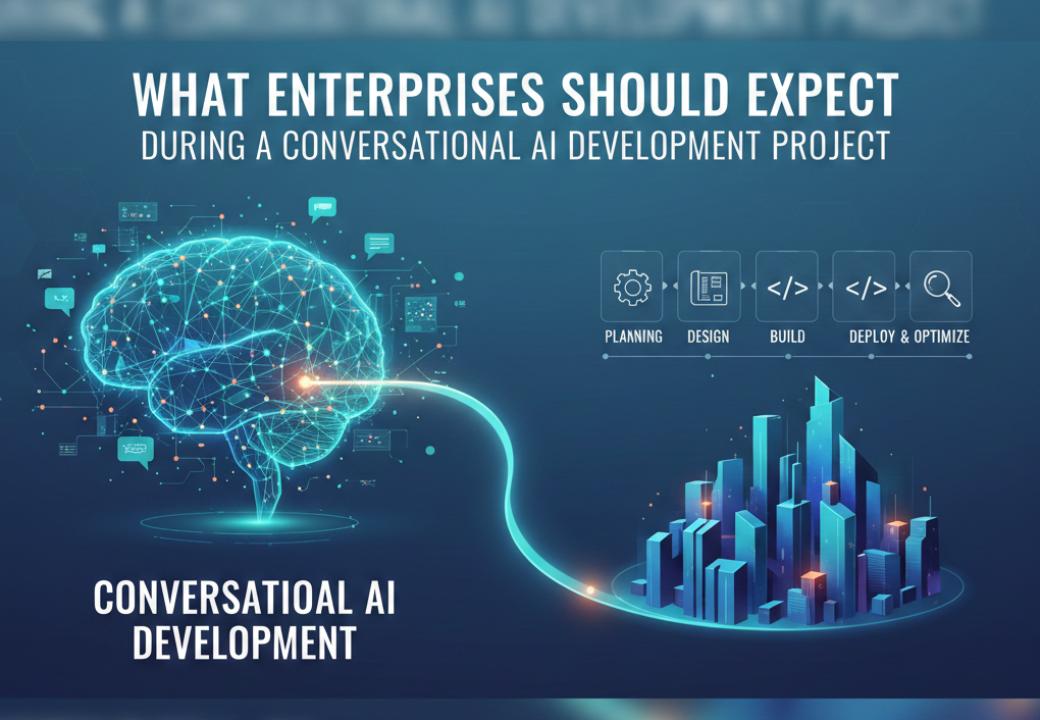
This guide explains what organizations should expect at each phase of a conversational AI project, from early strategy to post launch optimization.
Phase 1: Business Discovery and Goal Definition
Every successful project begins with clarity. Enterprise stakeholders must define what the chatbot is expected to achieve. Common objectives include lowering support workload, increasing lead qualification, improving customer satisfaction, or accelerating internal workflows.
During discovery workshops, project teams outline:
• Priority use cases and target audiences
• Customer journey touchpoints
• Key performance indicators
• Integration requirements with existing systems
This phase ensures the initiative stays business driven rather than technology led. A capable AI Chatbot Development Company will challenge assumptions, highlight risks, and translate business goals into technical scope. Enterprises that invest time in discovery reduce budget overruns and prevent misaligned product outcomes.
Phase 2: Technology and Architecture Planning
Once objectives are confirmed, solution architects design the technical foundation. Enterprises evaluate language models, natural language processing frameworks, conversation engines, analytics tools, and hosting infrastructure.
Key considerations include:
• Expected user volume and concurrency
• Response latency requirements
• Data privacy and compliance controls
• Multi region deployment needs
• Integration with CRM, ERP, and support platforms
Some projects require controlled scripted flows. Others involve Generative AI Chatbots for open-ended interactions. Selecting the correct architecture early prevents costly redevelopment later.
At this stage, organizations should expect architecture documentation, security assessments, and deployment blueprints before any development begins.
Phase 3: Data Preparation and Knowledge Engineering
High performing conversational systems rely on high quality data. Enterprises must prepare structured knowledge sources to train and guide chatbot behavior.
Typical data preparation includes:
• Intent and entity mapping
• FAQ and documentation structuring
• Historical chat log review
• Knowledge base validation
• Content tone guidelines
For retail and transactional use cases, E-commerce chatbot development requires connection to product catalogs, inventory systems, order tracking databases, and payment services.
Industry research indicates data preparation accounts for a significant share of project timelines. Enterprises that allocate internal subject matter experts to support this phase achieve faster training cycles and higher response accuracy.
Phase 4: Conversation Design and User Experience Mapping
Conversation design shapes how users experience the chatbot. This phase defines dialogue flows, error handling, escalation to human agents, and brand communication >
Enterprises should expect:
• Conversation flow diagrams
• Sample interaction scripts
• Tone and voice alignment
• Multilingual planning if required
• Accessibility and inclusivity considerations
Strong design prevents customer frustration and increases completion rates for targeted tasks. This is where AI Chatbot Solutions begin to feel like part of the brand experience rather than a standalone tool.
Phase 5: Development and Enterprise Integration
With designs approved, technical development begins. Engineers build natural language understanding models, backend logic, API integrations, and analytics pipelines.
Enterprise grade development focuses on:
• Secure authentication and authorization
• Integration with internal systems
• Audit logging and monitoring
• Load and performance readiness
• Compliance aligned data handling
Complex organizations often require deep integration across departments. This is where Custom Chatbot Development Solutions differentiate from generic chatbot tools. The system becomes embedded into existing digital infrastructure rather than operating in isolation.
Development usually follows sprint cycles, giving leadership teams regular visibility into progress.
Phase 6: Testing, Training, and Risk Control
Before launch, extensive testing ensures the chatbot behaves as expected under real conditions.
Testing activities include:
• Intent recognition accuracy evaluation
• Conversation flow validation
• Security and penetration testing
• Load and stress testing
• Human review of AI-generated responses
Training continues throughout testing as real user data exposes gaps in knowledge or phrasing. Enterprises should expect transparent reporting dashboards, accuracy metrics, and remediation plans before approving production release.
This phase is essential for protecting brand reputation and user trust.
Phase 7: Deployment and Launch Strategy
Deployment is planned carefully in enterprise environments. Most organizations begin with pilot releases to limited user groups, followed by controlled expansion.
Deployment planning typically covers:
• Cloud or on premises hosting configuration
• Multi region availability planning
• Disaster recovery preparation
• Compliance verification
• Internal team training
A professional Conversational AI development partner also provides operational documentation so internal teams can manage day-to-day performance after launch.
Phase 8: Monitoring, Optimization, and ROI Measurement
Chatbots are not static systems. Continuous improvement ensures long term business value.
Post-launch optimization focuses on:
• Conversation success rate tracking
• Customer satisfaction measurement
• Resolution time reduction
• Escalation trend analysis
• New use case expansion
Enterprises that invest in ongoing refinement often report measurable gains in customer engagement and operational efficiency. Performance dashboards enable leadership teams to connect chatbot performance directly to ROI outcomes.
Governance and Compliance Expectations
Enterprise conversational systems require governance frameworks that define ownership, update procedures, privacy controls, and ethical usage policies.
Governance planning typically includes:
• Role based access control
• Content approval workflows
• Audit trails for response changes
• Data retention rules
• Regulatory compliance mapping
Strong governance ensures conversational platforms remain stable, secure, and aligned with organizational standards over time.
Choosing the Right Development Partner
Selecting a partner with enterprise experience directly impacts project success. Organizations should look for proven case studies, system integration expertise, security maturity, and transparent delivery methodology.
The right partner accelerates deployment, reduces risk exposure, and supports continuous growth of conversational initiatives.
Closing Perspective
Conversational AI has become a strategic capability for modern enterprises and ambitious startups. Organizations that understand the full project lifecycle are better positioned to manage investment, control risk, and achieve long term business value.
From discovery to deployment and optimization, each phase demands planning, collaboration, and technical rigor. Enterprises that approach the process with clear expectations build conversational systems that enhance customer experience, strengthen internal efficiency, and deliver measurable returns in an increasingly digital marketplace.