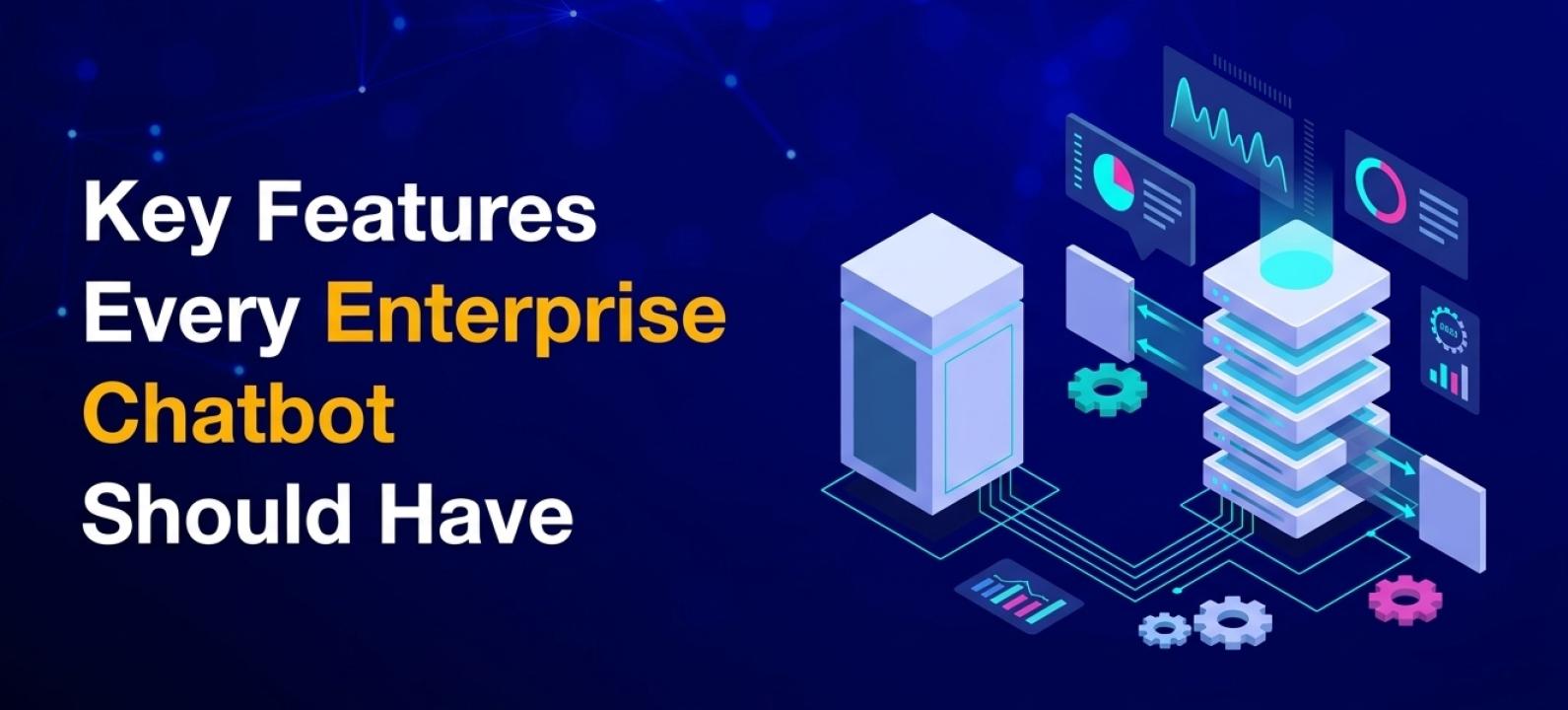

Chatbots have turned out to be a significant aspect of business communication in our time. They are used by many organizations to resolve customer questions, assist users with the services and support teams within the organization. A business chatbot, however, requires additional features, as compared to a simple chatbot.
Big organizations have to work with thousands of interactions daily. An enterprise chatbot should be able to manage this scale without losing accuracy, security, and efficiency.
We will consider the main characteristics that any enterprise chatbot must have.
Natural Language Understanding (NLU)
An effective chatbot should be able to interpret human language. Human beings usually write messages differently. There are messages that are short and some have slangs or vague words.
Natural Language Understanding assists the chatbot to understand user intent. It examines the message behind the message and give the right answer.
As an illustration, there are various ways in which a user can request to know the status of an order. The chatbot must be able to identify the request and give the appropriate information without any confusion.
This aspect facilitates smooth and natural conversations.
Business Systems integration.
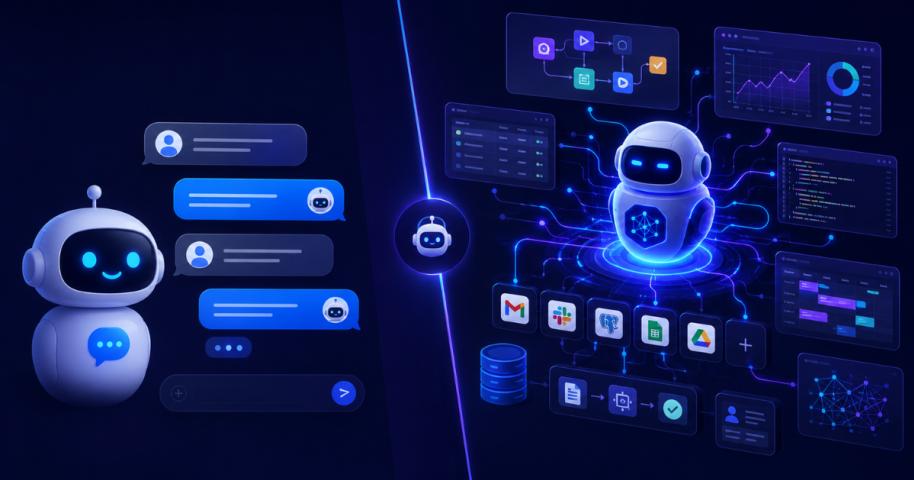
Internal systems should be connected to enterprise chatbots. These systems can consist of customer databases, CRM platforms, help desk software and payment systems.
The chatbot is able to access real-time information through integration. As an illustration, it is capable of accessing customer information, support tickets, or order status.
Without integration, a chatbot has the capability to give the simplest answers. It is an effective tool that is used in real business operations with system connections.
High Traffic Scalability.
At any moment, big organizations can process thousands of user requests. A chatbot will have to be able to cope with such conversations.
Scalability will make the chatbot work effectively even when the traffic is high. It must act fast and have a consistent performance when interacting with numerous people.
This functionality is needed when launching products, promoting products or when there is a disruption of services where the traffic of users spikes.
Multi-Channel Support
There are numerous platforms that customers communicate with. They are websites, mobile applications, texting services, and social media.
A chatbot in the enterprise must operate on several channels. Regardless of the point of initiating the conversation with the users, they should be provided with consistent support.
Multi-channel capability enhances access and assists companies to have a consistent customer experience.
Context Awareness
An efficient chatbot is able to recall a conversation. Context awareness enables it to follow the past messages and react accordingly.
As an example, a user may inquire about a product initially. They may later in the discussion enquire as to delivery options. The chatbot is supposed to comprehend that the query is linked to the previous product query.
This will avoid the repetitive nature of questions and enhance the quality of conversation.
Data protection and security.
Enterprise chatbots are usually sensitive in nature. This may consist of personal information, account information or internal information of the company.
Good security functions are a necessity. User information is safeguarded by encryption and authentication, and a safe storage location.
Organizations should also make sure that the chatbot is in compliance with the industry and data privacy standards.
Performance Insights and Analytics.
Learning about user interactions also allows organizations to enhance chatbot have better performance. Analytics applications follow the trend of conversations, user queries, and the success rate of the response.
These lessons assist the teams to determine the gaps in the knowledge of the chatbot. They will be able to update responses, enhance work processes, and optimize the overall experience.
Analytics is also used in assisting businesses to know the customer needs and behavior.
Human Handoff Capability
Some of the questions will need human help. A chatbot must be able to detect complicated cases and hand over the discussion to an operator.
Smooth handover is a way of making sure that the users do not feel stuck. The chatbot is supposed to forward the history of the conversation to the agent to eliminate the need of the user to repeat himself/herself.
This aspect makes the support process effective and easy to use.
Constant Improvement and Learning.
Business landscapes are volatile. New services, policies and customer needs are revealed over a period.
The best chatbot will become better with continuous learning. Conversations can be analyzed by machine learning models and the responses may be updated on the basis of new information.
Constant updates make the chatbot accurate and relevant.
In a Nutshell
Business chatbots are significant in the contemporary business communication. They assist the customers, help the employees and streamline operations.
These chatbots require sophisticated capabilities in order to deliver. Good performance is provided by natural language understanding, system integration, scalability, security, and analytics.
A chatbot is not just a tool, but a complex one, when the mentioned features are combined. It turns into a trusted digital assistant which assists organizations with communication of large size.