Custom countertops are often seen as a premium upgrade for kitchens, bathrooms, and commercial spaces. Yet, many homeowners hesitate before investing because of common concerns around staining, scratching, and long-term durability. Questions like “Will it stain easily?” or “Does granite or quartz scratch with daily use?” still dominate online searches.
The truth is, most of these worries are based on myths rather than real-world performance. When designed, fabricated, and maintained correctly, Custom Design Countertops are built to handle everyday use while maintaining their appearance for years. This article breaks down the most common myths and explains what really happens in real homes—especially for homeowners exploring countertop Virginia options.
Myth 1: Custom Design Countertops Stain Easily
The reality:
Most modern custom countertops are highly stain-resistant.
Natural stones like granite and marble are porous by nature, but professional sealing dramatically reduces their ability to absorb liquids. Once sealed, spills from coffee, wine, oil, or sauces can be wiped away without leaving marks—provided they are cleaned within a reasonable time.
Engineered surfaces such as quartz are even more resistant. Quartz countertops are non-porous, meaning liquids cannot seep into the surface at all. This makes staining extremely rare in normal household conditions.
What actually causes stains?
Unsealed or poorly sealed natural stone
Leaving spills unattended for extended periods
Using harsh chemicals that degrade sealers
With proper fabrication and routine care, staining is not a common issue.
Myth 2: Scratches Appear With Everyday Use
The reality:
Custom countertops are designed for daily wear and tear.
Granite ranks very high on the Mohs hardness scale, making it resistant to scratches from common kitchen tools. Quartz is also extremely durable due to its engineered structure. Even marble, while softer than granite, does not scratch easily under normal use.
That said, no surface is completely indestructible.
What can cause scratches?
Cutting directly on the surface with sharp knives
Dragging heavy metal cookware
Repeated abrasive contact over time
Using cutting boards and basic precautions eliminates most scratch risks entirely.
Myth 3: Natural Stone Is Too Delicate for Kitchens
The reality:
Natural stone countertops are widely used in high-traffic kitchens worldwide.
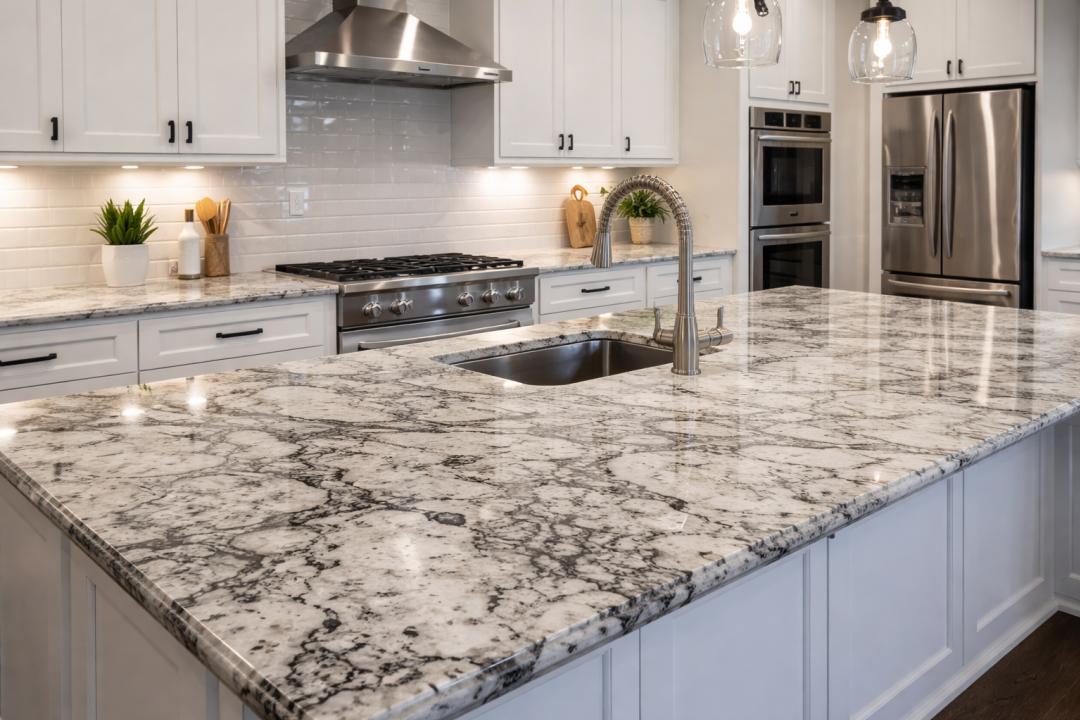
Granite countertops are popular precisely because they withstand heat, impact, and frequent use. Marble, often labeled as “fragile,” performs well in kitchens when homeowners understand its characteristics and maintain it properly.
Custom fabrication ensures correct thickness, reinforced edges, and professional installation—all of which improve durability.
In real-world use, damage usually comes from misuse rather than material weakness.
Myth 4: Sealing Is Complicated and Needs Frequent Reapplication
The reality:
Sealing is simple and infrequent.
Modern sealers are long-lasting. Many granite countertops only require resealing once every 12–24 months. Some high-quality stones and factory-treated materials may not need sealing for several years.
Sealing is a quick process that:
Takes minutes, not hours
Does not disrupt kitchen use
Extends countertop life significantly
Quartz countertops do not require sealing at all, making them ideal for low-maintenance households.
Myth 5: Stains and Scratches Are Permanent
The reality:
Most surface issues can be corrected.
Minor stains on natural stone can often be removed using poultices or professional cleaning. Light scratches can be buffed or polished out, especially on granite and marble.
Custom countertops are not disposable surfaces. They are repairable, refinishable, and restorable—unlike many low-cost prefabricated alternatives.
This repairability is one reason custom solutions remain a long-term investment rather than a short-term upgrade.
Why Custom Design Countertops Perform Better Than Prefab Options
The difference lies in customization and craftsmanship.
With Custom Design Countertops, every detail is tailored:
Material selection based on usage
Edge profiles designed to reduce chipping
Correct thickness for structural strength
Professional sealing and finishing
For homeowners investing in countertop Virginia projects, working with local fabricators ensures surfaces are selected and installed based on regional climate, life>
FAQs
1. Do custom countertops stain more than prefabricated ones?
No. Custom countertops often perform better because they are professionally sealed and finished. Prefabricated options may lack proper sealing or quality control.
2. Are quartz countertops completely scratch-proof?
Quartz is highly scratch-resistant but not scratch-proof. Cutting boards should always be used to protect both the surface and kitchen tools.
3. How often should granite countertops be sealed?
Typically once every 12–24 months, depending on usage and stone type. A simple water-drop test can indicate when resealing is needed.
4. Can heat cause damage to custom countertops?
Granite and quartz handle heat well, but placing extremely hot cookware directly on the surface is not recommended. Trivets help preserve the finish.
5. Are custom countertops suitable for busy households?
Yes. Custom design allows material and finish selection based on life>
Final Takeaway
Staining and scratching are not inherent problems with custom countertops—they are usually the result of misinformation or improper care. When fabricated and installed correctly, Custom Design Countertops offer durability, repairability, and long-term value.
For homeowners exploring countertop Virginia solutions, custom options provide both peace of mind and performance—without the myths holding them back.