In today’s fast-paced digital
environment, organizations depend heavily on IT infrastructure to maintain
business operations. As systems become more complex, managing configuration
changes, maintaining consistency, and ensuring system reliability has become
increasingly challenging.
This is where Configuration Management Services play a critical role. By providing a structured
approach to managing IT assets, applications, and systems, these services help
organizations streamline operations, reduce downtime, and improve overall
efficiency.
From small businesses to large
enterprises, adopting Configuration Management Services ensures that IT
environments remain stable, scalable, and aligned with business objectives.
Understanding Configuration Management Services
Configuration Management Services involve the systematic management of IT assets and
resources. This includes tracking configuration items, monitoring changes, and
maintaining consistency across infrastructure, applications, and services.
At the core, these services ensure
that systems are configured correctly, changes are logged, and deviations are
identified and rectified quickly. Organizations can prevent unauthorized
modifications, reduce errors, and maintain compliance with internal policies
and external regulations.
By integrating Configuration
Management Services into IT operations, businesses can achieve better control,
visibility, and governance of their entire technology landscape.
The Importance of Configuration Management Services
IT environments today are dynamic,
with frequent updates, patch deployments, and system modifications. Without a
proper configuration management process, organizations risk:
- System Downtime
– Untracked changes can lead to unexpected failures.
- Operational Inefficiency – Manual tracking of configurations is time-consuming.
- Security Vulnerabilities – Unauthorized changes may expose systems to risk.
- Non-Compliance
– Lack of records can lead to regulatory penalties.
Configuration Management Services provide a structured framework to address these challenges.
By implementing these services, organizations maintain consistency, ensure
reliability, and improve operational efficiency across the board.
Key Features of Configuration Management Services
1. Centralized Configuration Tracking
Centralized tracking allows IT teams
to maintain a single source of truth for all configuration items. This
visibility ensures that every system component is accounted for, reducing
errors and improving accountability.
2. Automated Change Management
Automating configuration changes
minimizes human error and accelerates deployment processes. Alerts and
approvals ensure that changes are properly documented and authorized before
implementation.
3. Compliance and Audit Support
Configuration Management Services
help organizations maintain audit trails, ensuring compliance with industry
standards such as ISO, ITIL, and GDPR. Automated reporting simplifies audits
and reduces manual documentation efforts.
4. Risk Mitigation
By monitoring system configurations
and detecting unauthorized or erroneous changes, these services reduce the risk
of system failures, security breaches, and operational downtime.
5. Enhanced Collaboration
Configuration data can be shared
across development, operations, and security teams, improving collaboration and
ensuring that everyone has access to accurate, up-to-date information.
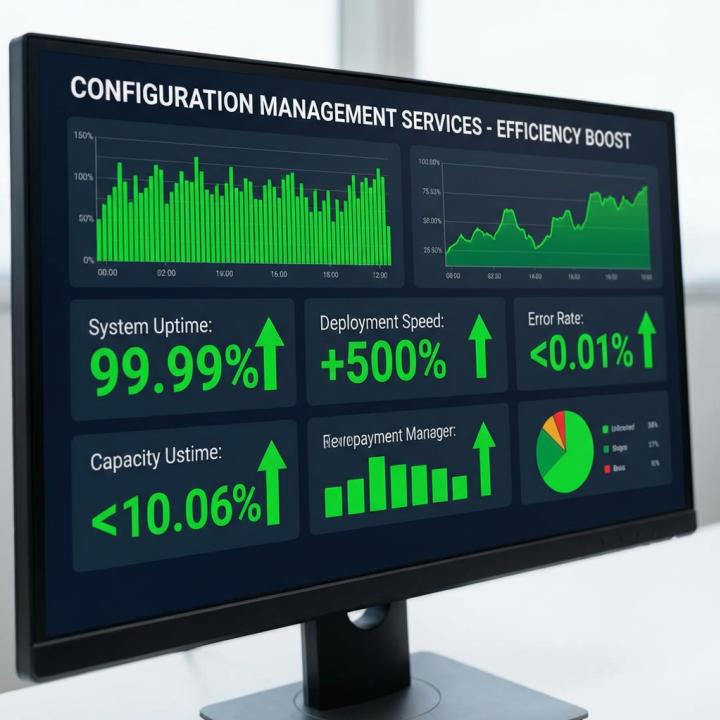
How Configuration Management Services Improve Efficiency
Streamlining Operations
When IT teams know exactly what
resources are deployed, where they are located, and how they are configured,
operational efficiency improves dramatically. Configuration Management Services
eliminate guesswork, reduce repetitive tasks, and prevent misconfigurations that
can lead to downtime.
Faster Incident Resolution
During system failures,
understanding the current configuration of affected components is essential.
Configuration Management Services provide immediate visibility, enabling teams
to identify root causes and restore systems faster.
Reducing Redundancy
Duplicate resources and inconsistent
configurations can waste time and money. By maintaining an organized record of
all IT assets, Configuration Management Services help eliminate redundancy and
ensure resources are used optimally.
Supporting DevOps Practices
DevOps relies on frequent, reliable
software deployments. Configuration Management Services integrate seamlessly
with CI/CD pipelines, automating configuration changes and ensuring consistency
across environments. This alignment accelerates delivery without compromising
system stability.
Applications Across Different IT Environments
Enterprise IT
Large organizations with complex
infrastructures benefit from Configuration Management Services by maintaining
consistent configurations across thousands of servers, applications, and
network devices. This ensures reliability, compliance, and efficient resource
utilization.
Cloud Infrastructure
Managing cloud resources across multiple
providers can be challenging. Configuration Management Services provide
visibility into cloud environments, ensuring proper setup, monitoring usage,
and managing changes to avoid misconfigurations that could lead to security or
performance issues.
Hybrid IT Environments
Many organizations operate hybrid
infrastructures combining on-premises and cloud systems. Configuration
Management Services ensure seamless coordination across these diverse
environments, reducing errors and improving operational efficiency.
Application Deployment
Configuration Management Services
track software versions, dependencies, and system settings, ensuring
applications deploy consistently across environments. This minimizes failed
deployments and enhances user satisfaction.
Best Practices for Implementing Configuration Management Services
1. Maintain Accurate Inventory
Track all configuration items,
including hardware, software, and network components. Ensure records are
updated whenever changes occur.
2. Automate Where Possible
Use tools to automate configuration
tracking, change management, and compliance reporting. Automation reduces
errors and frees up IT resources for strategic initiatives.
3. Implement Clear Change Control Processes
Define approval workflows for
configuration changes. Ensure all changes are documented, authorized, and
tested before implementation.
4. Monitor Continuously
Regular monitoring ensures that
configurations remain consistent and any deviations are detected promptly.
5. Integrate with ITIL and DevOps Practices
Align Configuration Management
Services with ITIL processes and DevOps pipelines to enhance efficiency and
consistency across operations.
Challenges in Configuration Management
While these services provide
significant benefits, organizations may face certain challenges:
- Complex Environments
– Managing configurations across multiple platforms and technologies can
be intricate.
- Tool Integration
– Selecting the right tools and ensuring they work with existing IT
systems is crucial.
- Change Resistance
– Teams may be hesitant to adopt standardized processes over manual
methods.
- Skill Requirements
– Effective implementation requires trained personnel familiar with both
IT operations and configuration management tools.
Addressing these challenges through
planning, training, and careful tool selection ensures successful deployment of
Configuration Management Services.
Key Benefits of Configuration Management Services
- Enhanced Operational Efficiency – Streamlined processes reduce downtime and improve
performance.
- Improved Reliability
– Consistent configurations prevent system failures and outages.
- Reduced Risk
– Unauthorized changes and errors are detected early.
- Compliance Readiness
– Automated reporting ensures adherence to regulatory standards.
- Cost Savings
– Efficient use of resources and reduced downtime save money.
- Scalability
– Easily manage infrastructure growth without sacrificing control.
- Faster Incident Response – Quick access to configuration information speeds up
troubleshooting.
Tools Supporting Configuration Management Services
Several tools are widely used to
support these services effectively:
- Ansible
– Automates configuration tasks across servers and networks.
- Puppet
– Manages system configurations and enforces compliance.
- Chef
– Provides automated configuration management for complex environments.
- Terraform
– Manages infrastructure as code, supporting cloud and hybrid
environments.
- SaltStack
– Offers automation for configuration and orchestration across large-scale
IT systems.
Selecting the right tools depends on
your organization’s infrastructure, team expertise, and operational goals.
Future of IT with Configuration Management Services
The evolution of IT toward
cloud-native systems, microservices, and continuous delivery pipelines makes
Configuration Management Services increasingly essential. Future trends
include:
- AI-Driven Automation
– Predictive analytics to anticipate misconfigurations.
- Integration with Security – Aligning configuration management with cybersecurity
practices.
- Self-Healing Systems
– Automatic correction of configuration drift to maintain system
integrity.
- Enhanced Visibility
– Unified dashboards for hybrid and multi-cloud environments.
Organizations embracing these trends
will maintain efficient, secure, and scalable IT operations in the coming
years.
Conclusion
Configuration Management Services are critical for optimizing IT operations. By maintaining
accurate records, automating change management, and ensuring compliance, these
services enhance efficiency, reliability, and security.
In a world where IT environments are
increasingly complex and fast-paced, leveraging Configuration Management
Services is no longer optional. Businesses that adopt these solutions gain
control over their infrastructure, streamline operations, and ensure consistent
delivery of high-quality IT services.
The future of IT relies on
structured, automated, and proactive management of configurations, enabling
organizations to scale efficiently, reduce risks, and focus on innovation.