How Injection Moulding Robots Are Transforming Modern Plastic Manufacturing
In today’s competitive manufacturing landscape, speed, precision, and consistency are no longer optional — they are essential. This is where Injection Moulding Robots play a powerful role. By automating the handling process in injection moulding machines, these robots help manufacturers increase productivity, reduce errors, and maintain high-quality output with minimal manual effort.
What Are Injection Moulding Robots?
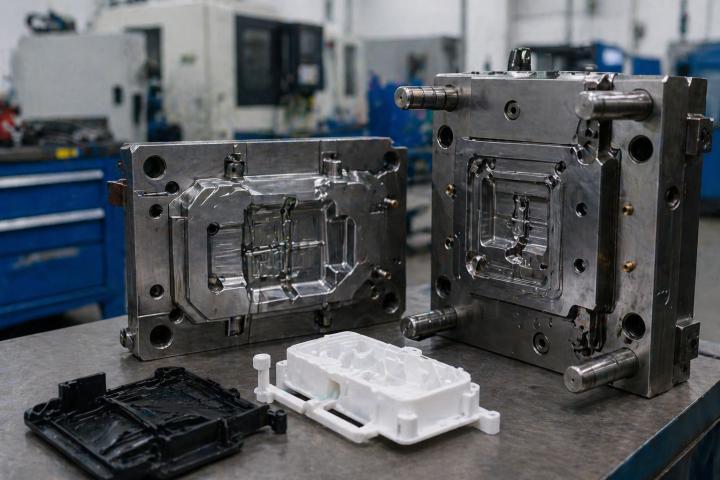
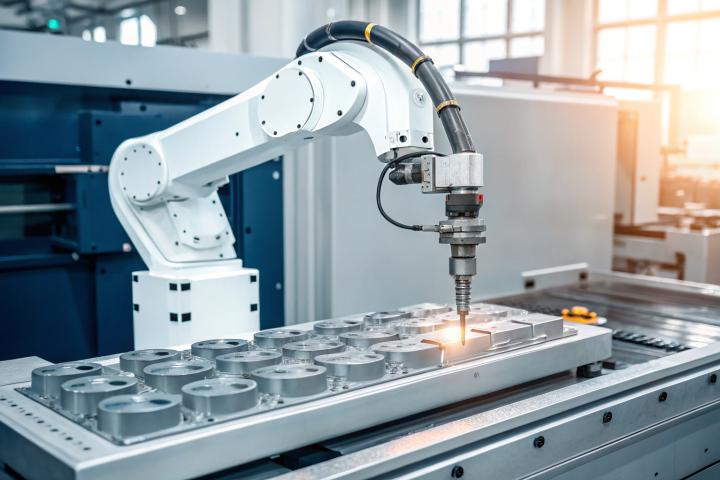
Injection moulding robots are automated systems designed to work alongside injection moulding machines. Their primary function is to remove finished parts from the mould, place inserts, perform secondary operations, and handle products safely and efficiently without human intervention.
These robots are commonly used in industries such as automotive, electronics, medical devices, packaging, and consumer goods manufacturing.
Why Manufacturers Are Adopting Injection Moulding Robots
1. Reduced Cycle Time
Robots can remove products from the mould much faster than manual labor. This directly reduces cycle time and increases overall production output.
2. Consistent Quality
Human handling can sometimes cause product damage, scratches, or inconsistency. Robots ensure precise and repeatable movements, maintaining uniform product quality every time.
3. Improved Worker Safety
Injection moulding involves high temperatures and moving machinery. Robots eliminate the need for operators to place their hands inside the machine, reducing the risk of workplace injuries.
4. 24/7 Operation
Unlike manual labor, robots can work continuously without fatigue, making them ideal for high-volume production environments.
5. Labor Cost Reduction
By automating repetitive tasks, companies can reduce dependency on manual labor and allocate human resources to more skilled operations.
Types of Injection Moulding Robots
-
Cartesian (Linear) Robots – Most common, used for simple pick-and-place operations.
-
Articulated Robots – Flexible and suitable for complex movements and secondary tasks.
-
SCARA Robots – Fast and ideal for high-speed assembly and handling.
-
Collaborative Robots (Cobots) – Work safely alongside humans for semi-automated processes.
Applications Beyond Part Removal
Modern injection moulding robots do much more than just part picking:
-
Insert loading before mould closing
-
Product stacking and packaging
-
Trimming and finishing operations
-
Quality inspection
-
Labeling and assembly
Return on Investment (ROI)
Many manufacturers hesitate to invest in automation due to initial costs. However, injection moulding robots quickly deliver ROI through:
-
Faster production rates
-
Reduced rejection rates
-
Lower labor expenses
-
Increased machine uptime
The Future of Injection Moulding Automation
With Industry 4.0 and smart manufacturing gaining momentum, injection moulding robots are now integrated with sensors, vision systems, and data analytics. This allows real-time monitoring, predictive maintenance, and smarter production planning.
Conclusion
Injection moulding robots are no longer a luxury — they are becoming a necessity for manufacturers aiming to stay competitive. By improving speed, safety, and consistency, these robots help businesses achieve higher efficiency and better profitability.
Investing in injection moulding automation today means preparing your manufacturing unit for the demands of tomorrow.