
Preparing for the CCIE Security exam is not just about theory or video lectures—it is largely about the quality of lab infrastructure you practice on. For aspirants exploring CCIE Security Training in Delhi, understanding what makes a robust lab environment is essential before enrolling in any program. The right infrastructure can significantly impact your confidence, troubleshooting skills, and exam readiness.
As Delhi has become a major hub for advanced networking
education, multiple institutes now claim to offer “world-class” CCIE Security
labs. However, serious aspirants must look beyond marketing claims and evaluate
lab infrastructure based on practical, exam-oriented criteria.
Why Lab Infrastructure Matters for CCIE Security
The CCIE Security certification is designed to test
real-world expertise. The lab exam focuses heavily on configuration,
integration, and troubleshooting of complex security scenarios. Without an
advanced and realistic lab setup, candidates may struggle to bridge the gap
between theory and application.
High-quality lab infrastructure ensures:
- Hands-on
exposure to enterprise-level security scenarios
- Familiarity
with Cisco security technologies
- Faster
problem-solving under exam pressure
- Reduced
learning curve during real deployments
This is why lab quality is often the deciding factor for
experienced professionals choosing CCIE Security Training in Delhi.
Core Components of a Strong CCIE Security Lab
1. Enterprise-Grade Cisco Devices
A serious CCIE Security lab should include firewalls,
routers, switches, and VPN devices aligned with current exam blueprints.
Whether physical or virtual, devices must support advanced configurations such
as site-to-site VPNs, remote access VPNs, firewall policies, and secure
routing.
2. Virtualization and Cloud-Based Labs
Modern CCIE labs increasingly rely on virtual environments.
Virtual labs allow aspirants to practice complex topologies without waiting for
hardware availability. They also enable rapid resets, multiple attempts, and
parallel practice—critical for exam preparation.
3. Hybrid Lab Access
The most effective lab infrastructure combines both physical
and virtual labs. Physical devices help learners understand real-world hardware
behavior, while virtual labs provide flexibility and scalability. Many advanced
training centers in Delhi now follow this hybrid model.
4. 24/7 Remote Accessibility
Serious aspirants often balance preparation with full-time
jobs. Labs that offer 24/7 remote access allow candidates to practice at their
own pace, repeat scenarios, and maximize hands-on hours without time
restrictions.
5. Exam-Oriented Lab Scenarios
Good infrastructure is not just about devices—it’s about
design. Labs should be mapped closely to CCIE Security exam objectives,
including troubleshooting-based scenarios, multi-technology integration, and
time-bound tasks.
Instructor and Support Integration
Even the best lab infrastructure is incomplete without
expert guidance. Top-tier CCIE Security labs in Delhi integrate instructor
support directly into lab sessions. This includes:
- Guided
lab walkthroughs
- Real-time
troubleshooting assistance
- Design
discussions and best practices
- Post-lab
reviews to identify mistakes
This combination ensures that aspirants not only practice
configurations but also understand why certain solutions work better
than others.
Scalability and Continuous Updates
Cisco technologies evolve frequently, and so does the CCIE
exam blueprint. A serious lab infrastructure must be scalable and regularly
updated. Institutes that fail to upgrade their labs may leave aspirants
practicing outdated scenarios that no longer reflect the exam or industry
needs.
When evaluating CCIE Security Training in Delhi, aspirants
should ask whether labs are updated regularly and aligned with the latest
security technologies.
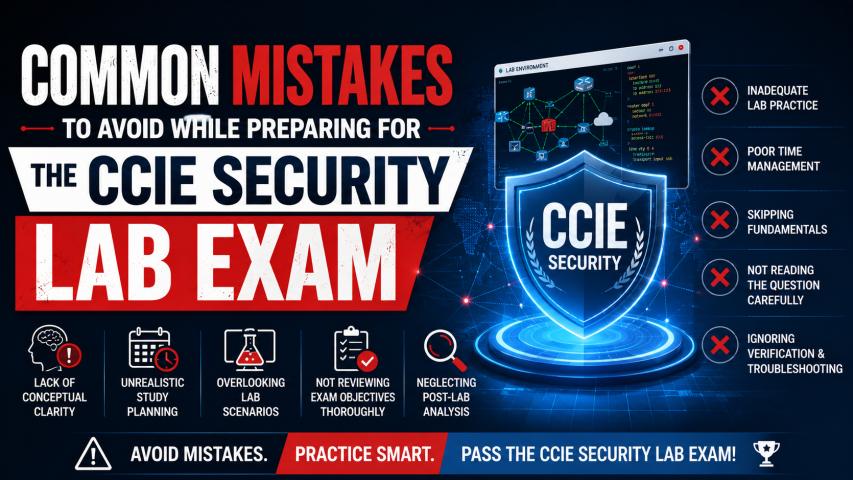
Common Mistakes Aspirants Should Avoid
Many candidates focus only on course duration or pricing and
overlook lab depth. Common pitfalls include:
- Limited
lab hours
- Shared
labs with restricted access
- Outdated
device images
- Overcrowded
practice environments
Avoiding these mistakes can save months of ineffective
preparation.
Final Thoughts
For serious CCIE Security aspirants, lab infrastructure is
not a secondary feature—it is the foundation of success. A well-designed lab
environment builds technical confidence, sharpens troubleshooting skills, and
prepares candidates for real-world security challenges as well as the demanding
CCIE lab exam.
Before enrolling, aspirants should thoroughly evaluate lab
access, device coverage, scalability, and instructor involvement. Choosing the
right infrastructure can make the difference between repeated attempts and
first-time success.
In conclusion, selecting a program that offers strong lab
infrastructure along with expert mentorship is critical, especially when
considering CCIE Security Bootcamp Delhi, CCIE Security Certification Delhi
as long-term career investments in advanced network security.