
Fashion has always been more than clothing. It is a powerful form of creativity that reflects personality, culture, and identity. Behind every elegant garment or innovative collection is a designer who understands fabrics, silhouettes, colors, and craftsmanship. Today many aspiring designers are searching for a fashion designing course Bangalore that teaches not just theory but the true art of fashion design. The difference between basic fashion education and professional fashion training lies in how deeply students learn the craft of design.
Eduleem has developed a strong learning environment for students who want to understand fashion beyond trends. The institute focuses on creativity, garment construction, textile understanding, and professional design techniques. Through its 1-Year Fashion Design Program, students experience the complete journey of design—from the first sketch to the final garment presentation. This structured approach helps learners understand how the fashion industry works while developing their personal design identity.
Understanding the True Art of Fashion Design
The true art of fashion design goes far beyond drawing stylish outfits. A professional designer must understand human anatomy, garment structure, fabric movement, and styling concepts. Every design begins with an idea, but transforming that idea into a wearable garment requires technical expertise.
Fashion designers carefully study how fabrics fall on the body, how seams shape silhouettes, and how colors influence the visual impact of a garment. Designers must also understand the relationship between design concepts and real-world usability. Clothing should not only look beautiful but also feel comfortable and practical.
At Eduleem, students begin by learning these artistic and technical foundations. This helps them move beyond simple creativity and develop the discipline required to work in the professional fashion industry.
Why Learning Fashion Design Requires Professional Training
Many people believe fashion design can be learned simply by watching trends or experimenting with clothes. While creativity is important, professional fashion design requires structured training.
Students must understand pattern drafting, garment construction, fabric behavior, and stitching techniques. They must also learn how to convert sketches into real garments that fit properly.
Professional training also introduces students to industry workflows such as design development, sample production, styling, and collection presentation. Without this structured learning process, it becomes difficult for designers to compete in the fashion industry.
Eduleem focuses on teaching both creativity and technical expertise so students can confidently develop their design skills.
The Foundation of Fashion Design at Eduleem
Every fashion designer begins with strong creative fundamentals. At Eduleem, students explore the basic principles that guide successful fashion design.
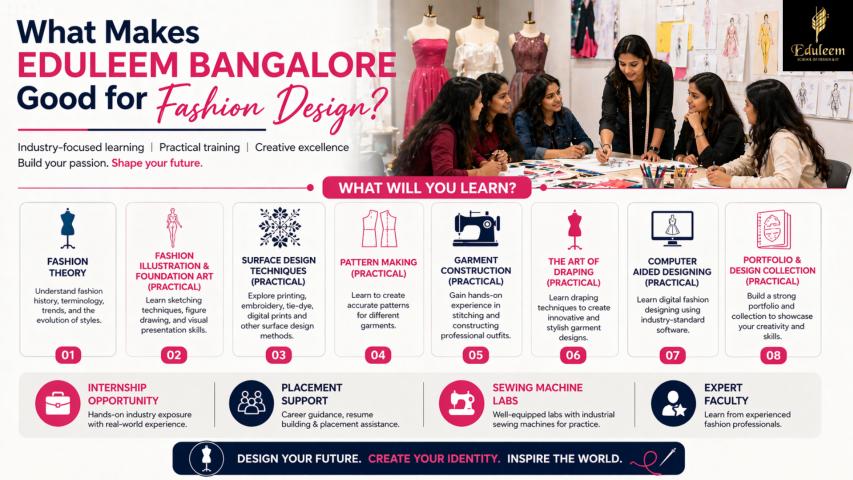
The learning process begins with fashion theory and design concepts. Students understand the principles of fashion, apparel categories, and the role of styling in clothing design. They also learn how color theory influences the visual appeal of garments.
Fashion illustration is another essential skill taught during the early stages of training. Students practice sketching human figures, garment details, and design elements. This helps them communicate design ideas effectively before moving into garment construction.
These foundational skills help students develop confidence in their creative thinking.
Mastering Fashion Illustration and Creative Visualization
Fashion illustration is one of the most important tools for designers. It allows them to visualize clothing ideas before the garment is actually created.
At Eduleem, students learn freehand drawing techniques, shading, and human anatomy for fashion figures. They practice illustrating body poses, garment folds, and accessory details.
Students also explore how to depict different fabric textures such as denim, silk, chiffon, velvet, and leather. This ability helps designers communicate how a garment will look and feel.
Creative visualization exercises help students experiment with new silhouettes, >
Textile Knowledge and Fabric Understanding
A designer’s understanding of fabric plays a crucial role in fashion creation. Different fabrics behave differently when stitched or draped, and choosing the right material is essential for achieving the desired design outcome.
Students at Eduleem study fabric types, textile textures, and material properties. They learn how fabrics influence garment shape, comfort, and durability.
Understanding textiles also helps designers experiment with fabric manipulation techniques such as pleating, gathering, and layering.
Fabric knowledge gives designers the ability to create garments that balance aesthetics and practicality.
Pattern Making and Garment Construction
Pattern making is the technical backbone of fashion design. It transforms creative sketches into structured garment patterns.
Students learn how to draft patterns for different types of clothing, including women’s wear, men’s wear, and kids wear. Pattern grading techniques are also introduced so designers can adjust garments for different body measurements.
Garment construction follows the pattern making stage. Students practice cutting fabrics, assembling garment components, and stitching using professional sewing machines.
Eduleem provides hands-on training in sewing techniques, machine operation, and garment finishing. This practical learning experience helps students understand how fashion designs become real clothing.
Draping: The Artistic Side of Fashion Creation
Draping is one of the most creative techniques used in fashion design. Instead of using flat patterns, designers shape fabric directly on a mannequin to create garment structures.
Students at Eduleem learn draping techniques such as bodice draping, skirt draping, pleats, gathers, and cowl designs. This method allows designers to experiment with new silhouettes and fabric flow.
Draping also helps designers understand how garments interact with the human body.
This artistic technique is widely used by couture designers when creating unique fashion pieces.
Advanced Topics Covered in the One-Year Fashion Program
A major strength of Eduleem’s program is its focus on advanced fashion design topics that prepare students for real industry work.
Students learn surface design techniques including embroidery, fabric painting, and textile ornamentation. These skills help designers create distinctive garment details.
Computer-aided fashion design is another advanced topic. Students learn digital tools used for fashion graphics, motifs, and textile patterns.
The course also covers fashion styling, accessory design, and visual merchandising. These topics help designers understand how garments are presented in fashion shows and retail environments.
As students progress through the program, they clearly understand how a structured fashion design course helps transform creativity into professional design capability.
Portfolio Development and Design Collection
A strong portfolio is essential for every fashion designer. It showcases creativity, technical skill, and design thinking.
At Eduleem, students develop professional portfolios that include concept boards, garment sketches, fabric selections, and finished designs. These portfolios represent their creative identity and design perspective.
Students also create complete fashion collections as part of their final project. This allows them to present their work in a professional format.
Portfolio development helps graduates demonstrate their abilities when applying for fashion jobs or starting their own labels.
Real Fashion Industry Exposure
Fashion education becomes meaningful when students understand how the industry operates in real environments.
Eduleem provides opportunities for students to observe the fashion workflow from concept to garment production. Learners understand how designers collaborate with tailors, stylists, and fashion brands.
This exposure helps students develop a professional mindset and prepares them for real fashion careers.
Why Many Aspiring Designers Choose Eduleem
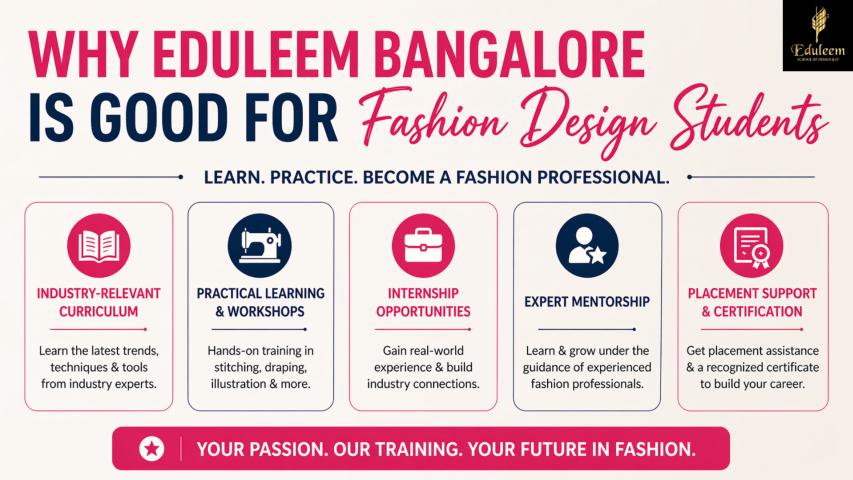
Choosing the right institute can shape a designer’s future. Eduleem focuses on practical training, creative exploration, and industry-relevant skills.
Students learn from experienced trainers who guide them through illustration, draping, garment construction, and digital design techniques. The program also encourages students to experiment with new fashion ideas while developing strong technical abilities.
Aspiring designers searching for a fashion designing course Bangalore can explore the Eduleem website or review the institute’s student experiences online to understand the learning environment.
Fashion design is a profession that transforms imagination into wearable art. With the right training, dedication, and creativity, Eduleem’s fashion design course helps students develop the artistic vision and technical skills needed to succeed in the fashion industry.
Frequently Asked Questions
- Does Eduleem teach practical fashion design skills?
Yes. Students learn fashion illustration, pattern making, garment construction, draping, and textile design through hands-on training. - What advanced topics are included in the course?
The course includes surface design techniques, digital fashion design, accessory design, styling, and portfolio development. - Can beginners learn fashion design at Eduleem?
Yes. The program is designed for beginners as well as students who want to build professional design skills. - What career opportunities are available after completing the course?
Graduates can work as fashion designers, stylists, merchandisers, boutique owners, or freelance designers. - How can I learn more about the program?
You can visit the Eduleem website or explore the institute’s reviews page to understand the course structure and student experiences.
For More Details
Visit: Eduleem — Fashion design course in bangalore
Website: www.eduleem.com
Email: info@eduleem.com
Contact: +91 96064 57497
Address: 150,First Floor,150 Feet Ring Road, Service Rd, HSR Layout 5th Sector, Bengaluru, Karnataka 560102