Understanding vehicle taxation is essential for every vehicle owner in Uttar Pradesh, whether you are buying a new car, transferring ownership, or moving from another state. Road tax is a mandatory fee imposed by the state government for using public roads, and it directly contributes to infrastructure development and maintenance.
In simple terms, up road tax is a one-time or periodic payment that vehicle owners must make to legally drive their vehicles within the state. Knowing how it works can help you avoid penalties, plan your vehicle purchase better, and stay compliant with legal requirements.
What is UP Road Tax?
UP road tax is a state-level tax levied by the Uttar Pradesh Transport Department on all motor vehicles registered in the state. This tax applies to private vehicles, commercial vehicles, two-wheelers, and transport vehicles.
The tax amount depends on multiple factors such as:
- Vehicle type
- Cost of the vehicle
- Fuel type
- Usage (private or commercial)
For private vehicle owners, the tax is usually paid as a one-time lump sum during registration, while commercial vehicles often pay it periodically.
Why is Road Tax Important?
Road tax is not just a legal formality—it plays a crucial role in maintaining the state's transport ecosystem.
Key purposes include:
- Development and maintenance of roads and highways
- Improvement of traffic infrastructure
- Funding public transport systems
- Ensuring regulated vehicle usage
Failing to pay road tax can lead to heavy fines, penalties, or even vehicle seizure.
Structure of UP Road Tax
The structure of road tax in Uttar Pradesh is designed to be progressive and depends on the vehicle's value and category.
1. Private Vehicles (Cars and Two-Wheelers)
For private vehicles, the tax is calculated as a percentage of the vehicle’s ex-showroom price.
Typical tax rates:
- Vehicles up to ₹10 lakh: 6% – 8%
- Vehicles between ₹10 lakh and ₹20 lakh: 8% – 10%
- Vehicles above ₹20 lakh: 10% or more
Two-wheelers generally attract lower tax rates, often between 5% to 7% of the vehicle cost.
2. Commercial Vehicles
Commercial or transport vehicles such as taxis, buses, and trucks are taxed differently.
Factors affecting tax:
- Seating capacity
- Load capacity
- Type of permit
- Distance covered
These vehicles usually pay tax:
- Quarterly
- Half-yearly
- Annually
3. Electric Vehicles (EVs)
To promote eco-friendly transportation, the Uttar Pradesh government offers road tax exemptions or significant reductions for electric vehicles.
This makes EVs a cost-effective option in the long run.
4. Vehicles Registered Outside UP
If you bring a vehicle from another state and use it in Uttar Pradesh for more than 12 months, you must:
- Re-register the vehicle in UP
- Pay applicable UP road tax
You may also claim a refund from the original state, subject to their policies.
How is UP Road Tax Calculated?
The calculation of UP road tax is fairly straightforward for private vehicles.
Basic Formula:
Road Tax = Vehicle Cost × Applicable Tax Rate
Example:
If your car costs ₹8 lakh and the applicable tax rate is 7%:
- Road Tax = ₹8,00,000 × 7% = ₹56,000
For commercial vehicles, the calculation is more complex and depends on operational factors.
How to Pay UP Road Tax?
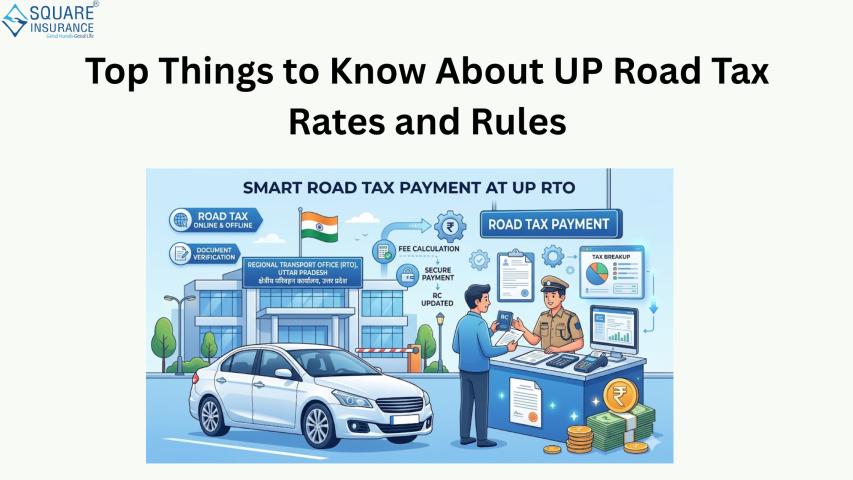
Vehicle owners can pay road tax through both online and offline methods.
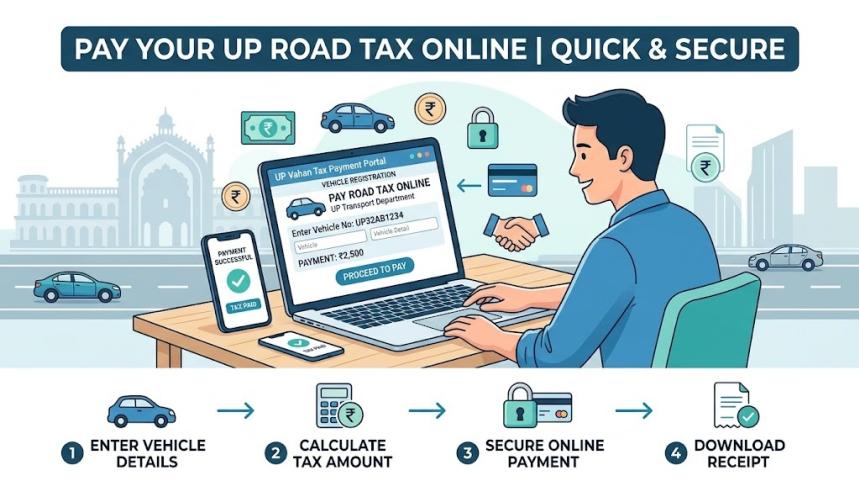
Online Payment Process:
- Visit the official transport portal of Uttar Pradesh
- Enter vehicle registration details
- Select tax payment option
- Pay using net banking, UPI, or debit card
- Download the receipt
Offline Payment Process:
- Visit the nearest Regional Transport Office (RTO)
- Fill out the required forms
- Submit documents
- Pay via cash, cheque, or demand draft
Important Rules Related to UP Road Tax
Understanding the rules can help you avoid legal complications.
1. Mandatory for All Vehicles
Every vehicle operating in Uttar Pradesh must pay road tax without exception.
2. One-Time Tax for Private Vehicles
Private vehicle owners typically pay tax only once during registration.
3. Timely Payment is Crucial
Delayed payment can lead to penalties and interest charges.
4. Re-registration Rule
Vehicles from other states must be re-registered if used in UP for more than a year.
5. No Tax, No Road Access
Driving without paying road tax is illegal and punishable under motor vehicle laws.
Penalties for Non-Payment
If you fail to pay UP road tax, you may face:
- Heavy fines
- Interest on pending tax
- Legal action
- Vehicle seizure in extreme cases
The penalty amount depends on the duration of delay and type of vehicle.
Exemptions and Concessions
Certain categories of vehicle owners may receive tax benefits:
- Government vehicles
- Ambulances
- Electric vehicles
- Vehicles used for agricultural purposes
These exemptions are subject to state policies and eligibility criteria.
Documents Required for Road Tax Payment
To pay road tax, you typically need:
- Vehicle Registration Certificate (RC)
- Invoice of the vehicle
- Identity proof
- Address proof
- Insurance documents
For re-registration cases, additional documents may be required.
Tips to Manage UP Road Tax Efficiently
- Always verify tax rates before purchasing a vehicle
- Keep digital copies of tax receipts
- Set reminders for periodic payments (for commercial vehicles)
- Check eligibility for exemptions or refunds
- Ensure proper documentation during interstate transfers
Frequently Asked Questions (FAQs)
Q1. Is UP road tax a one-time payment?
Yes, for private vehicles, it is usually a one-time payment made during registration. Commercial vehicles pay it periodically.
Q2. Can I get a refund on UP road tax?
Refunds are possible if you transfer your vehicle to another state, but conditions apply.
Q3. Are electric vehicles exempt from road tax in UP?
Yes, electric vehicles often receive full or partial exemptions as per current state policies.
Q4. What happens if I don’t pay road tax on time?
You may face penalties, interest charges, or legal consequences.
Q5. How can I check my road tax status?
You can check it online through the state transport portal using your vehicle registration number.
Conclusion
Understanding how UP road tax works is essential for every vehicle owner to ensure legal compliance and financial planning. From tax structure to payment methods and exemptions, being informed helps you avoid penalties and make smarter decisions when purchasing or using a vehicle.
To make the process even smoother, you can rely on Square Insurance for complete assistance, from vehicle insurance to policy management, ensuring that your vehicle stays protected while you stay compliant with regulations.
Please Note: Manage your policies easily with Square Insurance POS Apps on Google Play online anytime, anywhere.