A few years ago, AI tools were mostly about writing text, answering questions, or generating code snippets. Fast forward to today, and the landscape looks very different. We’re now entering an era where AI doesn’t just assist—it collaborates.
One of the most talked-about names in this space is Claude Cowork, a concept (and in some contexts, tool experiences built around Anthropic’s Claude models) that focuses on AI-assisted productivity and collaboration inside workflows. It’s designed to feel less like a chatbot and more like a co-worker sitting beside you helping you think, write, plan, and build.
But as the AI ecosystem expands rapidly, many users and teams are actively searching for Claude Cowork alternatives tools that either match its capabilities or go beyond it in areas like autonomy, integrations, reasoning, or enterprise readiness.
And the interesting part? There isn’t just one replacement. There’s an entire generation of AI systems redefining what “AI coworking” actually means.
Why People Are Searching for Claude Cowork Alternatives
The demand for alternatives isn’t necessarily about dissatisfaction. It’s about evolution.
Modern users especially developers, marketers, analysts, and enterprise teams are realizing that no single AI tool can perfectly fit every workflow. Claude Cowork->
Some users want deeper integration with tools like Slack, Notion, or Jira. Others want more autonomous agents that don’t just respond but actually execute tasks. And many enterprises are looking for solutions that can scale across teams with governance, security, and data control.
This gap between “AI assistant” and “AI worker” is exactly where alternatives are emerging.
The Shift From AI Chatbots to AI Workspaces
To understand Claude Cowork alternatives, it helps to understand the bigger shift happening in AI.
We are no longer just interacting with chatbots. We are moving toward AI workspaces—systems where AI can:
- Understand context across multiple documents
- Remember ongoing tasks
- Collaborate with humans in real time
- Connect with external tools and APIs
- Execute workflows instead of just suggesting them
Claude->
In simple terms, AI is moving from being a “thinking partner” to becoming a “doing partner.”
What Makes a Good Claude Cowork Alternative?
Before exploring tools, it’s important to define what users actually expect from an alternative.
A strong Claude Cowork alternative usually offers more than just good language generation. It needs to support real productivity workflows.
Users typically look for:
- Strong reasoning ability for complex tasks
- Long context memory for ongoing work
- Integration with external tools and platforms
- Ability to handle multi-step workflows
- Reliability in professional or enterprise environments
- Fast response times with consistent output quality
But beyond technical capabilities, there’s also a growing expectation: the AI should feel like a true collaborator, not just a reactive tool.
The Rise of Multi-Model AI Assistants
One of the most interesting trends in Claude Cowork alternatives is the rise of multi-model systems.
Instead of relying on a single AI model, these platforms combine different models for different tasks. One model might handle reasoning, another might focus on creativity, and another might optimize for speed or coding accuracy.
This hybrid approach allows users to get more balanced performance depending on what they are doing.
For example, a writer might use one model for ideation, another for editing tone, and another for fact structuring—all inside the same workspace.
This flexibility is becoming a major advantage over single-model coworking tools.
AI Tools Focused on Developer Productivity
A large portion of users searching for Claude Cowork alternatives are developers or technical teams.
For them, AI coworking isn’t just about writing text it’s about writing, debugging, and deploying code.
Modern developer-focused AI tools now offer:
- Code generation with context awareness
- Debugging across entire repositories
- Automated test generation
- API integration assistance
- Real-time pair programming experiences
Some tools even go beyond assistance and act like semi-autonomous engineering agents that can fix bugs or suggest architecture improvements.
This is where Claude Cowork alternatives start to feel less like chat tools and more like engineering collaborators.
Enterprise AI Workspaces: The Real Competition
In enterprise environments, Claude Cowork alternatives are evolving into full AI ecosystems.
Businesses are no longer asking, “Which AI writes better?” Instead, they are asking:
“How can AI improve our entire workflow?”
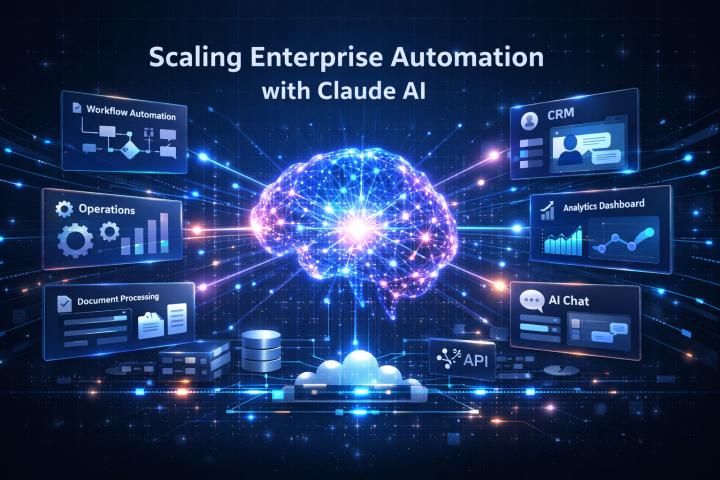
Enterprise-grade AI platforms are now focusing on:
- Secure data handling
- Role-based access control
- Workflow automation
- Integration with internal systems
- Compliance and auditability
- Scalable AI deployment across departments
This is where AI coworking becomes serious business infrastructure.
Instead of a single AI assistant, enterprises are deploying entire AI systems that support HR, finance, engineering, marketing, and customer support simultaneously.
Claude Cowork->
The Growing Popularity of AI Agent-Based Systems
Perhaps the biggest shift in Claude Cowork alternatives is the rise of AI agents.
Unlike traditional assistants, AI agents can:
- Break tasks into steps
- Use external tools
- Make decisions
- Execute workflows independently
- Learn from feedback
This means instead of asking AI to “help write a report,” you can assign it the goal of “generate, analyze, and format a business report using the latest data,” and it will handle the process end-to-end.
This agent-based model is becoming one of the strongest competitors to traditional coworking AI systems.
It represents a future where AI is not just part of the workflow—it is the workflow.
Limitations of Current Claude Cowork Alternatives
Despite rapid progress, these alternatives are not perfect.
One of the biggest challenges is reliability. As AI systems become more autonomous, ensuring accuracy becomes harder. A small reasoning error can cascade into larger workflow issues.
Another limitation is integration complexity. While many tools claim to be “plug and play,” real enterprise environments require deep customization, which is still evolving.
There’s also the issue of trust. Businesses are still cautious about allowing AI systems to execute high-impact actions without human approval.
Finally, cost and infrastructure requirements can be a barrier, especially for smaller teams trying to adopt advanced AI coworking systems.
The Future of AI Coworking
Looking ahead, Claude Cowork alternatives are heading toward a much more powerful direction.
We are moving toward AI systems that don’t just assist but actively participate in work across multiple domains. The distinction between “user” and “AI coworker” will gradually blur.
Future AI workspaces will likely include:
- Persistent memory across projects
- Fully autonomous task execution
- Real-time collaboration between multiple AI agents
- Deep integration with enterprise systems
- Context-aware decision-making capabilities
Instead of switching between tools, users will operate inside AI-native environments where everything is connected and intelligent by default.
Final Thoughts
The search for Claude Cowork alternatives is really a reflection of how fast AI is evolving.
Users are no longer satisfied with simple conversational assistants. They want intelligent systems that can think, plan, execute, and collaborate across real workflows.
While Claude Cowork introduced a strong foundation for AI collaboration, the ecosystem around it is expanding quickly with tools focused on autonomy, integration, and enterprise-scale intelligence.
The future won’t belong to a single AI coworking tool it will belong to ecosystems of AI systems working together seamlessly across every layer of digital work.
And for users and businesses alike, the real opportunity lies not just in choosing an alternative, but in redefining how AI becomes part of everyday work itself.