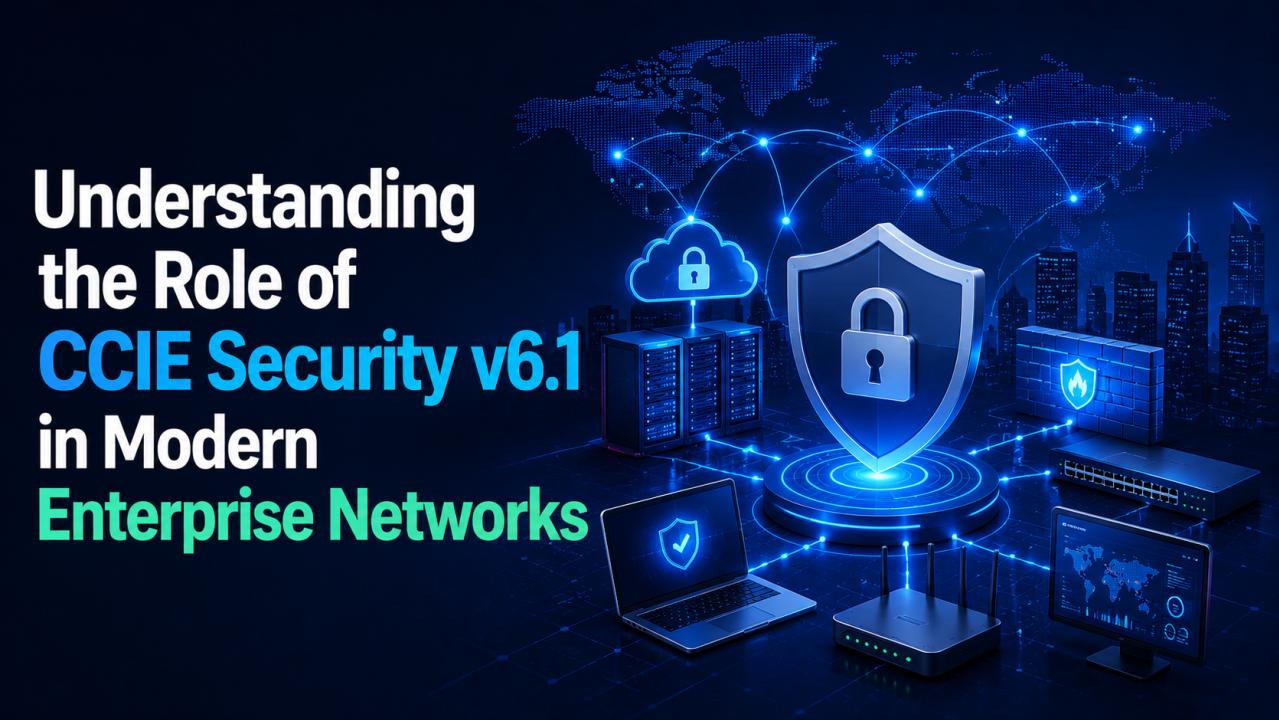

Enterprise networks today operate in highly dynamic environments shaped by cloud computing, remote access, hybrid infrastructure, and rapidly evolving cyber threats. As organizations scale their digital operations, securing complex network architectures has become a top priority. CCIE Security v6.1 represents one of the most advanced frameworks for understanding and implementing enterprise-grade cybersecurity solutions.
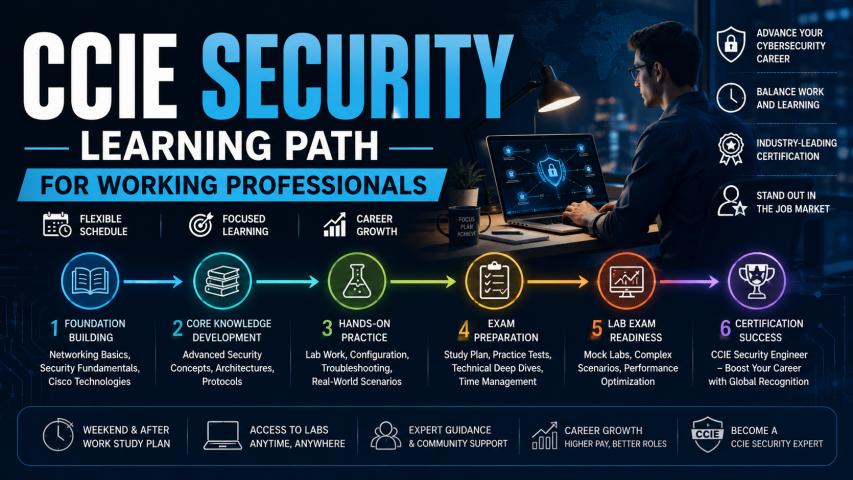
Many professionals begin strengthening their expertise through structured CCIE Security Training, which helps them understand how enterprise security systems are designed, deployed, and managed in real-world environments.
What Is CCIE Security v6.1?
CCIE Security v6.1 is an advanced-level networking and cybersecurity framework focused on securing enterprise infrastructures through in-depth technical knowledge and architectural design principles. It is considered one of the most comprehensive security certifications in the networking field.
Core Objective of CCIE Security v6.1
The main goal of CCIE Security v6.1 is to validate advanced skills in:
Designing secure enterprise networks
Implementing threat prevention mechanisms
Managing identity and access control systems
Securing network infrastructure and services
Handling complex security architectures
Why CCIE Security Is Crucial for Enterprise Network Security
Modern enterprises face a continuously expanding attack surface due to digital transformation, cloud adoption, and remote work environments.
Increasing Network Complexity
Enterprise environments now include:
Hybrid cloud deployments
Multi-site connectivity
Remote workforce access
IoT and connected devices
Third-party integrations
Each of these introduces additional security risks that require advanced expertise.
Rising Cyber Threat Landscape
Organizations must defend against evolving threats such as:
Ransomware attacks
Advanced persistent threats (APTs)
Phishing and credential theft
Insider threats
Zero-day vulnerabilities
Key Areas Included in CCIE Security v6.1
CCIE Security v6.1 covers multiple critical areas of enterprise cybersecurity.
Secure Network Infrastructure Design
This domain focuses on building resilient and secure network architectures.
Key Elements
Secure routing and switching
Network segmentation strategies
Secure communication protocols
Perimeter security design
Identity and Access Management Systems
Identity security is a foundational aspect of enterprise protection.
Core Concepts
User authentication mechanisms
Role-based access control
Policy enforcement frameworks
Identity lifecycle management
VPN and Secure Connectivity Solutions
Secure communication between users and enterprise systems is essential.
Technologies Included
IPsec VPN architectures
SSL VPN solutions
Secure site-to-site connectivity
Remote access security models
Security Automation and Policy Enforcement
Automation helps organizations improve efficiency and reduce human error.
Focus Areas
Automated security policy enforcement
Real-time threat detection systems
Security orchestration processes
Log monitoring and analysis
Role of CCIE Security in Modern Enterprise Architecture
CCIE Security principles are widely applied in real enterprise environments.
Strengthening Security Architecture
Organizations rely on advanced security designs to protect:
Sensitive business data
Customer information
Cloud workloads
Internal communication systems
Supporting Cloud and Hybrid Environments
With the adoption of hybrid models, security needs to adapt to new requirements.
Key Security Requirements
Cloud access security
Data encryption across environments
Identity-based access control
Secure workload management
Real-World Applications of CCIE Security
CCIE Security concepts are implemented across various enterprise use cases.
Data Center Protection
Data centers require robust security controls to protect critical systems and applications.
Remote Workforce Security
Remote users must securely access enterprise resources from different locations and devices.
Cloud Security Management
Security frameworks help ensure safe usage of cloud platforms and services.
Challenges in Enterprise Network Security
Despite advancements in security technologies, organizations still face significant challenges.
Expanding Attack Surface
The greater the use of digital systems, the more entry points attackers can exploit.
Complexity in Security Management
Managing security across multiple platforms can be difficult and resource-intensive.
Lack of Skilled Professionals
Many organizations face a shortage of professionals with advanced security expertise.
Importance of Continuous Monitoring
Ongoing monitoring is essential for detecting and responding to threats in real time.
CCIE Security and Its Future in Modern Enterprise Networking
The future of enterprise security is evolving with emerging technologies.
Artificial Intelligence in Security
AI is increasingly used for:
Threat detection
Behavior analysis
Automated response systems
Zero Trust Security Models
Zero Trust operates on the principle that no user or device is trusted by default.
Core Principles
Continuous verification
Least privilege access
Micro-segmentation
Context-aware security policies
Security Automation Evolution
Future networks will rely heavily on automation for:
Threat detection
Incident response
Policy enforcement
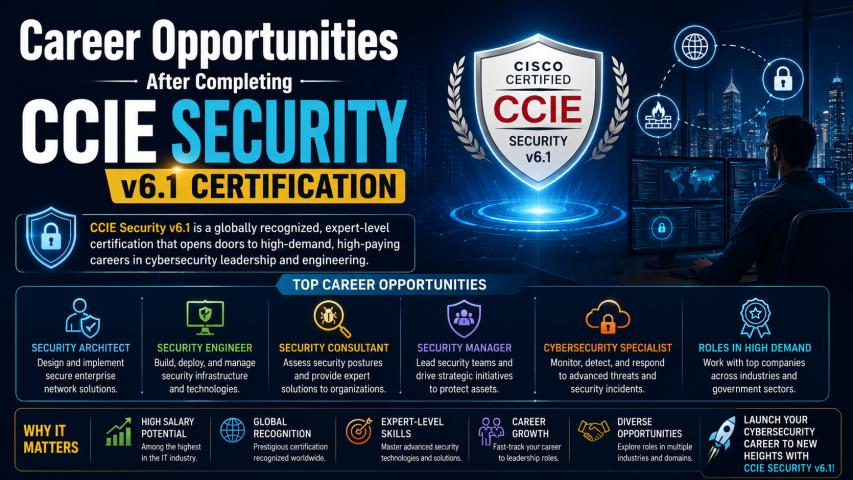
Career Value of CCIE Security Expertise
CCIE Security skills are highly valued in the cybersecurity and networking industry.
Common Career Roles
Network Security Engineer
Security Architect
SOC Analyst
Infrastructure Security Consultant
Industry Demand
Organizations across industries require skilled professionals to secure complex enterprise networks.
Importance of Practical Knowledge
Real-world experience is essential for applying CCIE Security concepts effectively in production environments.
Conclusion
CCIE Security v6.1 plays a crucial role in modern enterprise networking by providing advanced knowledge in secure architecture design, identity management, threat protection, and network defense strategies. As organizations continue to evolve their digital infrastructure, professionals with expertise in CCIE Security are essential for building secure, scalable, and resilient enterprise networks capable of withstanding modern cyber threats.