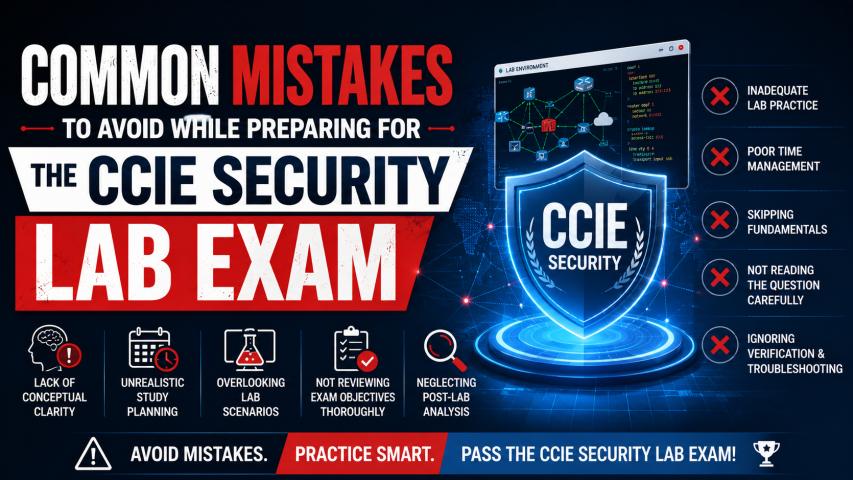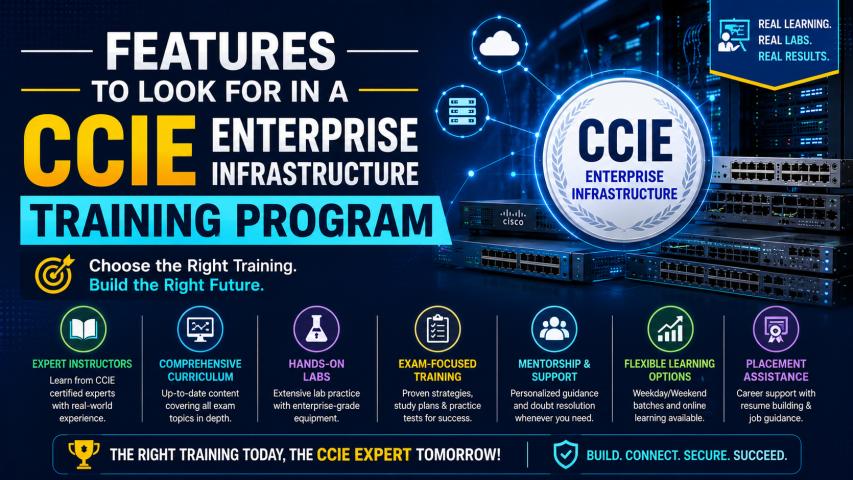

Modern cybersecurity has become a critical requirement for organizations operating in increasingly complex digital environments. With enterprises adopting cloud computing, remote work models, and interconnected systems, the need for advanced network security expertise has never been greater. CCIE Security represents one of the highest levels of technical knowledge in enterprise network protection and is widely associated with designing and managing secure infrastructures.
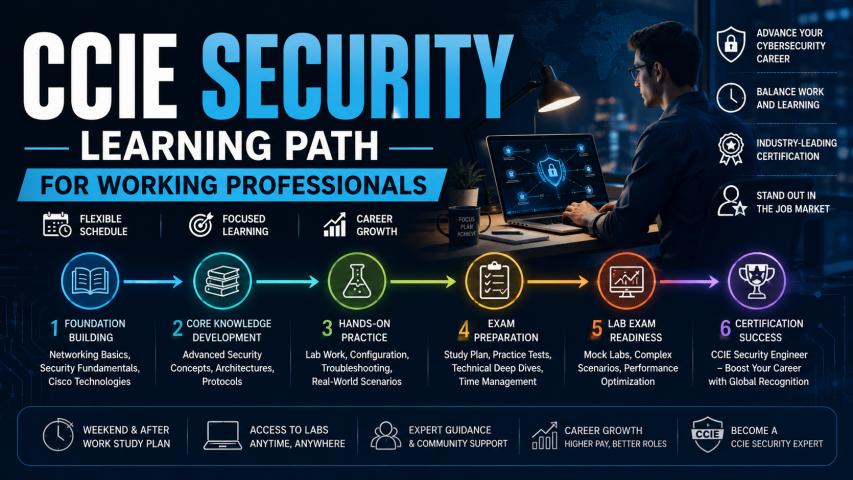
Many professionals explore CCIE Security Training to understand advanced security concepts, enterprise architecture, and real-world network defense strategies that are essential in today’s cybersecurity landscape.
Understanding CCIE Security
CCIE Security is an advanced-level networking certification framework focused on enterprise security technologies, architecture, and implementation. It validates deep technical expertise in securing large-scale networks and managing complex security environments.
Purpose of CCIE Security
The primary objective of CCIE Security is to equip professionals with the ability to:
Design secure enterprise network architectures
Implement advanced security controls
Manage identity and access systems
Protect infrastructure from cyber threats
Ensure secure communication across networks
Why CCIE Security Is Critical for Modern Cybersecurity
Cybersecurity threats have evolved significantly, targeting enterprises with sophisticated and persistent attacks. CCIE Security plays a crucial role in addressing these challenges by providing advanced knowledge of security systems and defense mechanisms.
Increasing Complexity of Enterprise Networks
Modern enterprises operate in highly distributed environments that include:
Cloud platforms
Hybrid data centers
Remote work infrastructure
IoT-connected systems
Third-party integrations
Each of these components introduces potential vulnerabilities that must be secured.
Rising Cyber Threat Landscape
Organizations face a wide range of threats, including:
Ransomware attacks
Phishing and social engineering
Insider threats
Advanced persistent threats (APTs)
Zero-day exploits
Core Areas Covered in CCIE Security
CCIE Security covers multiple domains essential for enterprise-grade cybersecurity.
Network Security Infrastructure
This area focuses on designing secure and resilient enterprise networks.
Key Concepts
Secure routing and switching
Firewall deployment strategies
Network segmentation
Secure communication protocols
Identity and Access Management
Identity security is a foundational component of enterprise protection.
Focus Areas
Authentication mechanisms
Authorization policies
Role-based access control
Identity lifecycle management
VPN and Secure Connectivity
Secure remote access is critical in modern enterprise environments.
Technologies Included
IPsec VPNs
SSL VPNs
Site-to-site connectivity
Remote access security
Security Automation and Monitoring
Automation enhances efficiency and improves threat detection.
Key Functions
Real-time monitoring
Automated threat response
Security policy enforcement
Log correlation and analysis
How CCIE Security Supports Enterprise Environments
CCIE Security knowledge is widely applied in real-world enterprise systems.
Securing Enterprise Infrastructure
Organizations rely on advanced security frameworks to protect:
Sensitive data
Business applications
Internal communication systems
Cloud workloads
Supporting Digital Transformation
As enterprises adopt modern technologies, security must evolve accordingly.
Key Areas Impacted
Cloud security integration
Remote workforce protection
Application security
Data protection strategies
Real-World Applications of CCIE Security
CCIE Security concepts are implemented across various enterprise scenarios.
Data Center Security
Data centers require strong protection mechanisms to safeguard critical systems and applications.
Cloud Security Management
Security frameworks ensure safe deployment and operation of cloud services.
Remote Access Security
VPNs and identity systems enable secure access for remote users.
Challenges in Modern Cybersecurity
Despite advancements, organizations still face several security challenges.
Expanding Attack Surface
As organizations adopt more digital systems, the number of potential entry points for attackers increases.
Complexity of Hybrid Environments
Managing security across multiple environments increases operational difficulty.
Skill Shortages in Cybersecurity
Many organizations lack professionals with advanced security expertise.
Importance of Continuous Monitoring
Continuous monitoring helps detect and respond to threats in real time.
Future of CCIE Security in Cybersecurity
CCIE Security continues to evolve alongside emerging technologies.
Artificial Intelligence in Security
AI is increasingly used for:
Threat detection
Behavioral analysis
Automated incident response
Zero Trust Security Model
The core principle of Zero Trust is that all users and devices must be verified before being trusted.
Core Principles
Continuous verification
Least privilege access
Micro-segmentation
Context-aware policies
Security Automation Trends
Future networks will rely heavily on automation for:
Threat detection
Policy enforcement
Incident response
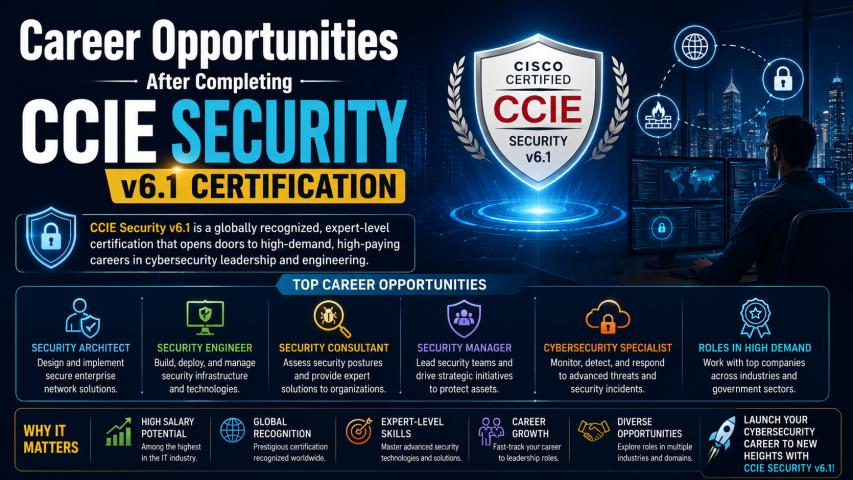
Career Relevance of CCIE Security
CCIE Security skills are highly valued in the cybersecurity industry.
Common Career Roles
Network Security Engineer
Security Architect
SOC Analyst
Cybersecurity Consultant
Industry Demand
Organizations across industries require skilled professionals to secure complex enterprise environments.
Importance of Practical Knowledge
Hands-on experience is essential for applying CCIE Security concepts effectively in real-world systems.
Conclusion
CCIE Security plays a vital role in modern cybersecurity by providing advanced knowledge in secure network design, identity management, and threat protection strategies. As organizations continue to evolve their digital ecosystems, professionals with expertise in CCIE Security are essential for building and maintaining secure, scalable, and resilient enterprise networks.