
Modern enterprises rely heavily on strong and scalable network infrastructures to support communication, cloud applications, remote work, and business operations. As organizations continue adopting digital transformation strategies, wireless networking and enterprise network design have become essential components of business connectivity. A well-designed enterprise network improves operational efficiency, enhances security, and supports seamless user experiences across distributed environments.
Businesses today require reliable network architectures capable of handling increasing data traffic, mobile devices, cloud services, and evolving cybersecurity challenges. Professionals seeking expertise in advanced enterprise networking often pursue certifications such as CCIE Enterprise Infrastructure to strengthen their understanding of enterprise design principles and modern networking technologies.
Wireless networking and enterprise network design principles help organizations build infrastructures that are scalable, secure, resilient, and capable of supporting long-term business growth. Understanding these technologies is important for both enterprises and networking professionals managing modern digital environments.
Understanding Enterprise Network Design
Computer Networking design refers to the process of planning, implementing, and managing network infrastructures that support enterprise operations. A properly designed network ensures efficient communication between users, devices, applications, cloud platforms, and branch offices.
Enterprise network design focuses on:
Scalability
Performance optimization
Security
Reliability
High availability
Simplified management
Modern enterprise environments require flexible architectures capable of adapting to changing business requirements and technological advancements.
Importance of Wireless Networking in Enterprises
Wireless networking has become a critical part of enterprise infrastructures because organizations increasingly rely on mobility, remote collaboration, and connected devices.
Benefits of Enterprise Wireless Networks
Enterprise wireless networks provide:
Flexible device connectivity
Improved employee mobility
Simplified infrastructure expansion
Support for remote and hybrid work
Enhanced collaboration capabilities
Wireless connectivity enables employees, guests, and IoT devices to access network resources without depending entirely on physical cabling.
Growing Demand for Wireless Connectivity
Modern enterprises support a large number of wireless devices, including:
Laptops
Smartphones
Tablets
Wireless printers
IoT devices
Collaboration tools
As wireless device usage grows, organizations must implement reliable wireless design strategies to maintain performance and security.
Core Principles of Enterprise Network Design
Successful enterprise networks follow several important design principles.
Scalability
Scalability allows networks to grow without requiring major infrastructure redesigns.
Why Scalability Matters
Scalable infrastructures support:
Business expansion
Increased user demands
Additional devices
Cloud integration
New applications
Organizations that design scalable networks can adapt more easily to future operational needs.
High Availability
Enterprise networks must remain operational even during hardware failures or connectivity disruptions.
Redundancy in Enterprise Networks
Redundant systems help minimize downtime and maintain service continuity.
Common redundancy methods include:
Backup links
Redundant devices
Failover routing
Load balancing
Disaster Recovery Planning
Disaster recovery strategies help organizations restore operations quickly during unexpected failures.
Network Segmentation
Network segmentation divides enterprise infrastructures into smaller logical sections.
Benefits of Segmentation
Segmentation improves:
Security
Traffic management
Performance optimization
Access control
VLAN Technologies
Virtual Local Area Networks separate devices into isolated network groups to reduce broadcast traffic and improve operational efficiency.
Wireless LAN Design Principles
Wireless LAN design focuses on delivering reliable and secure wireless connectivity across enterprise environments.
Wireless Coverage Planning
Proper wireless coverage ensures users receive stable connectivity throughout enterprise facilities.
Factors Affecting Wireless Coverage
Coverage quality depends on:
Building materials
Device density
Interference sources
Access point placement
Site Surveys
Wireless site surveys help organizations identify optimal access point locations and signal coverage requirements.
Capacity Planning
Wireless networks must support increasing numbers of users and connected devices.
Importance of Capacity Planning
Capacity planning helps prevent:
Network congestion
Performance degradation
Connectivity instability
Enterprise environments require sufficient bandwidth and wireless resources to support growing operational demands.
Wireless Security Principles
Wireless security is essential for protecting enterprise infrastructures from unauthorized access and cyber threats.
Authentication and Access Control
Authentication systems verify users and devices before granting network access.
Common Wireless Security Mechanisms
Enterprise wireless networks often use:
WPA3 security
Identity-based authentication
Guest network isolation
Access control policies
Secure Network Segmentation
Segmentation limits unauthorized movement across enterprise infrastructures and strengthens overall security posture.
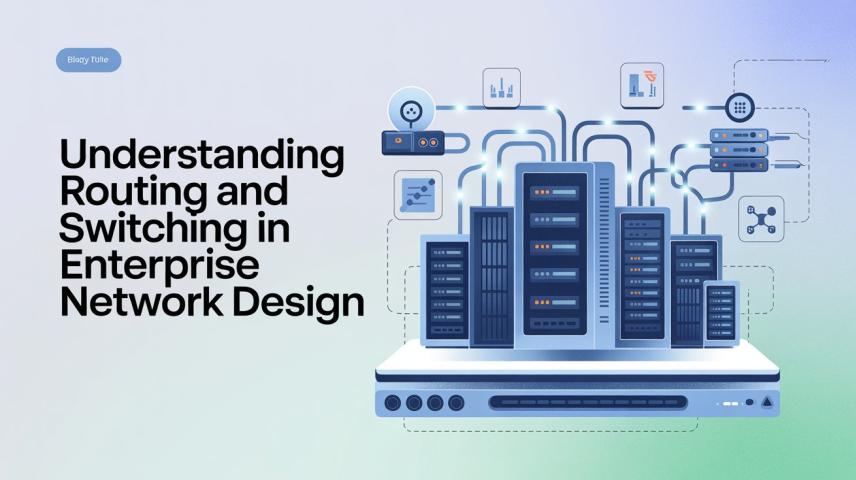
Role of Routing and Switching in Enterprise Design
Routing and switching technologies form the foundation of enterprise connectivity.
Routing Technologies
Routing enables communication between different networks and locations.
Dynamic Routing Protocols
Enterprise networks commonly use protocols such as:
OSPF
EIGRP
BGP
IS-IS
These protocols help optimize traffic flow and improve network scalability.
Switching Technologies
Switches connect devices within local networks and improve communication efficiency.
Layer 2 and Layer 3 Switching
Layer 2 switching supports local traffic forwarding, while Layer 3 switching enables inter-network communication and routing functions.
Software-Defined Networking in Enterprise Architectures
Software-Defined Networking is transforming modern enterprise infrastructures.
Centralized Network Management
Software-defined networking separates the control plane from the forwarding plane to simplify administration and automation.
Benefits of Software-Defined Networking
Organizations adopt SDN because it offers:
Centralized visibility
Faster provisioning
Simplified operations
Enhanced automation
Improved scalability
Automation in Enterprise Networks
Automation has become increasingly important in managing modern enterprise environments.
Benefits of Network Automation
Automation helps organizations:
Reduce manual configuration errors
Improve operational efficiency
Accelerate deployments
Standardize configurations
Common Automation Technologies
Enterprise engineers often use:
Python scripting
APIs
Configuration management tools
Infrastructure as Code
Automation simplifies repetitive operational tasks and improves network consistency.
Cloud Integration and Hybrid Networking
Cloud computing continues influencing enterprise network design strategies.
Hybrid Cloud Architectures
Many organizations combine on-premises infrastructures with cloud environments.
Benefits of Hybrid Networking
Hybrid architectures provide:
Greater flexibility
Improved scalability
Business continuity
Optimized resource usage
Multi-Cloud Connectivity
Enterprises increasingly use multiple cloud platforms to support distributed workloads and applications.
Wireless Mobility and Roaming
Enterprise wireless environments must support seamless mobility.
Seamless User Connectivity
Wireless roaming allows users to move throughout enterprise facilities without losing network connectivity.
Mobility Challenges
Organizations must address:
Signal interference
Coverage gaps
Device density
Performance optimization
Proper wireless design helps maintain reliable user experiences across enterprise environments.
Monitoring and Network Visibility
Continuous monitoring is essential for maintaining enterprise network performance and stability.
Network Monitoring Tools
Monitoring platforms provide visibility into:
Traffic patterns
Device health
Application performance
Security events
Real-Time Analytics
Real-time analytics help organizations detect issues proactively and optimize network operations.
Challenges in Enterprise Wireless and Network Design
Enterprise infrastructures face several design and operational challenges.
Increasing Device Density
Modern workplaces support large numbers of connected devices, increasing bandwidth and management requirements.
Security Risks
Wireless environments are vulnerable to unauthorized access, malware, and cyber threats.
Infrastructure Complexity
Cloud integration, remote work, and distributed architectures increase operational complexity.
Performance Optimization
Organizations must continuously optimize networks to support application performance and user experience.
Best Practices for Enterprise Wireless and Network Design
Successful enterprise infrastructures follow several best practices.
Conduct Proper Planning
Comprehensive planning helps organizations identify business requirements and technical objectives.
Implement Redundancy
Redundant architectures improve reliability and minimize downtime risks.
Prioritize Security
Security should be integrated into all aspects of network and wireless design.
Monitor Continuously
Ongoing monitoring helps identify operational issues before they impact users and business operations.
Future Trends in Enterprise Networking
Enterprise network technologies continue evolving rapidly.
Future trends may include:
AI-driven network management
Intent-based networking
Advanced wireless standards
Greater automation
Cloud-native architectures
Intelligent analytics platforms
Organizations adopting modern networking technologies can improve operational agility and long-term scalability.
Career Opportunities in Enterprise Networking
Professionals skilled in enterprise wireless and network design may pursue roles such as:
Enterprise Network Engineer
Wireless Network Specialist
Infrastructure Architect
Network Automation Engineer
Cloud Network Engineer
Security Network Engineer
As enterprise infrastructures continue evolving, networking expertise remains highly valuable across industries.
Conclusion
Wireless networking and enterprise network design principles are essential for building secure, scalable, and high-performing business infrastructures. Technologies such as routing, switching, automation, cloud integration, and software-defined networking help organizations support modern operational requirements while improving connectivity and user experiences.
Understanding enterprise wireless and network design concepts enables businesses to build reliable infrastructures while helping networking professionals strengthen their technical expertise. As digital transformation continues accelerating, enterprise networking knowledge will remain critical for supporting modern business operations.
Professionals seeking advanced enterprise networking expertise often pursue certifications and structured CCIE Enterprise Training programs to develop practical skills, improve troubleshooting capabilities, and gain deeper knowledge of modern enterprise infrastructure technologies.