Introduction
A rooftop solar system can perform perfectly for years while the roof beneath it slowly develops problems that nobody notices at first. That’s how many commercial roof leaks begin.
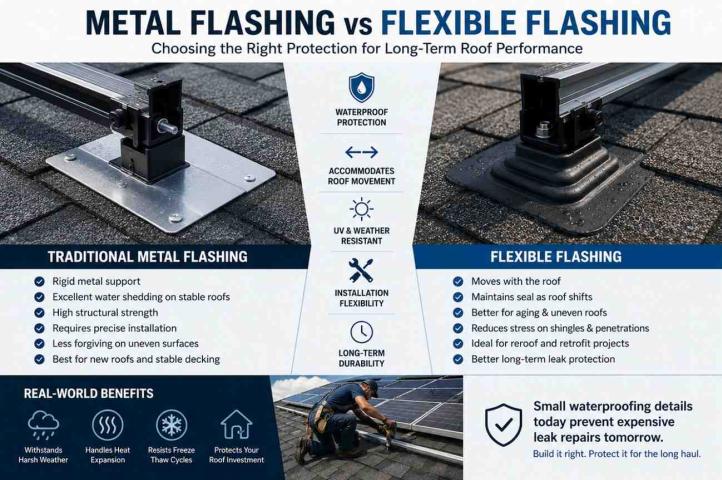
Meanwhile, small waterproofing failures begin to form around penetration details, flashing transitions, or stressed mounting points hidden beneath the array.
These issues develop gradually due to thermal movement, weather exposure, rooftop vibration, ponding water, and years of expansion cycles within the roof structure.
According to NRCA, roof penetrations remain among the most failure-prone areas of commercial roofing systems because they disrupt the waterproofing membrane and are constantly subjected to environmental stress.
This makes it essential to prioritize the most effective leak-proof solar mounting methods for modern commercial roofing projects, linking mounting choices directly to long-term roof performance.
Today, contractors are paying closer attention to how solar mounting systems interact with waterproofing assemblies, flashing assemblies, roof movement, and long-term maintenance requirements, not just how securely the modules attach to the roof structure.
Why Commercial Solar Roofs Start Leaking Over Time
Most commercial solar leaks do not start because the solar equipment fails.
The real issue usually develops beneath the mounting system.
Over time:
- Flashing joints begin separating
- Exposed sealants crack from UV exposure.
- Rooftop movement stresses penetration points
- Water works beneath the membrane
- Attachment areas loosen during expansion cycles
Commercial roofs constantly move throughout the year. Metal components expand during summer heat. Roofing membranes contract during colder temperatures. Wind uplift repeatedly stresses rooftop hardware during storms.
A mounting system must move with the roof rather than resist it.
When waterproofing systems cannot properly accommodate that movement, leaks eventually follow.
This becomes especially common on:
- Low-slope commercial roofs
- Large warehouse buildings
- Retrofit solar projects
- Aging reroof systems
- Facilities with heavy rooftop equipment
This makes it essential to prioritize waterproofing performance equally with attachment strength to prevent future leaks.
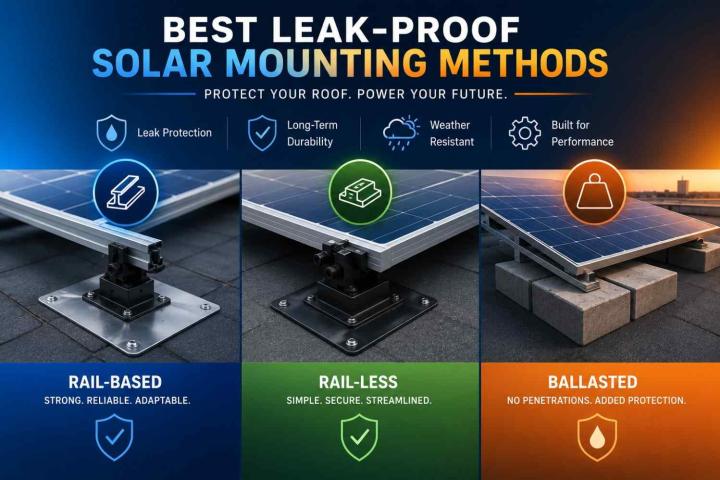
Rail-Based Solar Mounting Systems
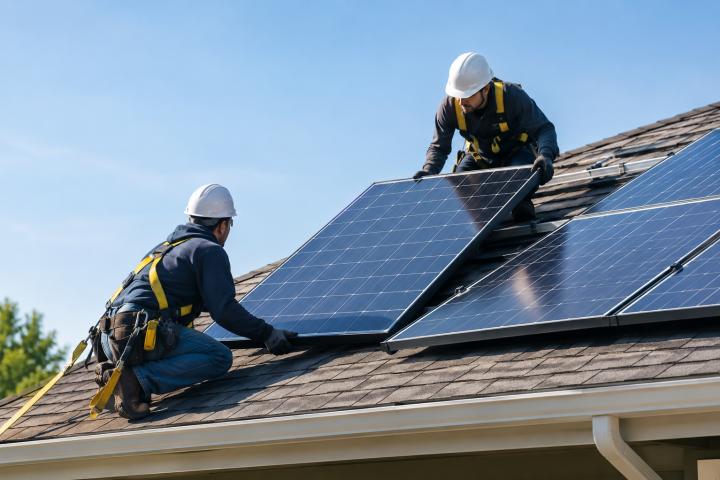
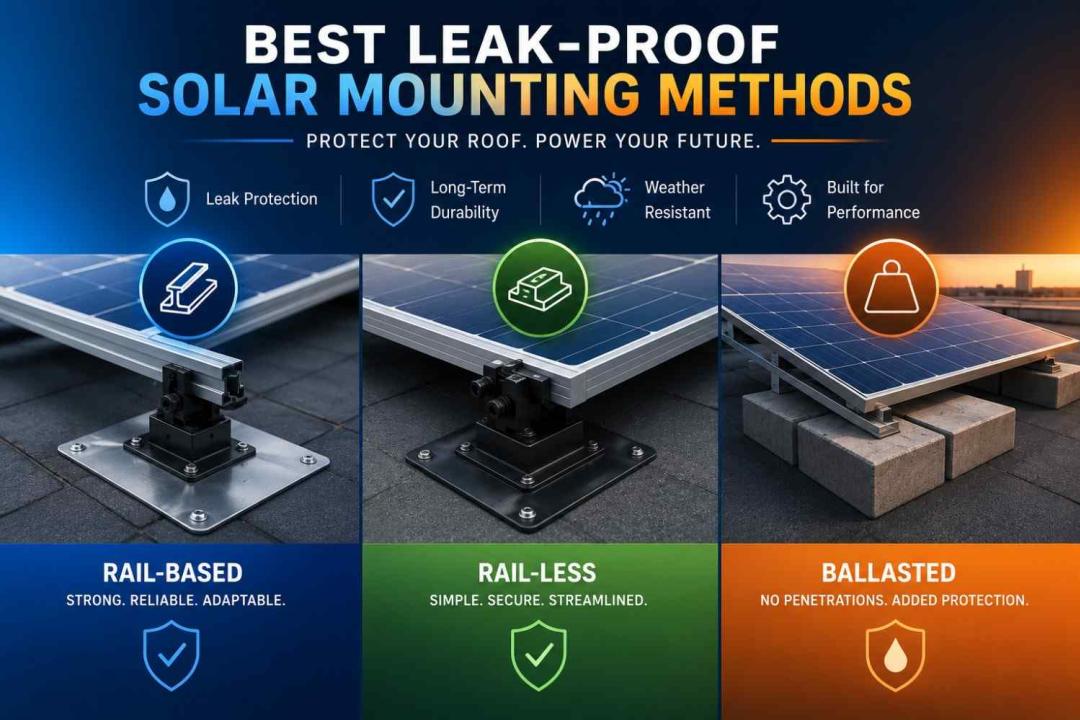
Traditional rail-based systems remain one of the most widely used mounting methods on commercial rooftops.
A properly engineered solar rail system helps distribute panel loads across the roof while improving array alignment and structural stability.
These systems work well because they provide:
- Consistent panel support
- Flexible layout options
- Strong load distribution
- Easier installation adjustments
But long-term waterproofing performance depends heavily on how the rail mounting system interfaces with the roof assembly below.
A common field issue involves unsupported rail sections that transfer movement stress directly into the penetration flashing beneath the mounting points.
Several seasons later, small flashing separations may begin, allowing moisture beneath the membrane system.
This becomes more noticeable on large commercial roofs, where thermal movement cycles repeatedly stress long rail assemblies.
Rail systems offer reliable performance when installed with proper flashing, compatible membranes, and well-spaced attachments, key factors for leak prevention.
Rail-Less Solar Mounting Systems
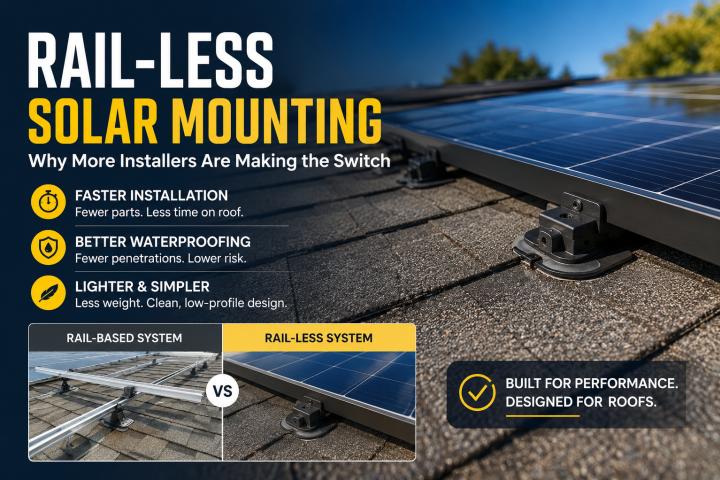
Rail-less systems changed how many contractors approach rooftop waterproofing.
Instead of relying on large, continuous rails, these systems reduce mounting hardware complexity and minimize unnecessary rooftop stress points.
Modern rail-less solar mounting systems can improve waterproofing performance by:
- Reducing attachment complexity
- minimizing stress transfer
- simplifying flashing layouts
- improving drainage flow
- Reducing rooftop hardware exposure
That becomes especially valuable on flat commercial roofs where ponding water and thermal movement already create difficult waterproofing conditions.
Fewer rooftop components also mean fewer long-term maintenance areas exposed to weather and movement cycles.
Selecting the right mounting method is important, but rigorous attention to flashing and waterproofing details is key for lasting leak prevention.
Even well-designed rail-less systems can eventually develop problems if flashing transitions are rushed or waterproofing details are ignored during installation.
Ballasted Mounting Systems
Ballasted solar systems avoid direct penetrations by using weighted supports instead of mechanical attachments.
At first glance, that seems like the safest waterproofing option for commercial roofs.
Sometimes it is.
But experienced roofing contractors know ballasted systems create different waterproofing concerns over time.
Common challenges include:
- Drainage obstruction
- Trapped debris
- Membrane abrasion
- Standing water buildup
- Movement during severe weather
On older commercial roofs, poor ballast placement can also create uneven pressure points that accelerate membrane wear beneath the array.
Therefore, contractors must consider how mounting systems impact drainage, membrane movement, and maintenance, not just the avoidance of penetrations.
The Best Leak-Proof Systems Usually Prioritize Waterproofing First
The strongest commercial solar projects are those in which roofing and solar teams coordinate before installation begins. That sounds simple, but it still gets overlooked on fast-moving projects.
In one reroofing project at a distribution facility, recurring leaks continued beneath a retrofit solar array several years after installation. The original system relied heavily on exposed sealant around flashing transitions, while several rail supports transferred stress directly into the membrane assembly. The solar panels themselves continued operating normally.
The actual failure occurred beneath the array, where waterproofing details slowly separated over years of expansion cycles and freeze-thaw cycles.
Once the mounting layout was rebuilt with improved flashing integration and optimized spacing between mounting attachments, the recurring leaks finally stopped. Situations like this are more common than many building owners realize.
Conclusion
The best leak-proof solar mounting methods are not necessarily the systems with the fewest penetrations or the heaviest hardware.
The best systems are usually those designed from the beginning for long-term waterproofing performance.
Commercial roofs constantly expand, contract, shift, and absorb weather stress throughout the year. Any mounting system that ignores those realities eventually places pressure on the waterproofing layer underneath the array.
Long-term leak prevention requires mounting systems that adapt to changing roof conditions rather than work against them. Because years later, most rooftop solar leaks are not caused by the panels themselves.
The majority of leaks originate in overlooked waterproofing details during installation; addressing these is crucial for leak-proof performance.