The growing complexity of cyberattacks has increased the demand for qualified cybersecurity professionals across industries. Professionals seeking advanced expertise in enterprise security often consider CCIE Security Training as a strategic step toward mastering modern security technologies.
The CCIE Security certification is recognized globally for validating advanced skills in designing, implementing, managing, and troubleshooting complex security infrastructures. For networking and cybersecurity professionals, earning this certification can open doors to senior-level roles and specialized career opportunities.
What Is CCIE Security Certification?
The Cisco Certified Internetwork Expert (CCIE) Security certification is one of the highest-level credentials offered by Cisco. It validates a professional’s ability to secure complex enterprise environments using advanced technologies and best practices.
The certification focuses on real-world security scenarios involving network protection, threat detection, access control, secure connectivity, automation, and policy enforcement.
Organizations across industries rely on certified experts to build resilient security architectures that safeguard critical assets and ensure business continuity.
Why Pursue CCIE Security in 2026?
As digital transformation accelerates, organizations continue to invest heavily in cybersecurity solutions. As organizations embrace cloud technologies, hybrid workplaces, and IoT devices, their exposure to cybersecurity threats continues to grow.
Growing Demand for Cybersecurity Experts
Cybersecurity remains one of the fastest-growing sectors in the technology industry. Organizations require professionals who can manage sophisticated security infrastructures and respond effectively to evolving threats.
Advanced Technical Expertise
The certification provides in-depth knowledge of enterprise security technologies, helping professionals develop practical skills applicable to complex network environments.
Career Advancement Opportunities
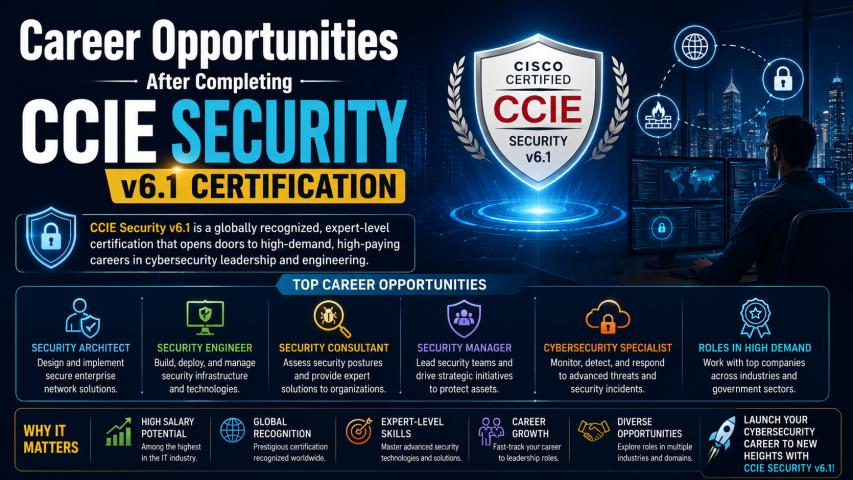
Professionals holding advanced security certifications often qualify for leadership and specialized technical positions, including:
Security Engineer
Network Security Architect
Security Consultant
Security Operations Lead
Cybersecurity Specialist
Infrastructure Security Engineer
Understanding the CCIE Security Certification Structure
Cisco has simplified the certification process by dividing it into two primary components.
Qualifying Written Exam
Candidates must first pass the CCIE Security written examination, which evaluates theoretical knowledge across multiple security domains.
The exam covers:
Security concepts
Network security
Cloud security
Secure network access
Threat detection and analysis
Automation and programmability
CCIE Security Lab Exam
After passing the written exam, candidates become eligible for the hands-on lab examination.
The lab examination assesses a candidate’s capability to:
Configure enterprise security solutions
Troubleshoot security issues
Implement secure network architectures
Manage advanced security technologies
Integrate multiple security platforms
The practical nature of the lab exam makes thorough preparation essential.
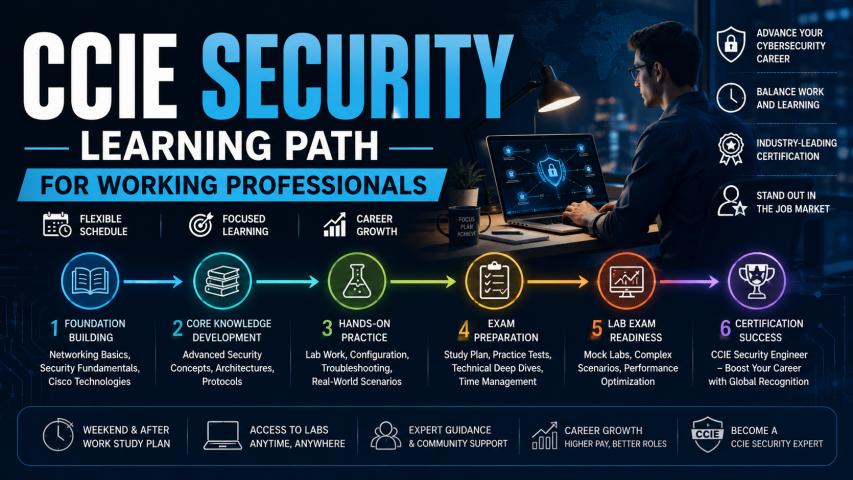
CCIE Security Roadmap for 2026
Step 1: Build Strong Networking Fundamentals
Before beginning CCIE Security preparation, candidates should possess a solid understanding of networking concepts.
Important topics include:
TCP/IP
Routing and switching
VLANs
OSPF
BGP
Network services
Enterprise architectures
Strong networking knowledge creates a foundation for advanced security concepts.
Step 2: Gain Security Knowledge
A comprehensive understanding of security fundamentals is crucial.
Focus on learning:
Security policies
Risk management
Encryption technologies
Identity management
Access control
Threat mitigation
Security monitoring
These concepts serve as building blocks for advanced security implementations.
Step 3: Develop Hands-On Experience
Practical experience is one of the most important components of CCIE Security preparation.
Candidates should regularly practice:
Firewall configuration
VPN deployment
Identity services
Security policy implementation
Secure access control
Threat prevention mechanisms
Hands-on learning helps reinforce theoretical knowledge and improves troubleshooting skills.
Step 4: Enroll in Structured Training
Many professionals choose formal training programs to streamline their preparation journey.
A quality training program typically includes:
Instructor-led sessions
Practical lab exercises
Mock exams
Real-world security scenarios
Expert guidance
Structured learning often helps candidates stay focused and organized throughout their preparation.
Step 5: Master Automation and Programmability
Modern enterprise security environments increasingly rely on automation.
Candidates should familiarize themselves with:
APIs
Python scripting
Security automation workflows
Network programmability
Infrastructure management tools
Automation skills are becoming increasingly important in enterprise cybersecurity operations.
Step 6: Prepare for the Lab Examination
The lab exam requires significant preparation and practical expertise.
Successful candidates typically:
Practice regularly in lab environments
Build troubleshooting skills
Simulate real-world scenarios
Review security design principles
Analyze complex network architectures
Consistent practice often contributes significantly to exam readiness.
Key Technologies Covered in CCIE Security
Network Security
Network security remains a core component of the certification.
Topics include:
Secure network design
Traffic filtering
Threat prevention
Security policy enforcement
Firewall Technologies
Firewalls play a critical role in protecting enterprise environments.
Candidates learn:
Firewall deployment
Policy management
Access control
Traffic inspection
Virtual Private Networks (VPNs)
Secure connectivity remains essential for modern organizations.
VPN-related topics include:
IPsec VPNs
Remote access VPNs
Site-to-site VPNs
Secure communications
Identity and Access Management
Identity-based security has become increasingly important.
Coverage includes:
Authentication
Authorization
Accounting
Identity policies
User access management
Cloud Security
As organizations move workloads to the cloud, cloud security skills have become critical.
Topics include:
Hybrid cloud security
Cloud access controls
Security policies
Secure application access
Security Automation
Automation technologies help organizations improve operational efficiency.
Candidates explore:
Automated security workflows
Policy automation
Programmability
Security orchestration
Effective Study Strategy for CCIE Security
Create a Realistic Study Schedule
A structured study plan helps maintain consistency throughout preparation.
Allocate time for:
Theory review
Lab practice
Mock exams
Troubleshooting exercises
Focus on Practical Learning
Hands-on practice should be a major component of preparation.
Building and troubleshooting security environments helps improve confidence and technical proficiency.
Use Official Learning Resources
Candidates should rely on trusted study materials, including:
Official Cisco documentation
Certification guides
Lab workbooks
Practice exams
Join Professional Communities
Participating in networking and cybersecurity communities provides valuable opportunities for knowledge sharing and professional growth.
Discussion forums and study groups often help candidates gain insights into challenging concepts.
Common Challenges During CCIE Security Preparation
Vast Technical Scope
The certification covers multiple advanced technologies, making effective planning essential.
Time Management
Balancing work responsibilities and exam preparation can be difficult for many professionals.
Lab Exam Complexity
The hands-on lab exam requires both technical expertise and efficient problem-solving skills.
Keeping Up with Technology Changes
Cybersecurity technologies evolve rapidly, requiring continuous learning and adaptation.
Tips for Success in 2026
Prioritize Hands-On Practice
Practical experience remains one of the most effective ways to prepare for advanced certification exams.
Develop Troubleshooting Skills
Employers and certification exams alike value professionals who can identify and resolve complex security issues efficiently.
Stay Updated on Industry Trends
Understanding emerging security technologies helps candidates remain relevant in a rapidly changing cybersecurity landscape.
Maintain Consistency
Regular study and practice often produce better results than sporadic intensive preparation sessions.
Conclusion
The CCIE Security certification remains one of the most respected credentials in the cybersecurity and networking industry. By building strong networking fundamentals, gaining practical experience, mastering security technologies, and following a structured learning path, professionals can successfully prepare for this advanced certification. As enterprise security challenges continue to evolve, CCIE Security professionals play a critical role in helping organizations protect their networks, data, and digital assets.