Cybersecurity continues to be a top priority for organizations as they work to protect critical systems and sensitive information from evolving threats. Professionals looking to build expertise in network security often consider certifications as a way to validate their skills and advance their careers.
Many candidates begin their journey with CCNP Security, while others explore CCIE Security Training to develop advanced security knowledge and prepare for expert-level roles. Understanding the differences between these certifications can help you choose the path that aligns with your career goals.
Understanding Cisco Security Certifications
Cisco offers a structured certification framework designed to help networking and security professionals develop their expertise at different stages of their careers.
Both CCNP Security and CCIE Security focus on enterprise security technologies, but they differ significantly in terms of complexity, experience requirements, and career outcomes.
What Is CCNP Security?
CCNP Security is a professional-level certification designed for network and security professionals who want to enhance their understanding of modern security technologies.
The certification validates skills in:
Network security
Secure access
Threat protection
VPN technologies
Security automation
Identity management
CCNP Security is often considered the next step after gaining foundational networking knowledge.
What Is CCIE Security?
CCIE Security is Cisco's expert-level security certification. It validates advanced skills required to design, implement, operate, and troubleshoot complex enterprise security solutions.
The certification focuses on:
Advanced security architectures
Secure network access
Firewall technologies
VPN solutions
Threat detection and mitigation
Security automation
Enterprise-wide security operations
CCIE Security is widely recognized as one of the most challenging certifications in the networking and cybersecurity industry.
Key Differences Between CCNP Security and CCIE Security
Certification Level
The most significant difference between the two certifications is the expertise level they represent.
CCNP Security
CCNP Security is a professional-level certification intended for individuals who already have networking experience and want to specialize in security technologies.
CCIE Security
CCIE Security is an expert-level certification designed for professionals who manage complex enterprise security infrastructures and require advanced troubleshooting and design skills.
Exam Structure
The examination process differs considerably between the two certifications.
CCNP Security Exam Format
Candidates typically complete:
One core examination
One concentration examination
The exams evaluate theoretical knowledge and practical understanding of security concepts and technologies.
CCIE Security Exam Format
The CCIE Security certification process consists of:
A qualifying written examination
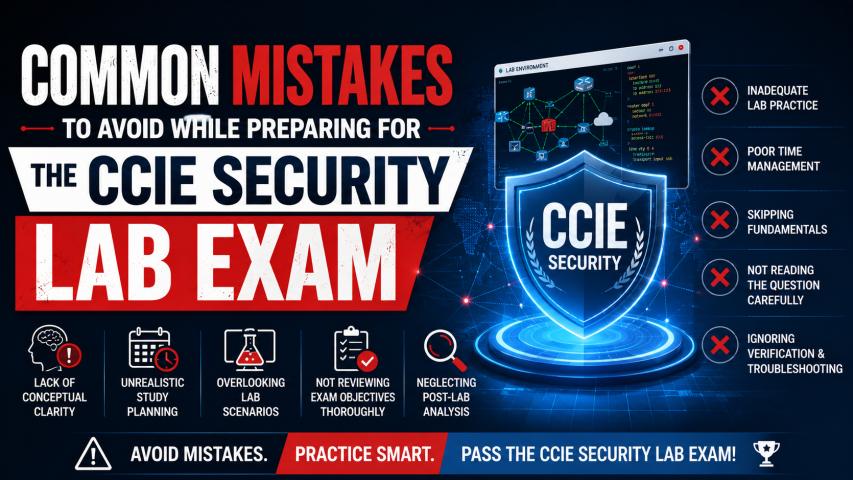
An extensive hands-on lab examination
The lab exam tests candidates in real-world security scenarios and complex troubleshooting environments.
Technical Complexity
The level of technical depth increases substantially from CCNP Security to CCIE Security.
Topics Covered in CCNP Security
CCNP Security focuses on:
Secure network access
VPN implementation
Endpoint security
Identity services
Basic automation concepts
Security monitoring
Topics Covered in CCIE Security
CCIE Security explores:
Advanced security architectures
Enterprise firewall deployments
Complex VPN solutions
Threat defense systems
Security policy enforcement
Security automation frameworks
Advanced troubleshooting methodologies
Who Should Choose CCNP Security?
CCNP Security is often suitable for professionals who want to establish or strengthen their expertise in cybersecurity.
Early-Career Security Professionals
Professionals transitioning into security roles can benefit from the structured learning path offered by CCNP Security.
Network Engineers Expanding Their Skills
Many network engineers pursue CCNP Security to gain specialized knowledge in securing enterprise environments.
IT Professionals Seeking Career Growth
The certification helps validate practical security skills that are increasingly valuable across industries.
Benefits of CCNP Security
Strong Security Foundation
CCNP Security provides comprehensive coverage of essential enterprise security concepts.
Industry Recognition
Employers recognize the certification as evidence of professional-level security expertise.
Career Development Opportunities
Common job roles include:
Security Administrator
Network Security Engineer
Security Analyst
Systems Security Specialist
Infrastructure Engineer
Who Should Choose CCIE Security?
CCIE Security is generally best suited for experienced professionals seeking advanced technical expertise.
Experienced Security Engineers
Professionals managing enterprise-scale security environments often pursue expert-level certification to deepen their capabilities.
Security Architects
Security architects responsible for designing complex infrastructures may benefit from the advanced knowledge validated by CCIE Security.
Senior Network Professionals
Engineers working with large-scale enterprise networks frequently pursue CCIE Security to enhance their design and troubleshooting skills.
Benefits of CCIE Security
Advanced Technical Validation
The certification demonstrates expertise in implementing and managing sophisticated security solutions.
Higher-Level Career Opportunities
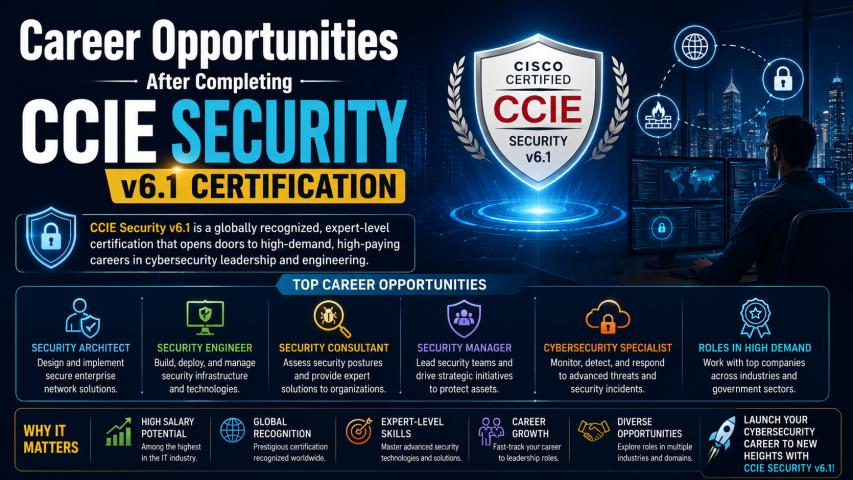
CCIE Security holders often qualify for positions such as:
Security Architect
Senior Security Engineer
Cybersecurity Consultant
Security Operations Manager
Enterprise Security Specialist
Enhanced Problem-Solving Skills
The lab-focused certification process develops strong troubleshooting and analytical capabilities.
Comparing Career Paths
Career Path After CCNP Security
After obtaining CCNP Security, professionals often continue building experience while taking on increasingly complex security responsibilities.
Potential progression includes:
Security Engineer
Senior Security Engineer
Security Consultant
Infrastructure Security Specialist
Career Path After CCIE Security
CCIE Security often supports advancement into strategic and leadership-focused technical roles.
Career opportunities may include:
Security Architect
Principal Security Engineer
Enterprise Security Consultant
Cybersecurity Program Lead
Time and Preparation Requirements
Preparing for CCNP Security
Preparation typically involves:
Studying core security concepts
Practicing configuration tasks
Learning Cisco security technologies
Completing hands-on labs
Many candidates can prepare while balancing full-time work responsibilities.
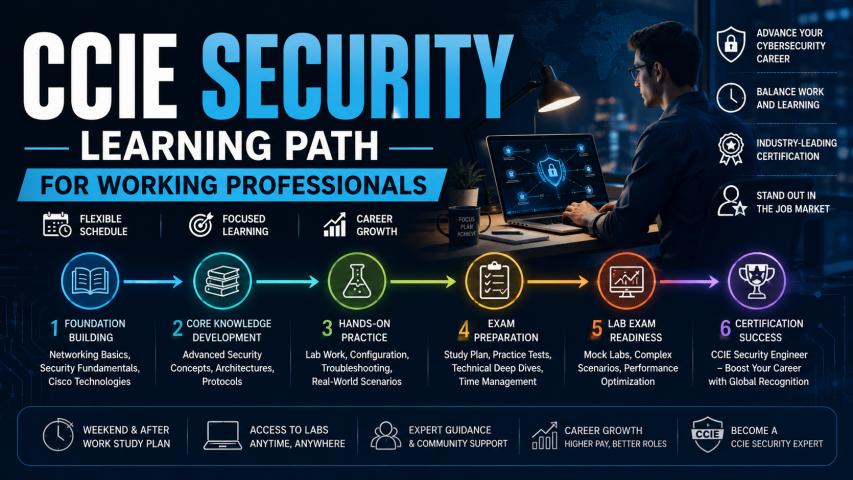
Preparing for CCIE Security
CCIE Security preparation often requires:
Extensive lab practice
Advanced troubleshooting exercises
Security design experience
Deep technical understanding
Consistent hands-on learning
The preparation process is generally more intensive due to the complexity of the certification.
Factors to Consider Before Choosing
Current Experience Level
Professionals with limited security experience often find CCNP Security to be a logical starting point.
Experienced engineers working in enterprise environments may be better positioned to pursue CCIE Security.
Career Objectives
If your goal is to develop professional-level expertise and enter security-focused roles, CCNP Security may be appropriate.
If you aspire to become an enterprise security expert, architect, or consultant, CCIE Security may align better with your long-term goals.
Learning Commitment
CCIE Security requires a significant investment of time, effort, and hands-on practice.
Candidates should evaluate their availability and readiness before committing to the expert-level certification path.
Building a Long-Term Certification Strategy
Many professionals view CCNP Security and CCIE Security as complementary milestones rather than competing certifications.
A common progression path includes:
Building networking fundamentals
Earning CCNP Security
Gaining real-world experience
Preparing for CCIE Security
Developing advanced enterprise security expertise
This approach allows candidates to strengthen their skills gradually while gaining valuable industry experience.
Conclusion
Choosing between CCNP Security and CCIE Security ultimately depends on your current experience, career goals, and commitment to advanced learning. CCNP Security provides a strong foundation in enterprise security technologies and is well suited for professionals looking to build specialized cybersecurity skills. For those seeking expert-level knowledge, advanced troubleshooting capabilities, and leadership opportunities in enterprise security, CCIE Security offers a challenging but rewarding path. By evaluating your professional objectives and technical background, you can determine which certification best supports your long-term success in the cybersecurity industry.