
Modern organizations depend heavily on robust and scalable digital infrastructure to support business operations, cloud applications, and remote connectivity. As enterprise networks become more complex, professionals often pursue CCIE Enterprise Infrastructure Training to gain advanced knowledge in designing and managing large-scale networks.
Enterprise network design is no longer just about connectivity. It involves building resilient, secure, and scalable architectures that can support dynamic workloads, hybrid environments, and evolving business demands.
Understanding Enterprise Network Design
Enterprise network design refers to the structured planning and implementation of network infrastructure that supports organizational goals while ensuring performance, reliability, and security.
Key Objectives of Enterprise Network Design
A well-designed enterprise network focuses on:
High availability and uptime
Scalability for future growth
Security across all layers
Efficient traffic management
Simplified network operations
Importance in Modern IT Environments
Organizations rely on enterprise networks for:
Cloud computing services
Remote workforce connectivity
Data center operations
Application delivery
Business continuity
Core Principles of Scalable Network Design
Scalability ensures that a network can grow without compromising performance or stability.
Hierarchical Network Architecture
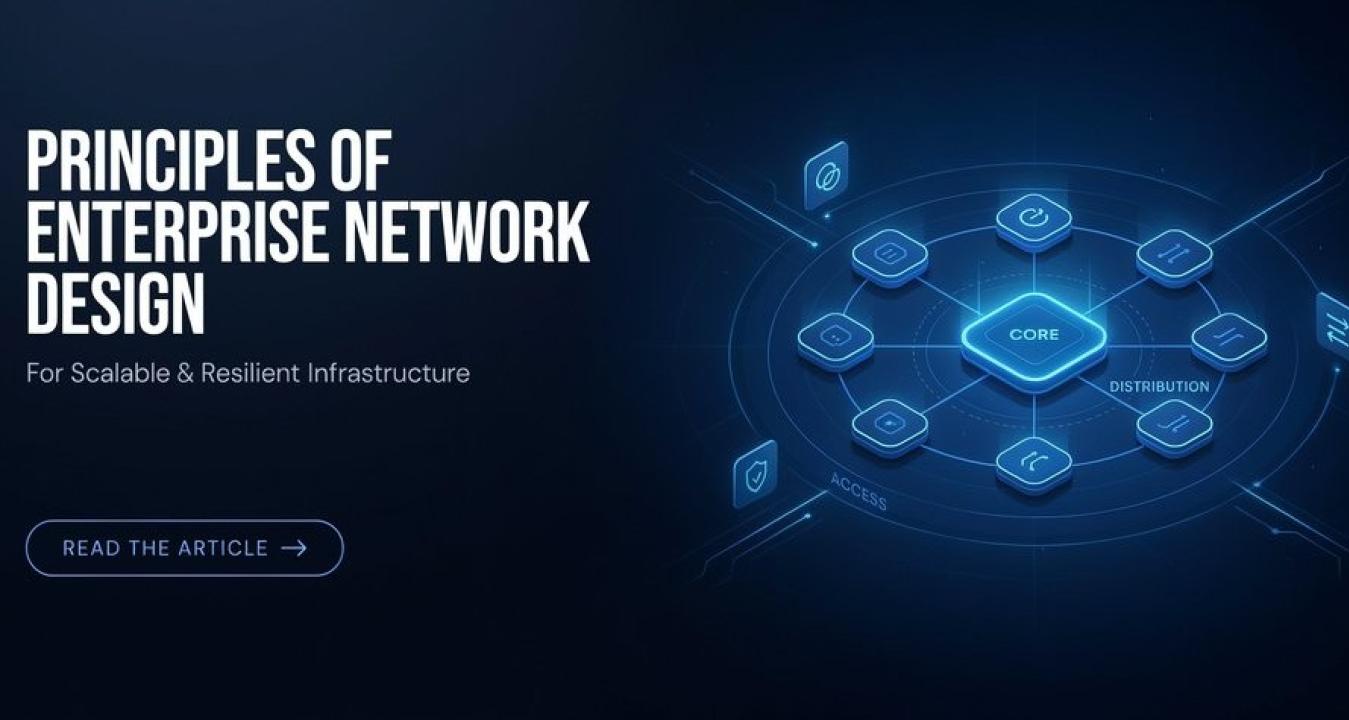
A hierarchical design divides the network into several layers:
Access Layer
Connects end devices
Provides user access to network resources
Implements basic security controls
Distribution Layer
Aggregates access layer traffic
Enforces policies
Performs routing decisions
Core Layer
Provides high-speed backbone connectivity
Ensures fast and reliable data transfer
Focuses on speed and redundancy
Benefits of Hierarchical Design
Easier troubleshooting
Improved scalability
Simplified management
Enhanced performance
Resiliency in Enterprise Networks
It guarantees that the network stays functional despite failures or interruptions.
Key Components of Resilient Design
Redundancy
Redundancy removes single points of failure by introducing backup paths and systems.
Fault Tolerance
Fault-tolerant systems keep functioning even when components fail.
High Availability
High availability ensures minimal downtime through:
Failover mechanisms
Load balancing
Backup systems
Why Resiliency Matters
Prevents business downtime
Ensures continuous service availability
Improves user experience
Reduces operational risks
Network Segmentation Strategies
Segmentation improves performance and security by dividing networks into smaller, manageable parts.
Types of Segmentation
VLAN Segmentation
Separates broadcast domains
Improves security and traffic control
Subnetting
Organizes IP address space
Enhances routing efficiency
Micro-Segmentation
Provides granular control at workload level
Enhances security in data centers
Benefits of Segmentation
Reduced congestion
Improved security posture
Better traffic management
Simplified troubleshooting
Security in Enterprise Network Design
Security is a foundational element of modern enterprise networks.
Key Security Principles
Defense in Depth
Multiple layers of security controls help mitigate threats.
Least Privilege Access
Users and systems are granted only necessary access rights.
Continuous Monitoring
Threats can be detected and addressed quickly through continuous monitoring.
Security Integration in Design
Security should be embedded into:
Network architecture
Access policies
Routing and switching configurations
Cloud connectivity models
Scalability Through Automation
Automation plays a key role in supporting scalable network infrastructures.
Role of Network Automation
Automation helps organizations:
Reduce manual configuration errors
Speed up deployments
Improve operational efficiency
Standardize configurations
Common Automation Tools
Python scripting
APIs
Cisco DNA Center
Network orchestration platforms
Performance Optimization Techniques
Efficient network design ensures optimal performance across all services.
Traffic Management Strategies
Load Balancing
Distributes traffic evenly across multiple resources.
QoS (Quality of Service)
Prioritizes critical applications and services.
Traffic Shaping
Controls bandwidth usage for specific applications.
Benefits of Optimization
Improved application performance
Reduced latency
Better user experience
Designing for Cloud and Hybrid Environments
Modern enterprise networks must support cloud and hybrid infrastructures.
Cloud Integration Challenges
Latency issues
Security concerns
Connectivity complexity
Hybrid Network Design Principles
Secure cloud connectivity
Unified management
Consistent policy enforcement
Importance of Flexibility
Flexible designs allow organizations to:
Scale cloud resources easily
Adapt to changing workloads
Integrate new technologies
Network Monitoring and Management
Effective monitoring ensures network health and performance.
Key Monitoring Tools
Network performance monitoring systems
Traffic analysis tools
Log management systems
Importance of Visibility
Visibility helps in:
Identifying bottlenecks
Detecting anomalies
Ensuring compliance
Improving troubleshooting efficiency
Common Mistakes in Enterprise Network Design
Lack of Scalability Planning
Failing to design for growth leads to performance issues.
Ignoring Redundancy
Without redundancy, networks are vulnerable to failures.
Poor Documentation
Incomplete documentation complicates troubleshooting and upgrades.
Overcomplicated Architectures
Overly complex designs increase operational difficulty and risk.
Best Practices for Enterprise Network Design
Keep Designs Simple
Simplicity improves manageability and reduces errors.
Plan for Growth
Always design with future expansion in mind.
Standardize Configurations
Standardization ensures consistency across the network.
Regularly Review Architecture
Continuous review helps maintain efficiency and relevance.
Role of CCIE Enterprise Infrastructure in Network Design
The CCIE Enterprise Infrastructure certification validates advanced skills in designing and managing complex enterprise networks.
Skills Validated
Advanced routing and switching
Network automation
Scalable architecture design
Troubleshooting complex networks
Industry Relevance
Professionals holding this certification are highly valued for designing scalable and resilient enterprise infrastructures.
Career Opportunities in Enterprise Network Design
Common Job Roles
Network Architect
Senior Network Engineer
Infrastructure Consultant
Enterprise Solutions Engineer
Industry Demand
Organizations across industries require skilled professionals to manage evolving network infrastructures.
Conclusion
Enterprise network design is a vital discipline that ensures scalability, resilience, and performance in modern IT environments. By applying structured design principles, organizations can build robust infrastructures capable of supporting current and future demands. Professionals pursuing expertise in this area, including those aiming for CCIE Enterprise Infrastructure, play a key role in shaping reliable and efficient enterprise networks.