
Introduction to Enterprise Networking Expertise
Modern organizations depend on highly complex and interconnected IT infrastructures to support business operations, digital services, cloud applications, and global communication systems. As enterprises continue to expand their networks across on-premises data centers, cloud platforms, and remote environments, the demand for skilled networking professionals has increased significantly.
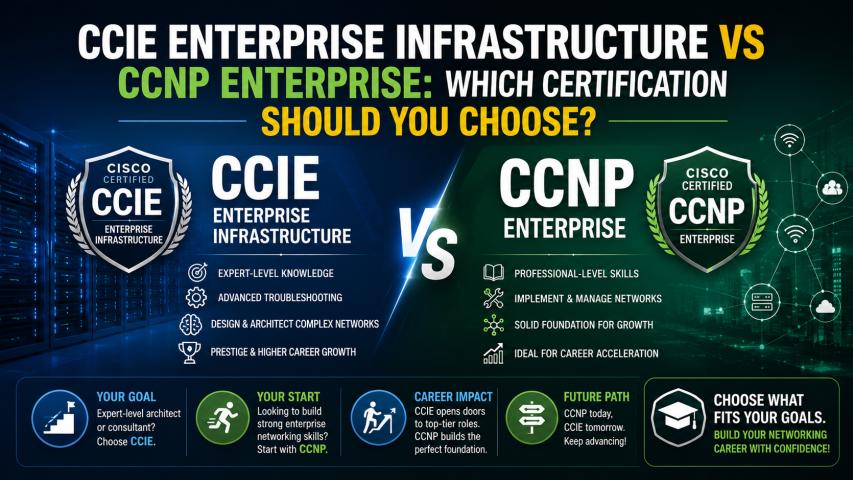
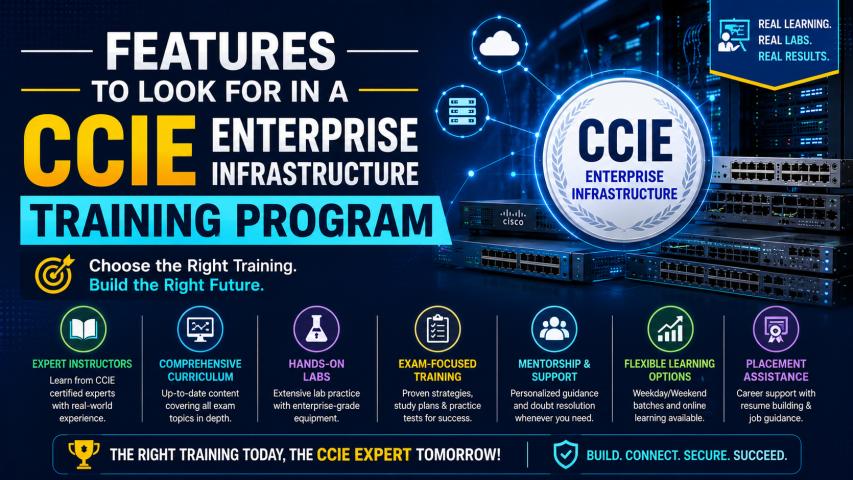
Within this context, CCIE Enterprise Infrastructure is widely recognized as one of the most advanced certifications that validates deep expertise in enterprise networking design, implementation, and troubleshooting. Organizations value professionals who hold this certification because they bring proven technical depth and real-world problem-solving capabilities.
The Growing Importance of Enterprise Network Expertise
Increasing Complexity of Modern Networks
Enterprise networks are no longer limited to traditional routing and switching environments. They now include multiple layers of technology such as virtualization, automation, cloud integration, and software-defined networking.
Key factors contributing to this complexity include:
Expansion of hybrid and multi-cloud environments
Increased remote and hybrid work models
Growing dependency on digital applications
Need for high availability and performance
Rising cybersecurity requirements
Because of these challenges, organizations require experts who can manage end-to-end network infrastructures efficiently.
Demand for Skilled Networking Professionals
The global demand for enterprise networking professionals continues to grow as businesses modernize their IT systems. However, there is a shortage of highly skilled experts capable of managing advanced infrastructures.
Organizations therefore prioritize certifications and practical experience when hiring network engineers, architects, and infrastructure specialists.
Why Organizations Prefer CCIE Enterprise Infrastructure Experts
Validated Technical Expertise
One of the primary reasons organizations value certified professionals is the validation of advanced technical skills.
Professionals with this certification demonstrate expertise in:
Complex routing and switching technologies
Enterprise network design principles
Infrastructure scalability and optimization
Advanced troubleshooting techniques
This ensures that certified individuals can handle real-world enterprise challenges effectively.
Proven Hands-On Experience
Unlike entry-level certifications, CCIE Enterprise Infrastructure focuses heavily on practical, lab-based skills. This ensures that professionals are not only theoretically knowledgeable but also capable of implementing solutions in real environments.
Organizations benefit from hiring professionals who can:
Configure and manage large-scale networks
Diagnose and resolve critical network issues
Implement optimized network designs
Maintain high-performance infrastructure systems
This reduces operational risks and improves network reliability.
Core Skills That Make These Professionals Valuable
Advanced Routing and Switching Knowledge
Routing and switching remain the foundation of enterprise networking.
Professionals are expected to understand:
Dynamic routing technologies like OSPF and BGP
Route optimization and policy control
VLAN design and segmentation strategies
High availability configurations
These skills ensure seamless communication across enterprise networks.
Network Design and Architecture Expertise
Organizations rely on professionals who can design scalable and efficient network infrastructures.
Key responsibilities include:
Designing hierarchical network models
Planning enterprise-wide connectivity
Ensuring redundancy and fault tolerance
Aligning network design with business needs
Strong architectural skills help organizations build future-ready networks.
Infrastructure Automation and Programmability
Modern enterprises increasingly rely on automation to manage complex networks efficiently.
Professionals with these skills can:
Automate repetitive network tasks
Implement API-driven configurations
Use scripting for network management
Support infrastructure-as-code approaches
Automation improves efficiency and reduces manual errors in network operations.
Role in Supporting Digital Transformation
Enabling Cloud Integration
As organizations move toward cloud-first strategies, enterprise networks must integrate seamlessly with cloud platforms.
Certified professionals contribute by:
Designing hybrid cloud connectivity
Ensuring secure data transfer between environments
Optimizing cloud application performance
Managing distributed network architectures
This enables smooth digital transformation initiatives.
Supporting Scalable IT Infrastructure
Enterprise growth requires scalable IT systems that can handle increasing workloads and user demands.
Professionals help organizations:
Expand network capacity efficiently
Maintain consistent performance across locations
Optimize bandwidth usage
Implement scalable architectures
Scalability is essential for long-term business success.
Contribution to Network Security and Stability
Building Secure Network Architectures
Security is a critical requirement in modern enterprise environments. Networking professionals play a key role in designing secure infrastructures.
They are responsible for:
Implementing secure routing practices
Designing segmented network architectures
Enforcing access control policies
Supporting secure communication protocols
These practices help reduce security risks across the organization.
Ensuring Network Reliability and Uptime
Organizations expect uninterrupted network performance to support business operations.
Certified professionals help achieve this by:
Designing redundant network systems
Implementing failover mechanisms
Monitoring network performance
Troubleshooting issues proactively
High availability is essential for maintaining business continuity.
Importance in Troubleshooting and Problem Resolution
Handling Complex Network Issues
One of the most valuable skills professionals bring is the ability to troubleshoot complex network problems.
They are capable of:
Identifying root causes of network failures
Diagnosing routing and connectivity issues
Resolving performance bottlenecks
Restoring network functionality quickly
This minimizes downtime and ensures operational stability.
Reducing Operational Risks
Effective troubleshooting skills help organizations reduce risks associated with network outages and failures.
Benefits include:
Faster incident resolution
Improved system reliability
Reduced financial impact of downtime
Enhanced user experience
This makes certified professionals highly valuable in enterprise environments.
Supporting Business Continuity and Growth
Aligning IT with Business Goals
Enterprise networking professionals play an important role in aligning technology infrastructure with business objectives.
They contribute by:
Supporting digital business initiatives
Ensuring network scalability for growth
Enhancing application performance
Enabling secure remote access
This helps organizations accomplish their long-term strategic goals.
Improving Operational Efficiency
Efficient network management leads to better overall business performance.
Professionals help organizations:
Optimize network resources
Reduce manual configuration tasks
Improve system automation
Enhance service delivery
Operational efficiency is critical for maintaining competitiveness.
Career Advantages of CCIE Enterprise Infrastructure Experts
High Demand in the Job Market
Industries such as IT services, banking, telecommunications, healthcare, and cloud computing are actively seeking professionals with advanced networking certifications.
Organizations actively seek experts who can manage large-scale enterprise environments.
Senior-Level Job Roles
Certified experts are typically considered for job roles such as:
Network Architect
Enterprise Infrastructure Engineer
Senior Network Consultant
Technical Solutions Architect
Network Operations Manager
These roles come with increased responsibility and decision-making authority.
Competitive Salary and Growth Opportunities
Due to their advanced skill set, these professionals often receive competitive compensation packages.
Key advantages include:
Higher salary potential
Global job opportunities
Career advancement into leadership roles
Increased industry recognition
This makes the certification highly valuable for long-term career development.
Strategic Value to Organizations
Enhancing IT Infrastructure Performance
Organizations benefit from improved network performance when working with highly skilled professionals.
This includes:
Better application response times
Optimized network traffic flow
Reduced latency issues
Improved user experience
Supporting Innovation and Digital Growth
Enterprise networking experts enable organizations to adopt new technologies and innovate effectively.
They support:
Cloud migration strategies
Automation initiatives
Advanced network architectures
Digital transformation projects
This helps organizations stay competitive in evolving markets.
Conclusion
Organizations place high value on professionals who possess advanced networking expertise due to the increasing complexity of modern IT environments. The ability to design, implement, and manage scalable and secure infrastructures is essential for business success.
Professionals holding CCIE Enterprise Infrastructure certification are recognized for their deep technical knowledge, hands-on experience, and problem-solving capabilities. This makes them highly valuable assets in enterprise environments, contributing to improved performance, security, and scalability of modern networks.