Modern diesel trucks are built for power, durability, and efficiency. Whether you operate a single semi truck or manage an entire fleet, maintaining peak engine performance is essential for controlling operating costs and maximizing uptime. However, one often-overlooked component can significantly affect fuel economy, power, and reliability: the diesel particulate filter (DPF).
The DPF is designed to capture soot and particulate matter before they exit the exhaust system. While this helps reduce emissions, the filter gradually fills with soot and ash. Over time, the buildup restricts exhaust flow, increases engine workload, and creates a variety of performance issues.
Many truck owners don't realize they have a DPF problem until warning lights appear or the truck enters limp mode. By then, repairs can become expensive and downtime can impact business operations.
Recognizing the warning signs early and choosing the best DPF cleaner can help restore performance, improve fuel economy, and prevent costly repairs. At 30 Minute DPF Clean, we help truck owners and fleet managers eliminate soot and ash buildup before serious problems develop.
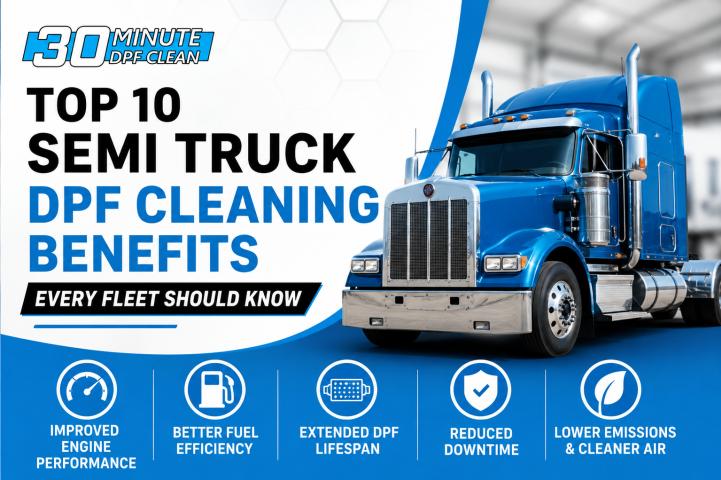
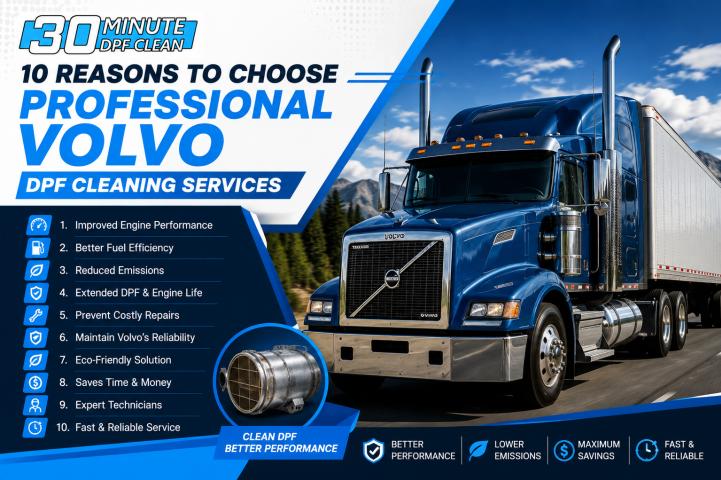
Here are the top 10 signs your truck may need professional DPF cleaning.
1. Your Fuel Economy Is Declining
One of the first indicators of a clogged DPF is reduced fuel efficiency.
When exhaust gases cannot flow freely through the filter, engine backpressure increases. As a result, the engine must burn more fuel to generate the same amount of power.
Many drivers notice they are filling up more frequently or seeing a steady drop in miles per gallon. While several issues can contribute to poor fuel economy, a restricted DPF is one of the most common causes in diesel-powered vehicles.
Using the best DPF cleaner can help restore airflow and improve overall efficiency.
2. Regeneration Cycles Are Happening More Often
Regeneration is a normal process that burns accumulated soot inside the DPF.
Under normal conditions, regeneration occurs periodically. However, when excessive soot and ash accumulate inside the filter, regeneration cycles become more frequent.
Frequent regenerations can:
- Increase fuel consumption
- Add stress to the engine
- Reduce productivity
- Increase maintenance costs
If your truck seems to be regenerating more often than usual, it's a strong indication that professional cleaning may be necessary.
3. Noticeable Loss of Engine Power
A clogged DPF restricts exhaust flow, making it difficult for the engine to operate efficiently.
Drivers often report:
- Sluggish acceleration
- Reduced towing capability
- Difficulty climbing hills
- Lower overall performance
The engine must work harder to overcome the restriction, which can further reduce fuel economy and place additional strain on critical components.
Choosing the best DPF cleaner can restore proper exhaust flow and help recover lost power.
4. DPF Warning Light Appears on the Dashboard
Modern diesel trucks use sensors to monitor DPF performance.
When soot levels exceed acceptable limits, the DPF warning light will illuminate. This warning is designed to alert drivers before severe restrictions occur.
Ignoring the warning light can lead to:
- Increased backpressure
- Reduced engine efficiency
- More frequent regenerations
- Potential component failure
Addressing the issue early through professional DPF cleaning can prevent larger and more expensive problems.
5. Excessive Exhaust Backpressure
Backpressure occurs when exhaust gases encounter resistance while leaving the engine.
As soot and ash build up inside the DPF, exhaust flow becomes restricted. This causes pressure to increase throughout the exhaust system.
Excessive backpressure can negatively affect:
- Turbochargers
- Exhaust sensors
- EGR systems
- Engine performance
The longer the restriction remains, the greater the risk of damage to other engine components.
The best DPF cleaner removes accumulated contaminants and helps restore normal exhaust flow.
6. Increased Fuel Consumption During Idling
Many truck operators focus only on fuel usage while driving and overlook fuel consumption during idle periods.
A clogged DPF forces the engine to work harder even when the vehicle is stationary. This increased workload can result in higher fuel usage while idling.
For fleet operators, the additional fuel costs can add up quickly over time.
Professional cleaning helps improve efficiency at both idle and highway speeds.
7. Turbocharger Performance Problems
Turbochargers rely on unrestricted exhaust flow to function properly.
When the DPF becomes clogged, the turbocharger may struggle to generate adequate boost pressure. Drivers may experience:
- Delayed throttle response
- Slow acceleration
- Reduced pulling power
- Poor performance under heavy loads
Since the turbocharger plays a major role in engine efficiency, DPF restrictions can significantly affect fuel economy.
Using the best DPF cleaner helps restore the exhaust flow necessary for optimal turbocharger operation.
8. Unusual Exhaust Temperatures
A restricted DPF can cause exhaust temperatures to rise beyond normal operating levels.
Excessive heat can place additional stress on various engine and exhaust components, potentially shortening their lifespan.
High exhaust temperatures may contribute to:
- Sensor failures
- Turbocharger wear
- Increased regeneration frequency
- Reduced component reliability
Routine DPF maintenance helps maintain proper operating temperatures throughout the exhaust system.
9. Increased Maintenance Costs
Many truck owners don't realize that a neglected DPF can trigger a chain reaction of mechanical issues.
When restrictions remain unresolved, additional components may become affected, including:
- Turbochargers
- EGR valves
- Sensors
- Exhaust manifolds
These repairs can quickly become expensive.
Investing in professional DPF maintenance is often far less costly than replacing damaged components. That's why many fleet managers consider regular service from the best DPF cleaner a critical preventive maintenance strategy.
10. Your Truck Enters Limp Mode
Limp mode is one of the most serious warning signs of a clogged DPF.
When restrictions become severe, the truck's computer may limit engine power to protect critical components from damage.
Symptoms of limp mode include:
- Reduced speed
- Limited acceleration
- Restricted engine performance
- Increased downtime
Once limp mode activates, productivity suffers and repairs become more urgent.
Preventive cleaning can help avoid this situation entirely.
Why Choosing the Best DPF Cleaner Matters
Many drivers mistakenly believe that regeneration completely cleans the diesel particulate filter.
In reality, regeneration only burns soot. It does not remove ash.
Over time, ash accumulates inside the filter and reduces available storage capacity. Eventually, the DPF becomes so restricted that regeneration alone is no longer effective.
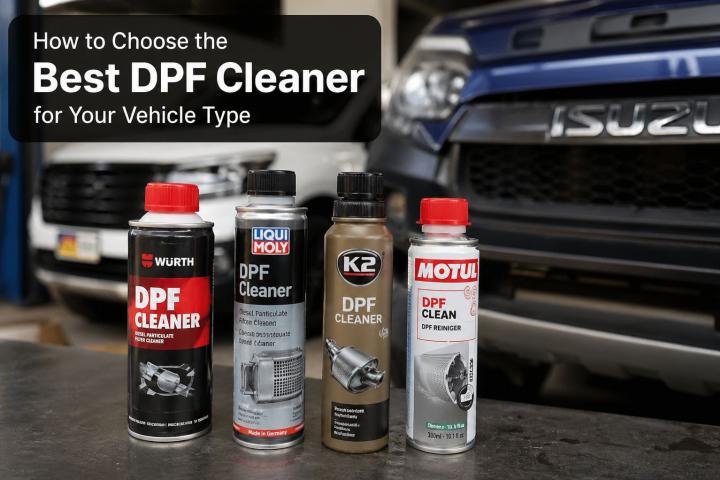
The best DPF cleaner removes both soot and ash, restoring the filter to optimal performance and extending its lifespan.
Benefits of professional DPF cleaning include:
- Improved fuel economy
- Better engine performance
- Reduced exhaust backpressure
- Fewer warning lights
- Less frequent regenerations
- Lower maintenance costs
- Extended DPF lifespan
- Reduced downtime
How Often Should a DPF Be Cleaned?
There is no one-size-fits-all maintenance schedule.
Cleaning intervals depend on factors such as:
- Vehicle mileage
- Load weight
- Driving conditions
- Idle time
- Route types
- Engine condition
Trucks operating in stop-and-go traffic typically require cleaning more frequently than vehicles running primarily on highways.
Regular inspections help determine the ideal maintenance schedule for each truck.
Professional Cleaning vs. DPF Replacement
Many truck owners assume that a clogged DPF automatically requires replacement.
Fortunately, that's often not the case.
Professional cleaning can restore performance at a fraction of replacement costs. Since replacement filters can cost thousands of dollars, cleaning is often the more economical option.
By choosing the best DPF cleaner, truck owners can maximize filter life and avoid unnecessary replacement expenses.
Why Truck Owners Choose 30 Minute DPF Clean
At 30 Minute DPF Clean, we specialize in professional DPF restoration services for semi trucks, commercial vehicles, and diesel fleets.
Our advanced cleaning process helps eliminate accumulated soot and ash while restoring proper airflow through the filter.
Our services help customers:
- Improve fuel economy
- Restore engine performance
- Reduce regeneration frequency
- Minimize downtime
- Extend DPF lifespan
- Avoid costly repairs
- Protect valuable equipment
Whether you operate one truck or an entire fleet, preventive DPF maintenance can help keep your vehicles running efficiently and profitably.
Take Action Before DPF Problems Get Worse
Ignoring the warning signs of a restricted DPF can lead to reduced fuel economy, loss of power, frequent regenerations, and expensive repairs.
The longer a restriction remains inside the system, the greater the impact on overall vehicle performance and operating costs.
If your truck is experiencing warning lights, poor fuel mileage, excessive regeneration cycles, turbocharger issues, or reduced power, now is the time to act.
Choosing the best DPF cleaner can help restore performance, improve efficiency, and protect your investment for the long haul.
Contact 30 Minute DPF Clean today to schedule professional DPF service and keep your truck operating at its best.
Frequently Asked Questions
1. What are the most common signs that I need the best DPF cleaner?
Common warning signs include poor fuel economy, frequent regeneration cycles, reduced engine power, DPF warning lights, excessive backpressure, turbocharger performance issues, and limp mode activation.
2. Can a clogged DPF affect fuel efficiency?
Yes. A restricted DPF increases engine backpressure, forcing the engine to work harder and consume more fuel.
3. How often should a diesel particulate filter be cleaned?
Cleaning intervals vary based on mileage, driving conditions, idle time, and vehicle usage. Regular inspections can help determine the proper schedule.
4. Does regeneration completely clean the DPF?
No. Regeneration burns soot but does not remove ash. Ash accumulation is one of the primary reasons professional cleaning becomes necessary.
5. Is professional cleaning better than replacing the DPF?
In many cases, yes. Professional cleaning can restore filter performance at a significantly lower cost than replacement.