Quick Summary: The market is full of products claiming to solve every noise problem, but not all acoustic treatment materials deliver the same results. Some improve room acoustics, while others offer little more than clever marketing. This blog separates fact from fiction, helping you understand which acoustic treatment materials genuinely improve sound quality and what to consider before investing.
Introduction
Search online for a solution to noisy rooms, and you'll quickly find hundreds of products making big promises.
"Instant soundproofing."
"Blocks 100% of noise."
"Professional studio acoustics."
"Works in every room."
It sounds convincing. Unfortunately, many of these claims oversimplify how acoustics actually work.
Sound behaves differently in every space. A home office has different acoustic needs than a classroom. A restaurant faces different challenges from a conference room. The right solution depends on the type of noise, the room's size, the building materials, and how the space is used.
This is why choosing acoustic treatment materials based on marketing alone often leads to disappointment. Some products are highly effective when used correctly. Others are applied in situations they were never designed for.
The good news is that once you understand the basics, separating genuine acoustic solutions from exaggerated claims becomes much easier.
First, Understand the Difference between Acoustic Treatment and Soundproofing
One of the biggest sources of confusion is assuming these terms mean the same thing.
Acoustic treatment materials improve the sound inside a room by reducing echoes, controlling reverberation, and making conversations or audio clearer.
Soundproofing materials, on the other hand, reduce the amount of sound travelling between spaces.
Knowing which problem you are trying to solve is the first step towards choosing the right solution.
What Actually Works?
Purpose-built Acoustic Panels
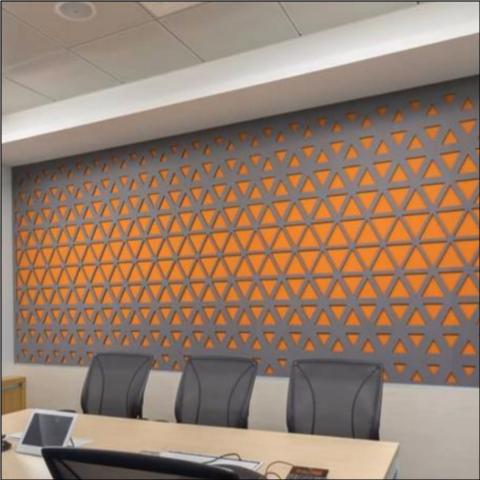
Professionally engineered acoustic panels are among the most effective acoustic treatment materials for reducing echoes and improving speech clarity. They are widely used in offices, schools, theatres, meeting rooms, and commercial buildings because they deliver predictable acoustic performance.
Ceiling Treatments
In spaces with high ceilings or open layouts, acoustic ceiling systems such as ceiling panels and baffles help reduce sound reflections that travel across large areas. They improve comfort without changing the overall layout of the room.
Fabric-wrapped Acoustic Solutions
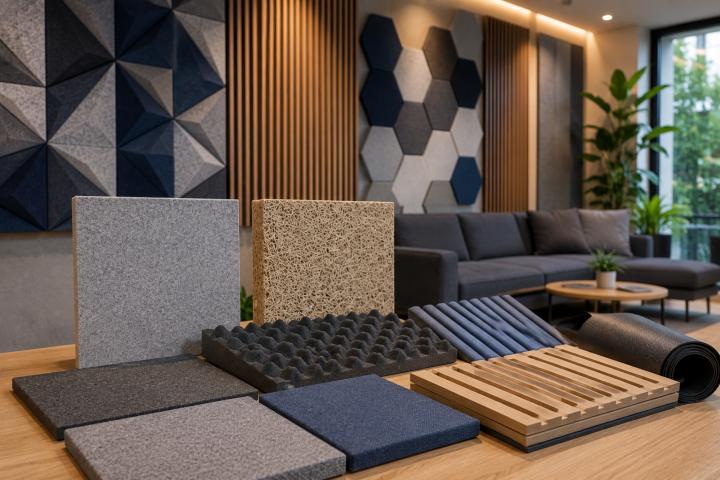
Fabric-covered acoustic products combine sound absorption with attractive finishes, making them suitable for offices, hotels, educational facilities, and residential interiors where appearance matters.
PET and Fibre-based Acoustic Materials
Modern recycled PET and fibre-based acoustic treatment materials provide effective sound absorption while offering durability and design flexibility.
They have become increasingly popular in sustainable building projects.
What often Gets Overhyped?
Assuming One Product Solves Every Problem
No single product can eliminate every type of noise. A material that controls echoes may not stop sound travelling through walls.
Choosing Based Only on Thickness
Thicker materials are not automatically more effective. Performance depends on material composition, density, placement, and application.
Ignoring Installation
Even premium acoustic treatment materials cannot perform properly if installed incorrectly or placed in ineffective locations.
Buying Based Only on Appearance
Decorative products may improve the look of a room, but aesthetics alone do not guarantee acoustic performance. Always review technical specifications instead of relying solely on visual appeal.
Read to know more on acoustic treatment materials here: Why Acoustic Treatment is Essential for Different Spaces Settings?
Questions to Ask before Choosing Acoustic Treatment Materials
Before making a purchase, consider the following:
What type of noise am I trying to reduce?
Is the problem inside the room or between rooms?
How is the room currently being used?
What surfaces are reflecting sound?
Has the solution been designed specifically for acoustic performance?
These questions help narrow your options and reduce the risk of buying products that are unsuitable for your space.
Why Professional Advice Matters
Acoustic performance is influenced by many factors, including room dimensions, ceiling height, wall materials, flooring, furniture, and occupancy. Professional acoustic specialists evaluate these factors before recommending suitable acoustic treatment materials, ensuring better long-term results than relying on assumptions or online marketing claims.
Conclusion
Not every product marketed as an acoustic solution delivers meaningful results. Understanding the difference between sound absorption and soundproofing, choosing products based on performance rather than advertising, and selecting materials suited to your specific environment are the keys to achieving better acoustics.
The best acoustic treatment materials are not the ones with the boldest marketing claims. They are the ones designed for the right application, installed correctly, and supported by expert guidance. When chosen wisely, they create spaces that are quieter, more comfortable, and far more enjoyable to use.
Choose Proven Acoustic Solutions with Tranquil Global
At Tranquil Global, we provide high-performance acoustic treatment materials designed to improve sound quality across commercial, educational, healthcare, hospitality, and residential environments.
Our innovative solutions combine reliable acoustic performance, modern design, and long-lasting durability to help architects, designers, and businesses create spaces that sound as good as they look.
With expert guidance and premium products, Tranquil Global ensures every project achieves the right acoustic balance.
FAQs
What are acoustic treatment materials?
Acoustic treatment materials are products designed to reduce echoes, control reverberation, and improve sound quality within a room.
Are acoustic treatment materials the same as soundproofing products?
No. Acoustic treatment materials improve sound inside a room, while soundproofing products reduce sound transmission between different spaces.
Where are acoustic treatment materials commonly used?
They are widely used in offices, schools, hotels, hospitals, theatres, restaurants, meeting rooms, studios, and residential interiors.
How do I choose the right acoustic treatment materials?
Consider the type of noise, room size, building materials, intended use of the space, and seek advice from experienced acoustic professionals.
Why choose Tranquil Global?
Tranquil Global offers premium acoustic treatment materials that combine advanced sound absorption, durable construction, and modern aesthetics to deliver effective acoustic solutions for every type of project.