There was a time when acoustics entered an architectural project rather late. The walls were designed. The furniture was selected. The lighting was finalised. The finishes were approved. Then someone walked into the completed room, and heard the echo. Soon, they asked a familiar question:
What can we do about the noise?
That approach is changing.
Today, acoustics is increasingly being considered alongside lighting, materials, spatial planning, comfort, and visual identity. The rise of sophisticated acoustic materials has made this shift possible. This is because sound control no longer has to look like a technical correction added to an otherwise finished interior.
It can be part of the architecture from the beginning.
Acoustic Treatment Materials are becoming Architectural Elements
The term "acoustic treatment" can sometimes suggest something temporary or purely technical. Modern systems challenge that idea.
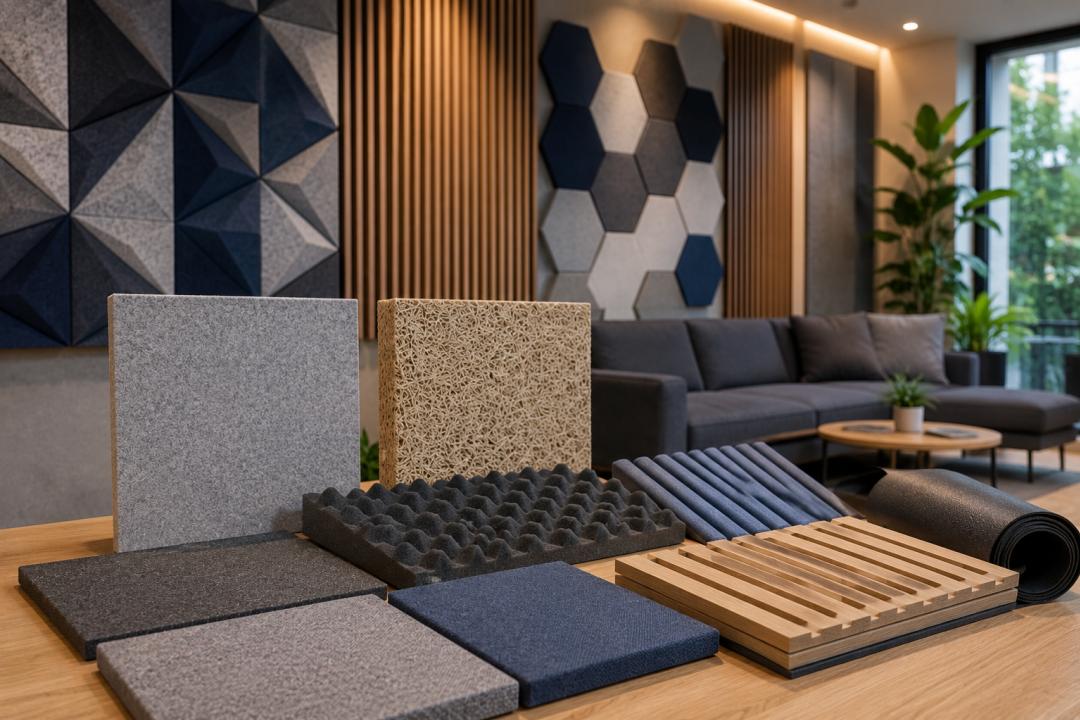
A suspended baffle can establish a ceiling pattern.
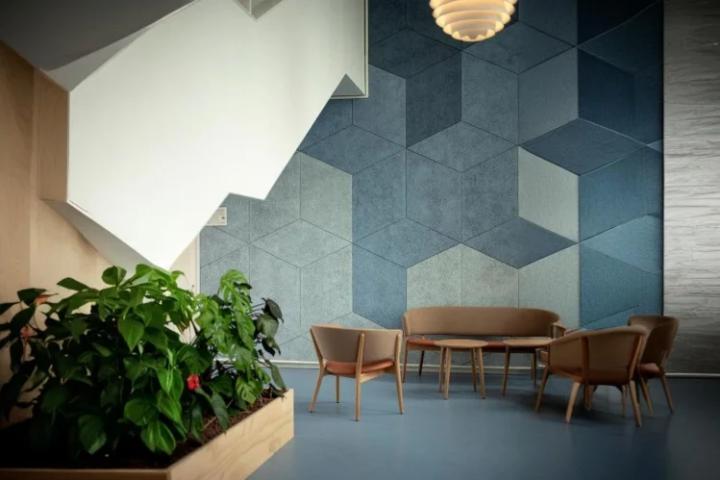
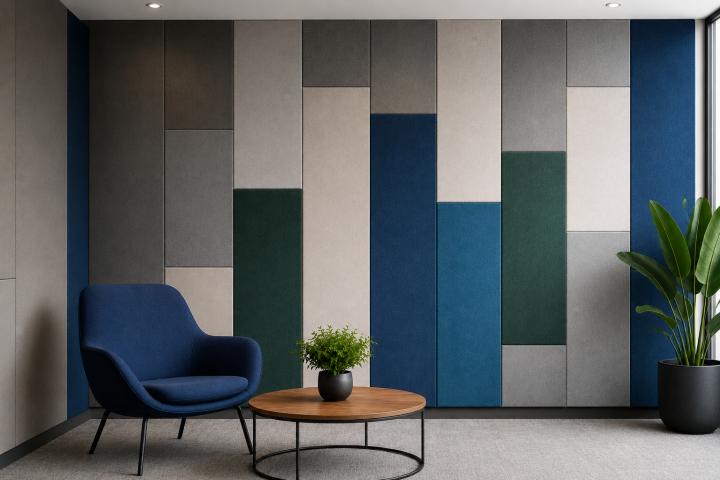
A wall panel can become a feature surface.
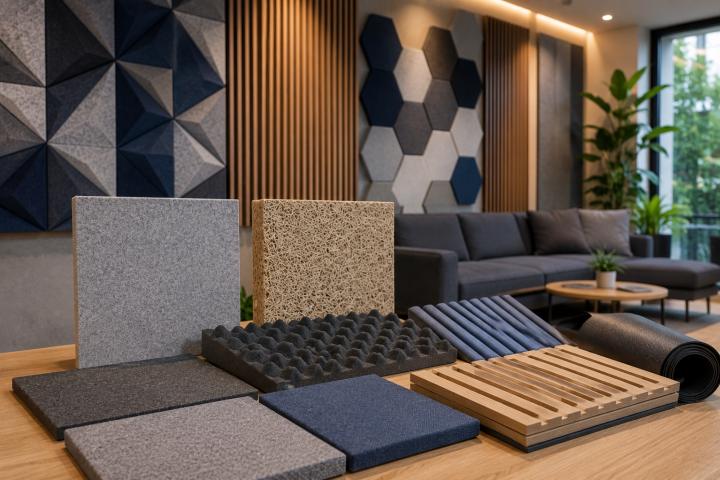
A fabric-covered system can introduce colour.
A wood-based acoustic system can bring warmth and texture.
A PET-based product can create geometric forms.
A perforated surface can combine visual rhythm with acoustic functionality.
The treatment is no longer necessarily something added to architecture. It can become architecture.
Geometry now Matters
Acoustic design is increasingly concerned with shape.
Flat panels are useful, but acoustic systems can also be arranged as:
vertical fins
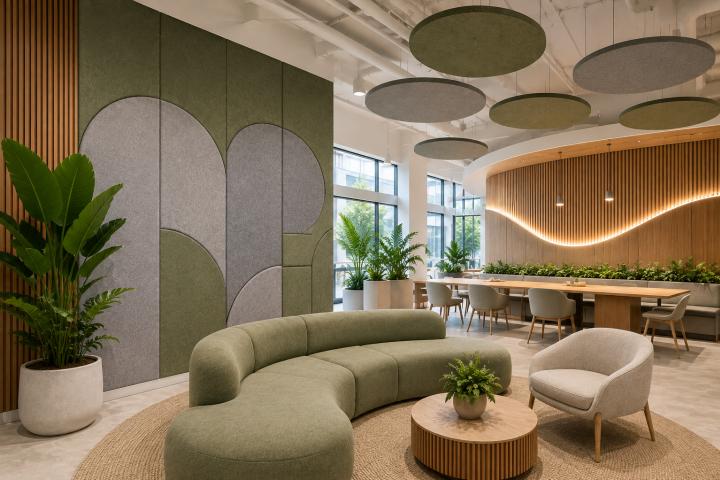
curved surfaces
suspended baffles
ceiling clouds
linear elements
geometric wall patterns
layered screens
modular compositions
These forms can influence where acoustic absorption is introduced while also creating visual movement.
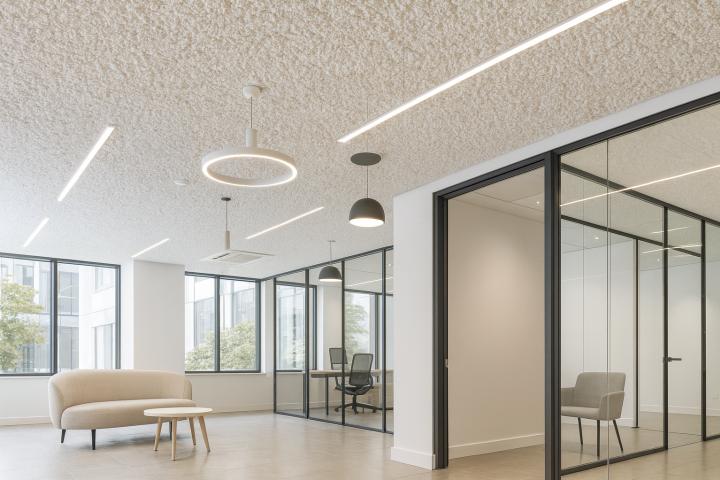
In some contemporary projects, acoustic elements become one of the defining features of the ceiling rather than something concealed above it. Rockfon, for example, documents projects where acoustic ceiling products were selected to work alongside the architectural aesthetic and wellness requirements.
Acoustic Design can Support Spatial Zoning
This is one of the more interesting developments. Acoustic materials can help communicate where one activity ends and another begins. A change in ceiling pattern can identify a collaboration zone. A textured wall can mark a meeting area. A series of suspended elements can define a lounge.
A different acoustic finish can distinguish a quieter workspace. In this way, acoustic treatment materials can perform a visual wayfinding function while also addressing sound. The material is doing more than one job.
Read to know more about acoustic treatment materials here: Acoustic Treatment Materials You didn’t Know You Needed… Here’s the List?
Better Acoustics does not Mean Covering Everything
More acoustic material is not automatically better. The goal is to achieve an appropriate acoustic environment for the room. A classroom, restaurant, private office, lobby, auditorium, and open-plan workspace do not have identical acoustic requirements. The amount, location, thickness, mounting method, and frequency response of acoustic materials can all influence performance.
Design therefore needs balance. Too little absorption can leave a room harsh and reverberant. A poorly planned treatment strategy can also create an environment that does not suit the intended activity. Good acoustic design is about finding the appropriate combination.
Acoustic Materials are Working with Lighting
One reason acoustic products have become more architectural is their ability to coexist with other building systems.
Lighting can pass between baffles.
Ceiling panels can be coordinated with luminaires.
Acoustic elements can be arranged around mechanical services.
Wall panels can integrate with joinery.
The result is a coordinated ceiling or wall. Modern acoustic solutions are increasingly designed to coordinate acoustic requirements with ceiling geometry, lighting, mechanical systems, colours, textures, and other interior elements.
Retrofit has also Driven Innovation
Not every acoustic problem occurs in a new building.
Existing offices, schools, restaurants, heritage buildings, and commercial spaces may already have architectural finishes that cannot easily be changed. That has increased demand for acoustic products that can be installed directly onto existing surfaces.
Wall panels, suspended islands, baffles, and surface-mounted systems can provide options for improving acoustics without completely redesigning a room.
The Best Acoustic Solution may be the One You Barely Notice
Not every project needs an expressive acoustic installation. Sometimes the best solution is almost invisible.
A ceiling can absorb sound without becoming a visual focal point.
A wall treatment can match the surrounding finish.
A concealed backing system can provide performance behind a decorative surface.
The important change is that designers now have the freedom to decide whether acoustics should be prominent or discreet. That choice is itself part of design.
Acoustic Design is becoming More Integrated
The most important change is not the appearance of acoustic products. It is the timing of the conversation. Acoustics is increasingly being considered at the same time as lighting and occupant experience. That makes it much easier to create spaces where sound performance supports the architectural concept rather than competing with it.
Conclusion
Acoustic materials became a design discipline because architecture eventually recognised that sound cannot be separated from the experience of space. A room can look beautiful and still be uncomfortable to use. A workplace can have excellent furniture and lighting but remain distracting. A restaurant can have an impressive interior and still become exhausting when conversations begin competing with one another.
Acoustics helps determine how people actually experience these spaces. Today, acoustic materials, acoustic treatment materials, and acoustic sheet material give designers more ways to address that experience without sacrificing architectural intent. The next step is not simply to make acoustic products more attractive. It is to think about sound from the beginning.
Partner with Tranquil Global for Integrated Architectural Acoustics
Modern architecture demands acoustic materials that serve as core design elements. At Tranquil Global, we provide versatile acoustic sheet materials and structural treatments that enhance spatial zoning, and blend into your lighting and decor. Connect with Tranquil Global’s specialists to integrate acoustics into your specification early.
FAQs
Why are acoustic materials becoming part of architectural design?
Modern acoustic products can provide sound absorption while also contributing colour, texture, geometry, and visual identity. This allows acoustic performance to be integrated into the architectural concept.
What are acoustic treatment materials used for?
They are primarily used to manage sound within spaces by reducing reflections and excessive reverberation. The appropriate material depends on the room's acoustic requirements.
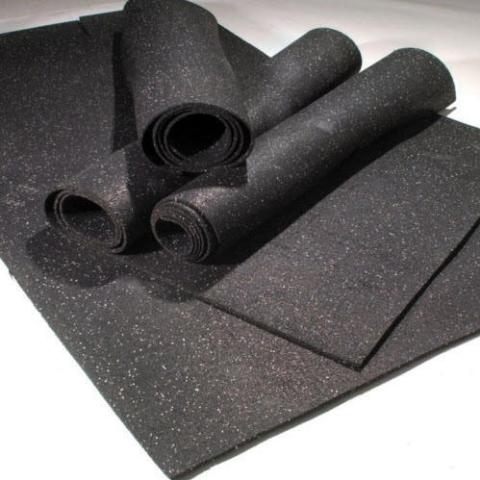
What is acoustic sheet material?
Acoustic sheet material generally refers to sheet-form products engineered or selected for acoustic applications. They can be used for wall panels, ceiling elements, partitions, screens, and other interior treatments.