Cutting into a roof that already has a factory-applied seal is enough to make any homeowner nervous. That thin adhesive strip under each shingle tab is what keeps wind from lifting the roof during a storm, and drilling through it for solar hardware raises an obvious question: does mounting equipment break that seal, and if so, what stops water from getting in?
What the Shingle Seal Actually Does
Asphalt shingles use a self-sealing strip, a bead of asphalt adhesive that softens under sun exposure and bonds the overlapping course above it. This bond is what gives the roof its wind resistance rating. Once that strip cures and locks two courses together, any gap or disruption in that bond line becomes a potential water entry point, which is why mount placement matters more than the fastener itself.
How Mounting Hardware Works Around It
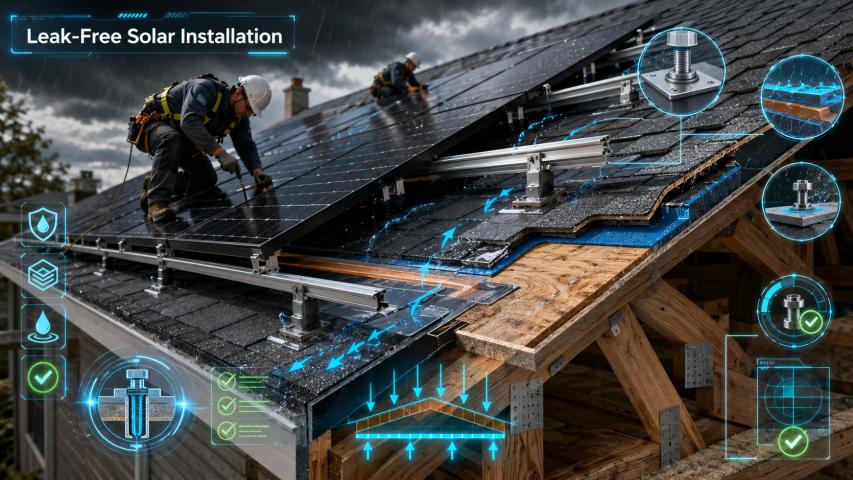
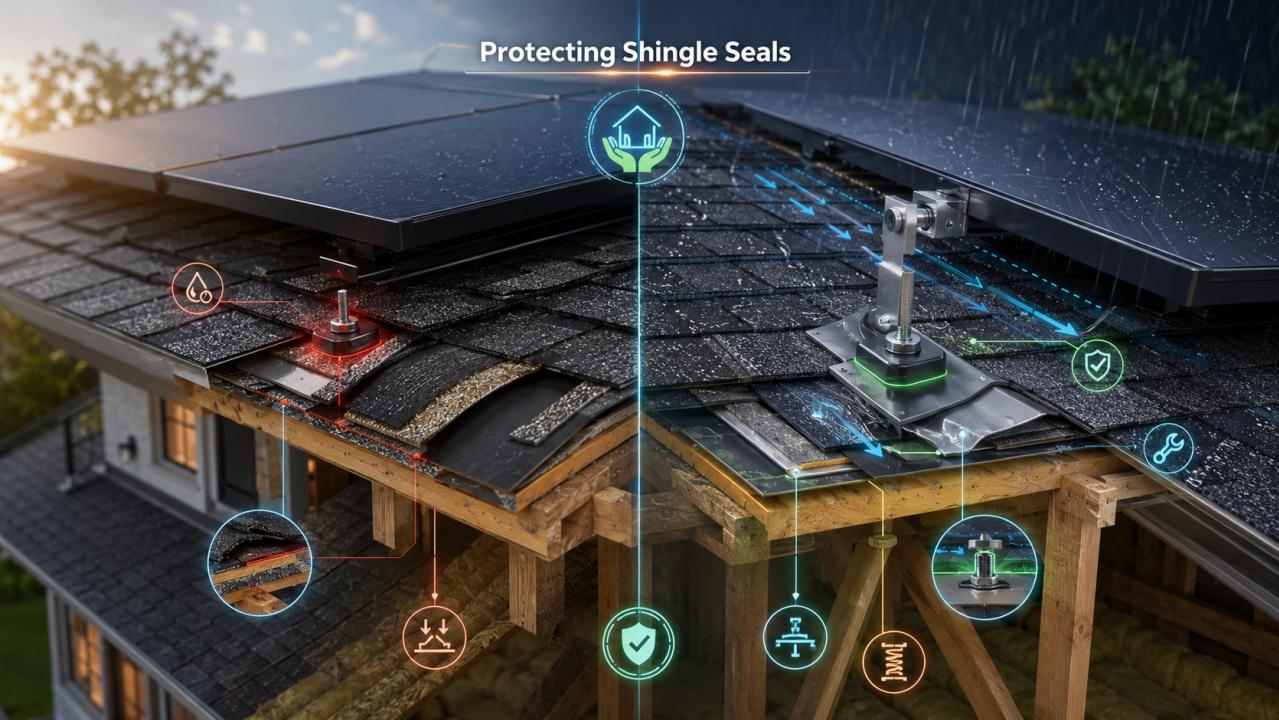
Installers locate rafters first, then position each attachment point along the shingle's exposed field rather than directly through the sealed lap line. A flashing plate slides under the shingle course above the penetration and over the course below, so water traveling down the roof plane is redirected across the top of the flashing instead of toward the lag bolt. Among sloped-roof hardware, a flashed L-foot base is often cited as the best-selling roof mount base for sloped roofs, largely because its low profile and wide flashing footprint keep water moving over the shingle course rather than pooling near the seal strip.
Stainless steel lag bolts, torqued to the mount manufacturer's spec and paired with a sealed or EPDM washer, close the penetration itself. The flashing does the actual waterproofing work; the sealant is a secondary barrier, not the primary one.
Climate, Materials, and Long-Term Sealing
Climate conditions and roof longevity are closely linked here. Repeated freeze-thaw cycling, UV exposure, and hail impact all affect how well an asphalt shingle seal solar penetration holds up over a 20-plus year system life. In colder climates, the factory seal strip may not fully re-activate around a disturbed area until a full summer heat cycle passes, so installers often add manufacturer-approved sealant at flashing edges as an interim measure rather than relying on the shingle to reseal itself immediately.
Common Installation Mistakes
Placing lag bolts through the sealed lap instead of the exposed shingle field
Skipping flashing in favor of sealant alone
Under-torquing or over-torquing fasteners, which can crack shingle mat or compress the washer unevenly
When done correctly, a solar mount penetration performs no differently from a properly flashed roof vent: the shingle seal stays intact where it needs to, and the flashing carries the waterproofing load everywhere else.
FAQs
1. Does solar installation void a shingle roof warranty?
Not typically, as long as flashed mounting methods are used and the installation follows the shingle manufacturer's penetration guidelines.
2. How do installers prevent leaks around solar mounts?
By combining rafter-aligned attachment points, flashing that overlaps shingle courses correctly, and sealed washers at each fastener.
3. Can solar panels be removed without damaging shingles?
Yes, when flashing was installed correctly, removal typically involves resealing the flashing rather than replacing shingles.
4. What is flashing and why does it matter for solar mounts?
Flashing is a waterproof plate installed under and over shingle courses at each mount point to redirect water away from the penetration.