Introduction
A rooftop solar array that has survived two hurricane seasons without issue can still fail in a moderate 45 mph gust if the array's edges are left exposed. Most homeowners assume wind damage comes from a single catastrophic storm, but the real risk usually builds quietly at the perimeter of the array, where wind pressure behaves nothing like it does at the center.
Why Perimeter Zones Behave Differently
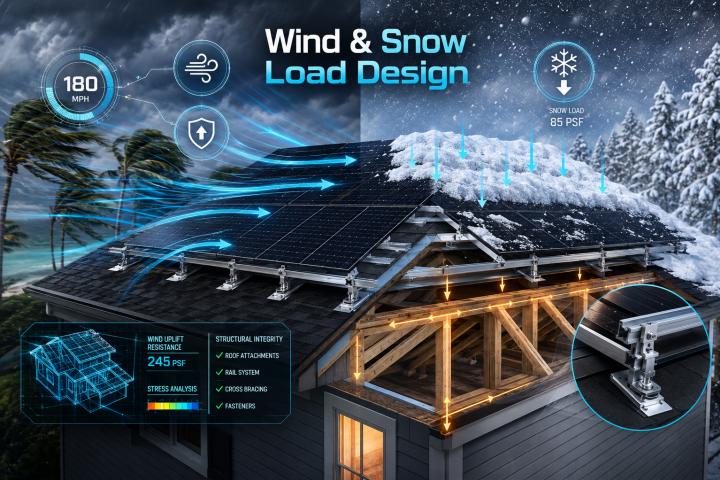
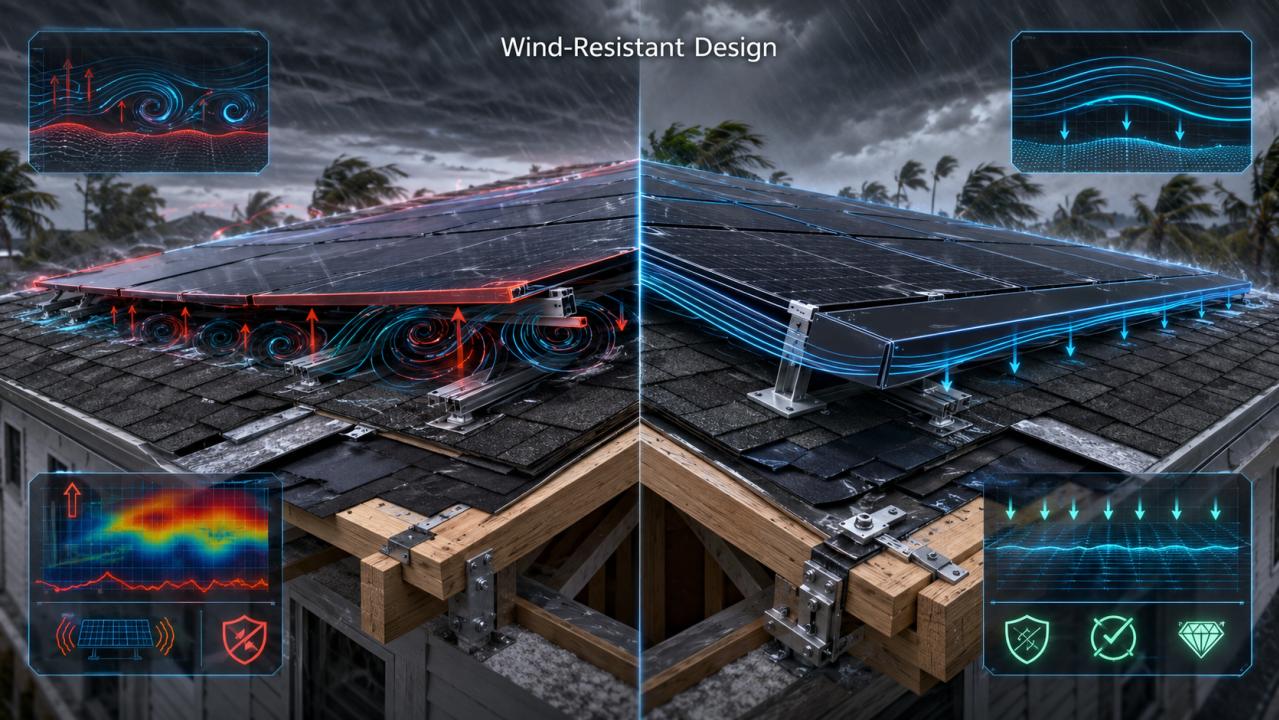
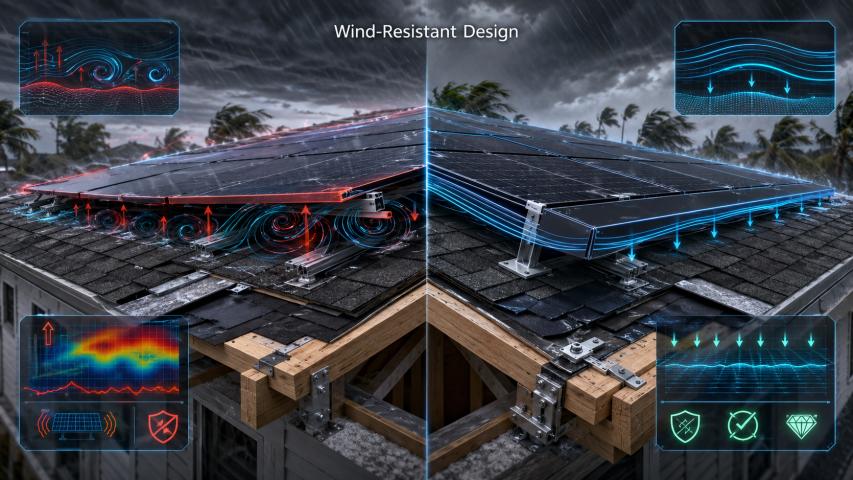
Wind doesn't push evenly across a roof. As air flows over a building, it separates at the edges and corners, creating localized zones of negative pressure, or suction, that can be two to three times stronger than the pressure across the field of the array. ASCE 7, the structural design standard most U.S. jurisdictions reference for wind loads, explicitly defines these edge and corner zones with higher pressure coefficients than the interior roof area. This is why the outermost row of panels in any array is statistically the most likely to experience uplift first.
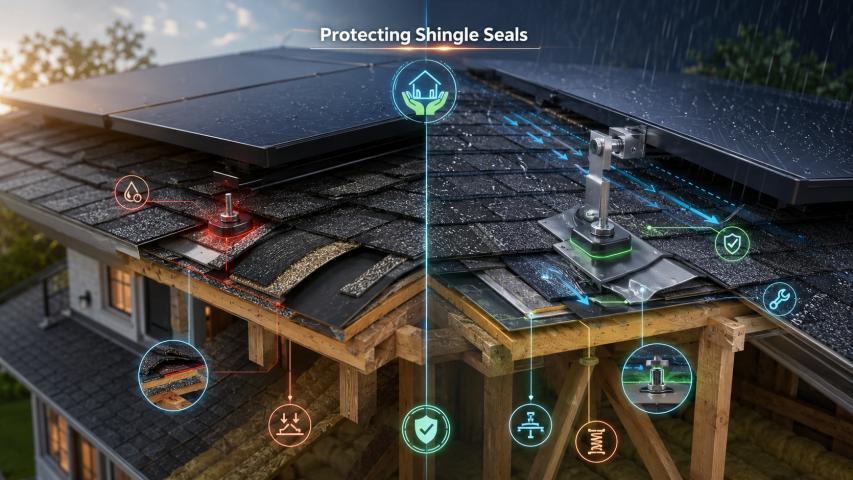
Skirting closes the gap between the panel's underside and the roof deck along this exposed perimeter. Without it, wind can get underneath the array edge, and once air is moving beneath a panel, it generates lift the same way air moving over a wing does. Sustained uplift cycles stress the racking's attachment points, the panel frame, and the flashing seal beneath any mounting point, even on a solar attachment in black finish rated for high wind exposure, since the finish has no bearing on the aerodynamic path underneath.
What Skirting Actually Does Structurally
Perimeter skirting is a solid or louvered barrier fastened along the array's edge, typically running from the panel frame down to just above the roof surface. It disrupts the airflow that would otherwise enter beneath the modules, reducing the pressure differential between the top and bottom of the panel. This matters across all types of roofing materials, since uplift risk at unprotected edges shows up on asphalt shingle, metal, and tile roofs alike, even though each substrate handles fastener loads differently.
Skirting also reduces debris intrusion, which matters for a separate reason: leaves and grit trapped under panels can hold moisture against the roofing membrane and accelerate wear at flashing points.
Common Installation Gaps
Skirting is frequently skipped or under-specified on:
Low-slope roofs, where installers assume reduced wind exposure
Arrays under 10kW, treated as "too small" to need edge protection
Retrofit installations added after the original racking design was finalized
None of these assumptions hold up under ASCE 7's actual pressure zone mapping, which applies regardless of system size.
Conclusion
Wind uplift is rarely a single dramatic event. It's cumulative stress at the array's weakest structural boundary, the perimeter, and skirting is one of the few components designed specifically to address that zone rather than the field load. Specifying it correctly during design, not after installation, is what keeps edge-row panels attached through repeated wind cycles rather than just the first big storm.
Frequently Asked Questions
1. Does every solar array need perimeter skirting?
Not universally, but any array in a designated high-wind exposure category, or with exposed edge rows, should have it evaluated as part of the racking design, not added as an afterthought.
2. Can skirting be added after a solar array is already installed?
Yes, in most cases. Retrofitting is common, though the skirting must match the original racking system's load path to avoid introducing new penetration points.
3. Does perimeter skirting affect panel cooling or efficiency?
It can slightly reduce airflow beneath the array, which may raise operating temperature marginally. This trade-off is generally accepted given the structural protection it provides.
4. Is skirting required by building code?
Building codes don't universally mandate skirting by name, but wind load compliance under ASCE 7 often makes it the practical solution for meeting edge-zone pressure requirements.