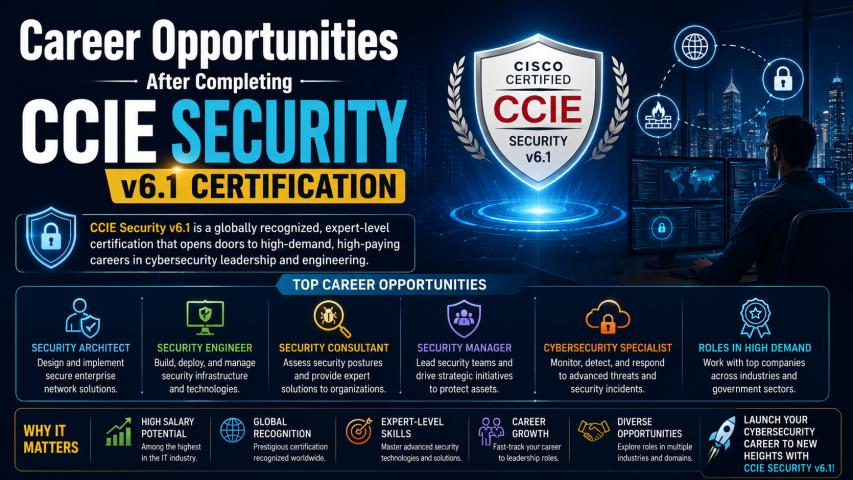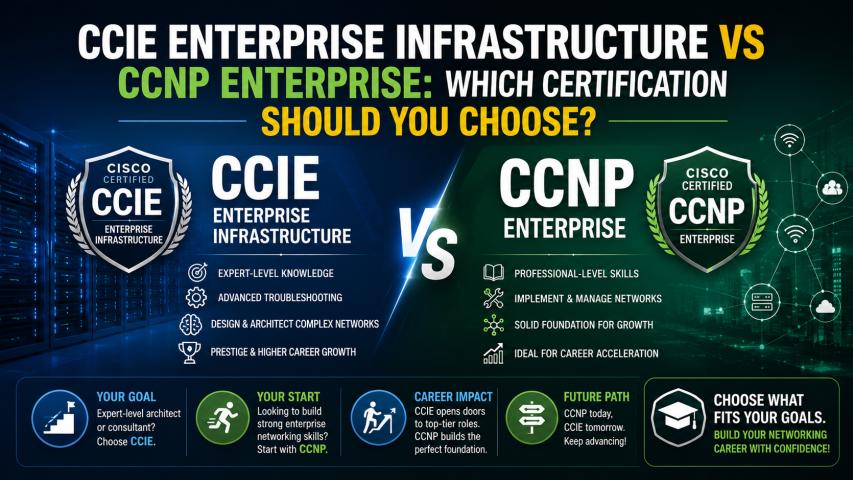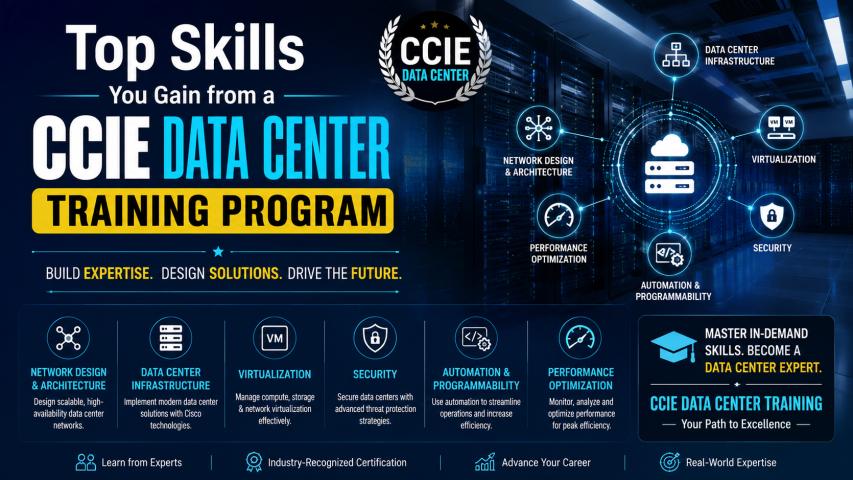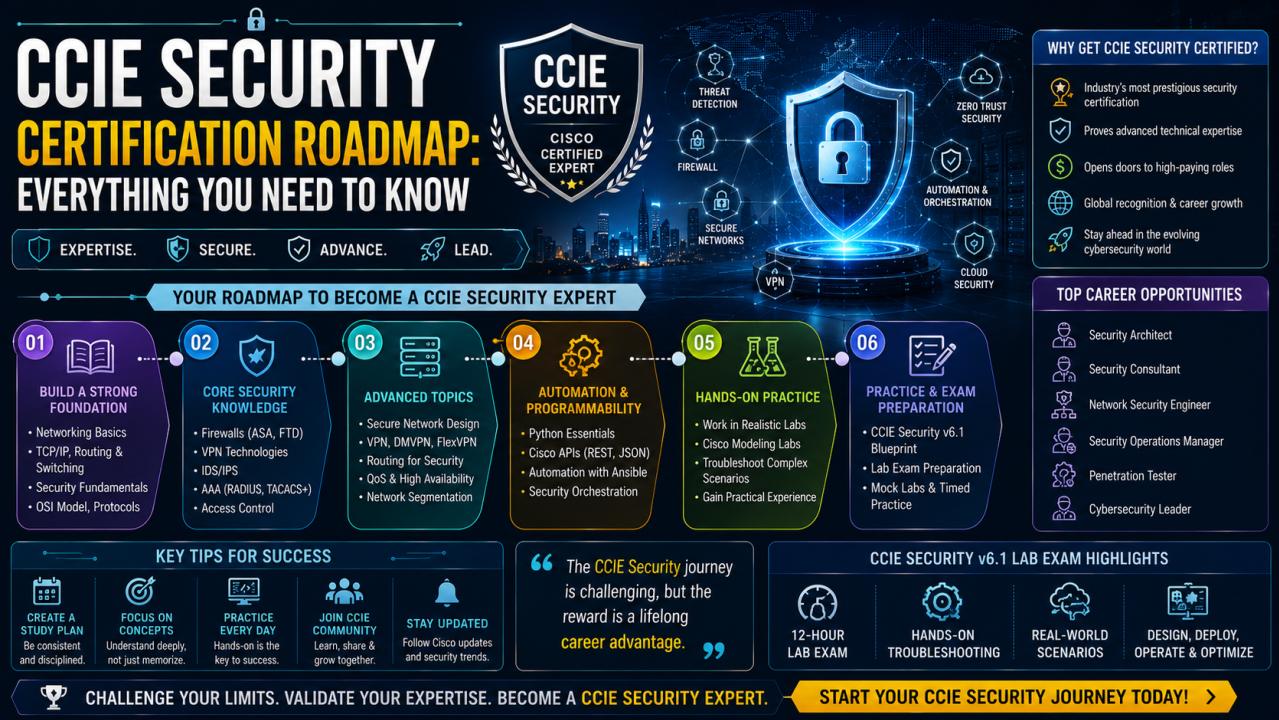
The CCIE Security certification is one of the most prestigious credentials for networking and cybersecurity professionals who want to validate their expertise in securing enterprise networks. Recognized worldwide, this certification demonstrates advanced knowledge of Cisco security technologies and the ability to design, deploy, manage, and troubleshoot complex security infrastructures.
For professionals planning to build expertise in Enterprise CCIE Security, understanding the certification roadmap is the first step toward achieving this expert-level credential. A structured preparation strategy helps candidates develop the technical skills required to succeed in both the qualifying exam and the hands-on lab assessment.
Whether you are an experienced network engineer, a security administrator, or an IT professional looking to advance your career, this guide outlines everything you need to know about the CCIE Security certification roadmap, including exam structure, recommended skills, preparation strategies, career opportunities, and practical tips.
What Is the CCIE Security Certification?
The Cisco Certified Internetwork Expert (CCIE) Security certification is Cisco's expert-level certification designed for professionals responsible for implementing and managing enterprise security solutions. It validates advanced technical skills required to secure modern enterprise infrastructures against evolving cyber threats.
Unlike entry-level certifications, CCIE Security emphasizes practical expertise. Candidates are expected to configure, integrate, automate, optimize, and troubleshoot enterprise security environments using Cisco technologies.
The certification demonstrates proficiency in areas such as:
Enterprise security architecture
Secure network access
Identity and access management
Infrastructure security
Secure connectivity
Threat protection
Automation and programmability
Organizations value CCIE Security-certified professionals because they possess the knowledge needed to protect critical business infrastructure.
Why Pursue the CCIE Security Certification?
Global Industry Recognition
CCIE certifications have earned a strong reputation across the networking industry. Employers recognize certified professionals as individuals capable of solving complex networking and security challenges.
Career Advancement
As organizations continue investing in cybersecurity, the demand for professionals with advanced security expertise continues to grow. Holding a CCIE Security certification can open opportunities in senior engineering, consulting, architecture, and leadership roles.
Strong Technical Foundation
Preparing for CCIE Security helps professionals gain in-depth practical knowledge of enterprise security technologies that can be applied in real-world environments.
Increased Earning Potential
Advanced certifications often contribute to higher-paying technical roles, particularly in enterprise networking, cybersecurity consulting, and infrastructure architecture.
Understanding the CCIE Security Certification Roadmap
Cisco has designed the certification process to evaluate both theoretical understanding and practical implementation skills.
Step 1: Pass the Qualifying Core Exam
Candidates begin by passing the qualifying core exam, which assesses knowledge across multiple enterprise security domains.
The exam typically includes topics such as:
Security architecture
Network security
Secure access
VPN technologies
Identity services
Cloud security
Content security
Endpoint protection
Automation
Programmability
Passing this exam qualifies candidates to attempt the CCIE Security lab exam.
Step 2: Complete the CCIE Security Lab Exam
The lab exam focuses entirely on hands-on skills.
Candidates must demonstrate their ability to:
Configure enterprise security solutions
Deploy Cisco security technologies
Troubleshoot enterprise security issues
Integrate multiple security platforms
Automate operational tasks
Optimize network performance
Success requires both technical knowledge and efficient problem-solving under time constraints.
Recommended Skills Before Beginning
Although Cisco does not require formal prerequisites, candidates benefit from having several years of experience working with enterprise networks.
Networking Fundamentals
A strong understanding of:
Routing
Switching
VLANs
IP addressing
Enterprise architecture
creates the foundation necessary for advanced security topics.
Enterprise Security Experience
Hands-on exposure to firewalls, authentication systems, VPNs, and access control technologies helps candidates understand practical deployment scenarios.
Troubleshooting Skills
The ability to identify, isolate, and resolve technical issues is one of the most valuable skills during both preparation and the lab examination.
Key Technologies Covered in CCIE Security
Network Security
Candidates learn how to secure enterprise infrastructure through segmentation, access control, and policy enforcement.
Identity and Access Management
Important concepts include:
Authentication
Verifying user identity before granting network access.
Frequently Asked Questions
Is CCIE Security difficult?
Yes. It is considered one of Cisco's most challenging certifications because it combines advanced theory with extensive practical testing.
How much experience is recommended?
Many successful candidates have several years of experience working with enterprise networking and security technologies before attempting the certification.
Is the certification valuable?
The certification remains highly respected across industries and is recognized for validating expert-level networking and security skills.
Conclusion
The CCIE Security certification is an excellent choice for professionals who want to demonstrate expert-level capabilities in enterprise cybersecurity and networking. By following a structured certification roadmap, developing strong networking fundamentals, gaining extensive hands-on experience, and practicing real-world troubleshooting scenarios, candidates can confidently prepare for both the qualifying exam and the practical lab assessment.
As enterprise networks continue to evolve, organizations increasingly seek professionals who can secure complex infrastructures while supporting business growth. Investing in CCIE Security Training can provide the practical knowledge, technical expertise, and confidence needed to achieve certification and build a successful career in enterprise security.