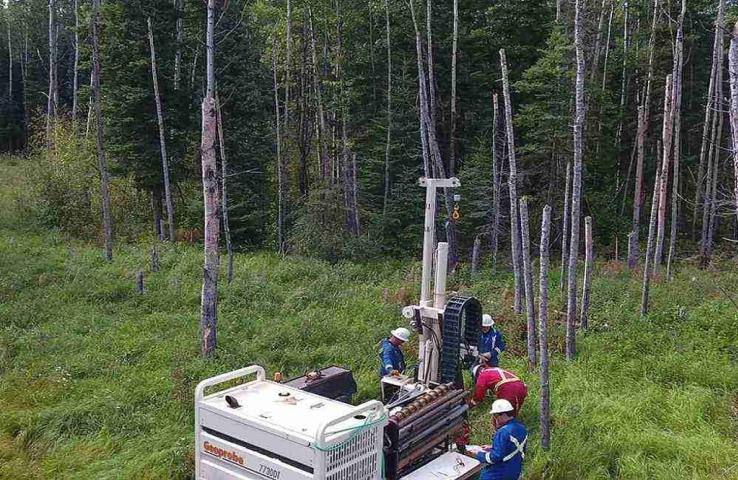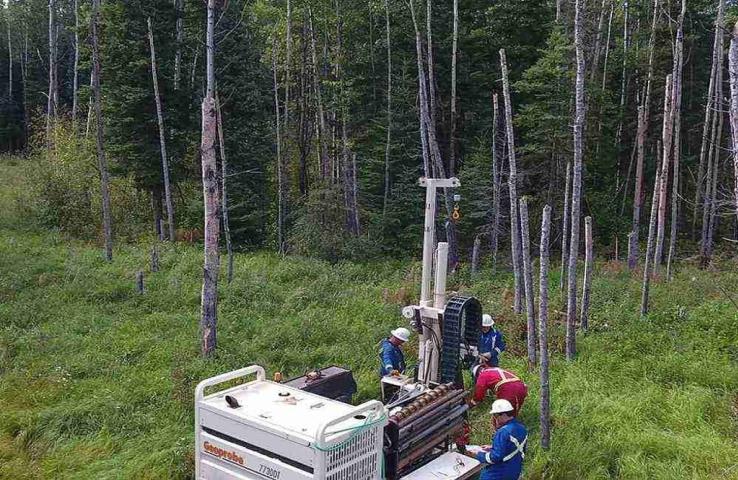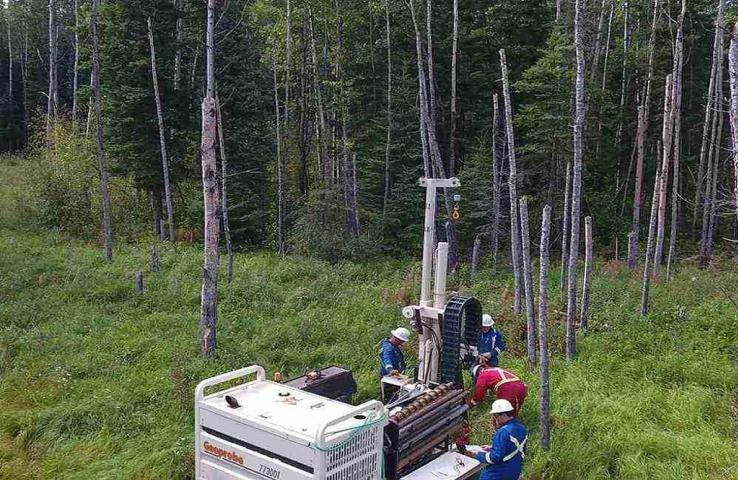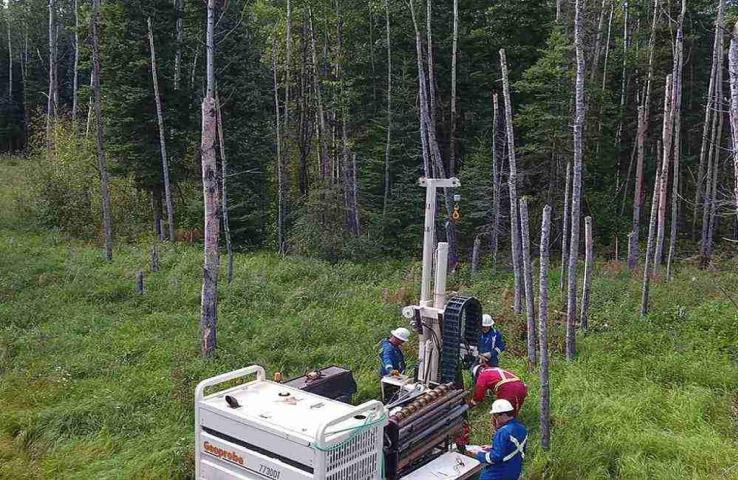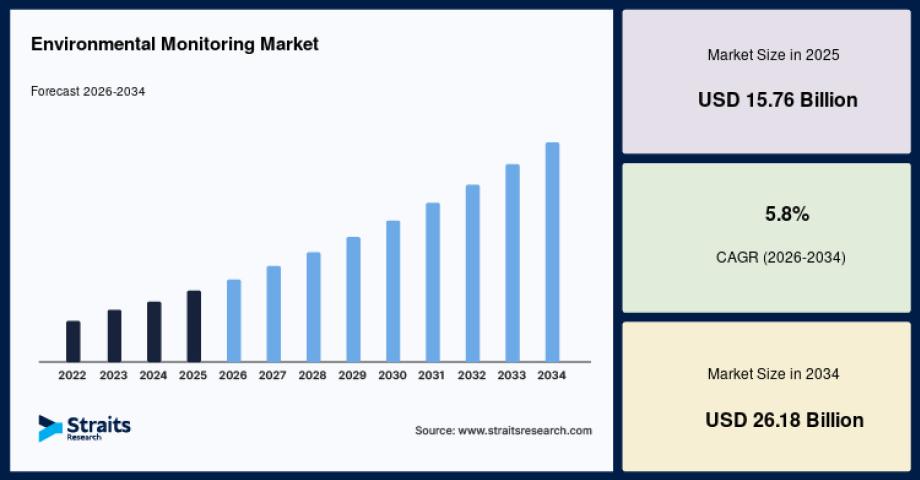

IMARC Group, a leading global market research and management consulting firm, has published its latest market intelligence report on the environmental monitoring market. The global environmental monitoring market size reached USD 24.7 Billion in 2025. Looking forward, IMARC Group expects the market to reach USD 41.7 Billion by 2034, exhibiting a growth rate (CAGR) of 5.81% during 2026-2034. Growth is driven by rising global awareness of environmental issues, technological advances in monitoring equipment, growing demand for sustainable resource management, increasingly stringent government regulations for pollution control, and more efficient use of natural resources.
The market is witnessing steady expansion as industrial activity and urbanization increase the need to track air, water, and soil quality around the clock. Integration of IoT and AI is improving data precision and making real-time compliance reporting the norm rather than the exception. Environmental monitors, continuous sampling, and air quality applications currently anchor demand, while North America holds the largest regional position.
Environmental Monitoring Market at a Glance
- Market Size: Currently valued at USD 24.7 Billion
- Projected Market Size: USD 41.7 Billion
- Growth Rate 2026-2034: CAGR of 5.81%
- Leading Component: Particulate Detection, with around 29.6% share
- Leading Product Type: Environmental Monitors, with around 52.2% share
- Leading Sampling Method: Continuous Monitoring, with around 57.9% share
- Leading Application: Air Pollution Monitoring, with around 45.5% share
- Dominant Region: North America, with over 37.0% share
How AI, IoT, and Remote Sensing Are Reshaping the Environmental Monitoring Market
- Real-Time Intelligence at Scale: IoT-enabled devices and real-time analytics are making environmental assessments faster and more accurate. Sensor networks can now flag pollution events as they happen instead of after periodic lab results arrive.
- Hybrid Sensing for Regulatory-Grade Data: Thermo Fisher Scientific's 5030iQ SHARP monitor combines light scattering nephelometry with beta attenuation technology to deliver particulate mass concentrations at one-minute intervals. The approach pairs the speed of optical sensing with the accuracy regulators demand.
- Environmental Intelligence from Space: In April, BAE Systems' Weather System Follow-on-Microwave (WSF-M) satellite launched from Vandenberg Space Force Base in California. It is the US Space Force's next-generation operational environmental satellite system, showing how remote sensing now complements ground-level monitoring.
Grab a sample PDF of this report: https://www.imarcgroup.com/environmental-monitoring-market/requestsample
Environmental Monitoring Market Trends and Drivers
Stricter government rules on environmental protection require industries to monitor water, soil, and air continuously, and the evidence base behind those rules keeps growing. In the United States, about 100 million Americans live in regions that do not meet federal air quality requirements, according to the US Environmental Protection Agency. Over 50% of the nation's lakes, rivers, and streams are estimated to be impaired, according to the World Economic Forum. An industrial report estimates that air-related public health risks cost the US economy roughly USD 150 Billion annually. Numbers like these keep investment flowing into monitoring infrastructure across air, water, and soil applications.
Technology is the second major growth lever. AI, IoT, and remote sensing enable real-time data collection and analysis, improving the accuracy and timeliness of environmental assessments. Better sensors, cloud analytics, and automated workflows are also lowering the effort needed to operate large monitoring networks, which widens adoption among utilities, manufacturers, and municipalities.
Public awareness of climate change, water quality, and biodiversity loss is the third driver. It shapes government policy and corporate practice alike. In one widely followed example, 3M agreed with the US EPA on a plan to address per- and polyfluoroalkyl substances (PFAS) in the Cordova region, including new technologies at its site to enhance the quality of water used in operations. Such commitments create direct demand for water and soil testing instruments.
Ask an analyst for customized report: https://www.imarcgroup.com/request?type=report&id=4296&flag=E
Global Regulatory and Sustainability Landscape Shaping Demand
- Tighter Particulate Standards in the United States: In February, the EPA strengthened the National Ambient Air Quality Standards for particulate matter, setting the primary annual PM2.5 standard at 9.0 micrograms per cubic meter and revising the Air Quality Index and monitoring network.
- Europe's Revised Air Quality Directive: The revised EU directive tightens the annual PM2.5 limit from 25 to 10 micrograms per cubic meter and requires member states, for the first time, to monitor ultrafine particles. Allowable levels are lowered for twelve air pollutants in total.
- Data Quality Under the Microscope in India: In August, CSIR-NPL launched a certification framework for Continuous Emission Monitoring Systems (CEMS) in India. The framework followed a five-year effort and addresses concerns over CEMS reliability for regulatory compliance.
- Airshed Planning Support: A World Bank program is introducing airshed management and planning tools to support India's first State-wide Air Quality Action Plans and the first extensive Regional Airshed Action Plan for the Indo-Gangetic Plains, covering seven union territories and states.
Key Government Schemes and Policy Programs Supporting the Industry
- United States, Clean Air Act and Clean Water Act: The EPA enforces statutes that call for ongoing monitoring of air and water quality, creating a steady compliance-driven demand base for monitors, sensors, and software.
- European Union, Green Deal and "Fit for 55" Package: The package targets a 55% cut in greenhouse gas emissions. Europe already operates more than 4,000 air quality monitoring stations, and the Water Framework Directive requires member states to achieve good ecological and chemical status for water bodies.
- India, National Clean Air Programme (NCAP): NCAP aims to improve air quality in 131 cities across 24 States and Union Territories, targeting up to a 40% reduction in PM10 concentrations or attainment of national standards. Yet the Centre for Research on Energy and Clean Air reports that 28 of the 130 NCAP cities still lack continuous ambient air quality monitoring stations, which points to a large infrastructure gap.
- China, Blue Sky Action Plan: The plan aims to minimize air pollution and reinforces demand for urban and industrial air monitoring across the country.
- Saudi Arabia, Solar Program: Renewable energy projects, including a USD 50 Billion Saudi solar program, incorporate environmental monitoring for efficiency and compliance.
- Brazil, National Environment System (SISNAMA): The system aims to improve monitoring infrastructure in a region where deforestation and industrial emissions from mining and agriculture are pressing concerns.
Environmental Monitoring Industry Segmentation
The report has segmented the market into the following categories:
Breakup By Component:
- Particulate Detection
- Chemical Detection
- Biological Detection
- Temperature Sensing
- Moisture Detection
- Noise Measurement
Particulate detection leads with around 29.6% share. Health concerns tied to respiratory disease, strict air pollution standards, and the air quality degradation that accompanies industrialization and urbanization all push demand for precise particulate measurement.
Breakup By Product Type:
- Environmental Monitoring Sensors
- Environmental Monitors
- Environmental Monitoring Software
- Wearable Environmental Monitors
Environmental monitors account for around 52.2% share. Rising global regulations, public awareness of pollution's health impact, and the integration of IoT and big data analytics are enhancing their functionality and appeal.
Breakup By Sampling Method:
- Continuous Monitoring
- Active Monitoring
- Passive Monitoring
- Intermittent Monitoring
Continuous monitoring leads with around 57.9% share. Real-time data lets operators detect and respond swiftly to environmental hazards, and constant surveillance of water, air, and soil quality is central to meeting shrinking compliance thresholds.
Breakup By Application:
- Air Pollution Monitoring
- Water Pollution Monitoring
- Soil Pollution Monitoring
- Noise Pollution Monitoring
Air pollution monitoring commands around 45.5% share. Growing urban populations and industrial activity are raising demand for continuous, accurate air quality assessment that can guide policy-making and health advisories.
Breakup By Region:
- North America (United States, Canada)
- Asia Pacific (China, Japan, India, South Korea, Australia, Indonesia, Others)
- Europe (Germany, France, United Kingdom, Italy, Spain, Russia, Others)
- Latin America (Brazil, Mexico, Others)
- Middle East and Africa
North America leads with over 37.0% share, and the United States accounts for 78.20% of the regional market. Strong regulation, advanced technology infrastructure, and climate initiatives sustain investment in the region.
In Asia Pacific, around 4 billion people, or 92% of the population, are exposed to harmful levels of air pollution, according to the Climate and Clean Air Coalition. About 80% of the region's wastewater is also released untreated, which strengthens the case for real-time monitoring in both air and water. Europe's demand is anchored by strict climate and water laws and by smart city investment in the Netherlands and Germany.
Latin America is driven by pollution, deforestation, and climate concerns. More than 150 million people there live in cities that do not comply with air quality standards, and more than 77 million lack access to clean water. In the Middle East and Africa, twelve of the world's most water-stressed nations create strong demand for advanced water quality monitoring, while PM2.5 levels in cities such as Riyadh and Johannesburg exceed safe limits.
Competitive Landscape
The report provides a comprehensive analysis of the competitive landscape in the environmental monitoring market, with detailed profiles of key companies, including:
- 3M Company
- Agilent Technologies Inc.
- Danaher Corporation
- Honeywell International Inc.
- Thermo Fisher Scientific Inc.
Other prominent players covered include Emerson Electric Co., General Electric, Horiba Ltd., Merck KGaA, Siemens AG, TE Connectivity, and Teledyne Technologies Incorporated. The landscape mixes established technology and industrial firms with emerging contenders. Companies compete on technological innovation, accuracy, reliability, and system integration capabilities, while acquisitions and partnerships are common ways to expand product portfolios and geographic reach.
Competitive Dynamics Shaping the Sector
- Certification as a Competitive Moat: HORIBA's AP-380 Series air quality monitors have secured type approvals from the US EPA, the German Federal Environment Agency with TÜV Rheinland, the UK Environment Agency via CSA Group, South Korea's NIER, and China's SAMR. Multi-jurisdiction approvals open doors to national and local government buyers.
- Consolidation in Sensing Technology: Industrial Scientific, a Fortive division, acquired New Zealand-based Aeroqual, a leader in real-time air quality monitoring hardware and software. Deals like this show how safety and environmental sensing businesses are converging.
- Sustainability as a Corporate Priority: In February, Danaher Corporation committed to science-based greenhouse gas reduction targets aligned with the Science Based Targets initiative, including a long-term net zero value chain emissions target.
- Compliance-Led Product Launches: In August, Honeywell introduced an advanced emissions monitoring system for offshore oil and gas operations, pairing advanced sensors with analytics to deliver precise, real-time emissions data.
What Does the Full Report Cover?
If you are tracking the environmental monitoring market for investment decisions, market entry planning, competitive benchmarking, or strategic advisory, IMARC Group's report gives you everything in one place:
- Comprehensive quantitative analysis of market segments by component, product type, sampling method, application, and region
- Detailed assessment of market drivers, challenges, and opportunities
- Mapping of the leading and fastest-growing regional markets
- Country-level coverage for the United States, Canada, Germany, France, United Kingdom, Italy, Spain, Russia, China, Japan, India, South Korea, Australia, Indonesia, Brazil, and Mexico
- Competitive landscape and key company profiles
- Porter's Five Forces analysis to assess new entrants, rivalry, supplier power, buyer power, and threat of substitution
The report is delivered in PDF and Excel formats and includes 10% free customization.
Recent News and Developments in Environmental Monitoring Market
- September: HORIBA UK announced that its AP-380 Series Air Quality Monitor achieved MCERTS certification, the UK's gold-standard scheme for environmental monitoring equipment, adding to approvals already held from the US EPA, German UBA/TÜV Rheinland, Korean NIER, and Chinese SAMR.
- June: HORIBA Group's AP-380 Series received type approvals that enable sales to national and local governments across Europe, the Americas, the Middle East, East Asia, and Southeast Asia.
- December: Industrial Scientific, a division of Fortive Corporation, acquired Aeroqual, expanding its worker-safety sensing portfolio with environmental monitoring technology and analytics.
- August: Honeywell launched a new advanced emissions monitoring system for offshore oil and gas operations to improve real-time emissions and air quality monitoring and help operators meet legal obligations.
- August: CSIR-NPL launched a certification framework for Continuous Emission Monitoring Systems in India to improve data quality for regulatory compliance.
- July: Thermo Fisher Scientific launched the 5014iQ Beta Attenuation Monitor and the 5030iQ SHARP Monitor for continuous ambient particulate monitoring, approved by the US EPA.
- June: Agilent Technologies introduced the Agilent 7010D Triple Quadrupole GC/MS System for food and environmental testing at the 72nd ASMS Conference on Mass Spectrometry and Related Topics.
Note: If you require specific details, data, or insights that are not currently included in the scope of this report, we are happy to accommodate your request. As part of our customization service, we will gather and provide the additional information you need, tailored to your specific requirements. Please let us know your exact needs, and we will ensure the report is updated accordingly to meet your expectations.
Key Questions This Report Answers
- What is the current global environmental monitoring market size and what is its projected value?
- Which component, product type, sampling method, and application segments hold the largest share in the global environmental monitoring market?
- What are the key drivers of global environmental monitoring market growth?
- Which region dominates the global environmental monitoring market and why?
- How are stricter air, water, and soil quality regulations reshaping investment in monitoring infrastructure worldwide?
- Who are the top companies in the global environmental monitoring market and what are their competitive strategies?
- How are IoT, AI, and remote sensing changing the accuracy and adoption of environmental monitoring solutions?
About Us
IMARC Group is a global management consulting firm that helps the world's most ambitious changemakers to create a lasting impact. The company provides a comprehensive suite of market entry and expansion services. IMARC offerings include thorough market assessment, feasibility studies, company incorporation assistance, factory setup support, regulatory approvals and licensing navigation, branding, marketing and sales strategies, competitive landscape and benchmarking analyses, pricing and cost research, and procurement research.
Media and Sales Contact
IMARC Group
Email: sales@imarcgroup.com
United States: +1-201-971-6302
India: +91-120-433-0800
United Kingdom: +44-753-714-6104