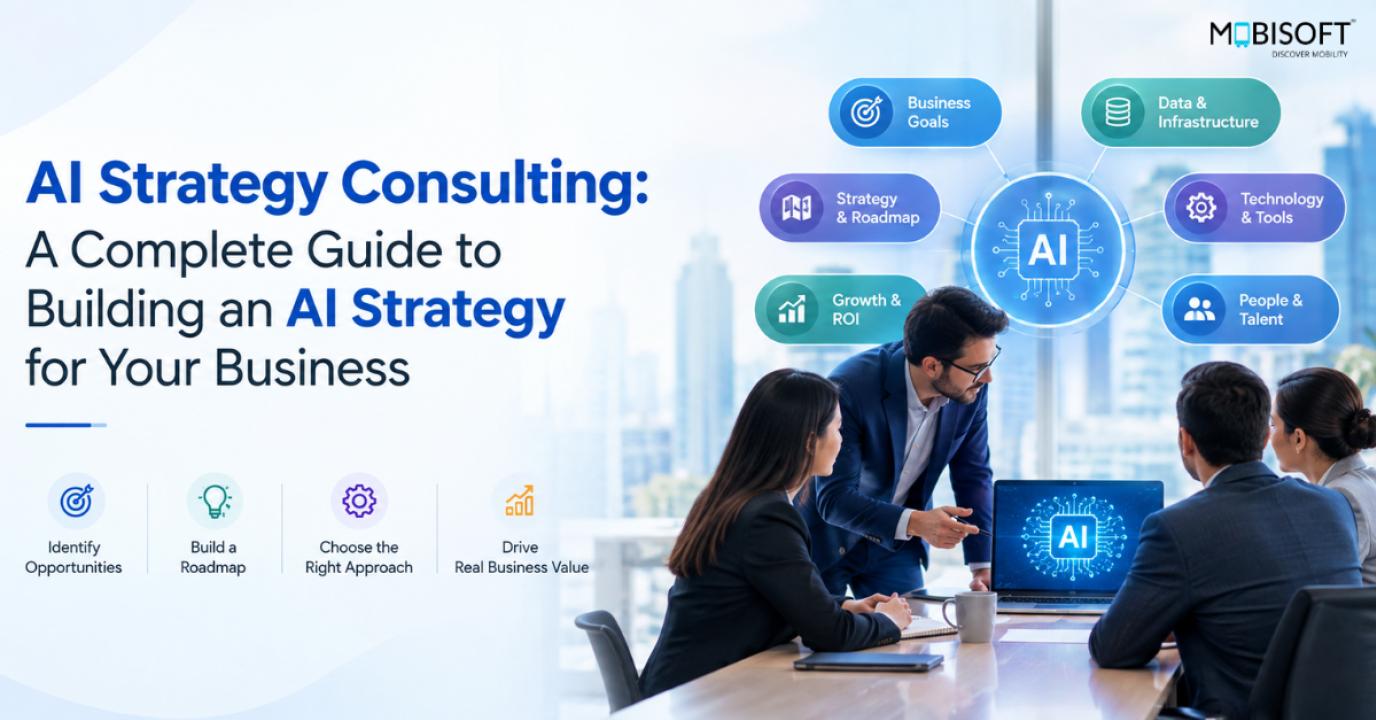
Your business has seen the hype around artificial intelligence. Everyone's talking about machine learning, large language models, and AI-powered automation. But here's the truth: jumping into AI without a plan is like driving cross-country without a map. You might end up somewhere, but probably not where you intended.
That's where AI strategy services come in. It's not about having the latest technology or hiring expensive data scientists. It's about having a clear, step-by-step plan that connects AI to your actual business goals: revenue growth, cost reduction, customer satisfaction, or competitive advantage.
This guide walks you through everything you need to know about building a real artificial intelligence strategy for your organization. Whether you're just beginning your AI journey or trying to fix broken projects, you'll find practical answers here.
What Is AI Strategy Consulting?
AI strategy consulting isn't just tech advice. It's a structured process that helps your business figure out where AI actually makes sense, how to build it the right way, and how to run it safely and profitably once it's live.
When consultants work with you on AI strategy consulting, they're doing three core things: Assessing where you are today: Looking at your data, your people, your infrastructure, and your current processes to understand what's really possible Identifying the best opportunities: Finding the specific problems AI can actually solve for your business (not just problems that sound interesting) Building a realistic roadmap: Creating a step-by-step plan with timelines, budgets, and measurable results
Think of it as building a bridge between "we want AI" and "our AI system is working and making us money." The gap between those two things is where most companies fail.
A good AI strategy consulting engagement includes everything from initial planning through production deployment. It's not just a document you file away. It's a living plan that guides your investment and keeps teams aligned.
AI software solutions work best when they're built on top of a solid strategy. Without that foundation, even the most sophisticated technology becomes expensive and disappointing.
Why Do Enterprises Need an AI Strategy?
Most companies skip the strategy part. They see a competitor launch an AI product, panic slightly, then tell their teams to "go build AI" without clear direction. The results are predictable: projects that take twice as long, cost way more than budgeted, and sometimes never make it to production.
Here's what actually happens in companies without a real AI business consulting plan: POC-to-production gap: You build a proof-of-concept in months. Then it sits. Moving it to production takes another year because nobody planned for data pipelines, security, scaling, or governance. Budget waste: Teams build AI models that nobody actually uses because they don't solve real problems. Money spent, value lost. Skills drain: You hire expensive AI talent to build things, but without strategy, they leave frustrated because there's no clear vision. Security and compliance mess: AI systems get built without thinking about data privacy, model transparency, or regulatory requirements. Then you have to rebuild them. Competing initiatives: Different teams pursue different AI projects with no alignment, leading to duplicate work and conflicting priorities.
An enterprise that invests in strategy first avoids all of this. You know exactly which AI projects to fund, when to expect results, and how each one connects to the business.
The 3-Pillar AI Strategy Framework: Build Vs. Buy Vs. Partner
Not every AI problem requires the same solution. A good strategy helps you decide which approach makes sense for which problem.
Build: Custom AI Development
When to build from scratch: Your problem is industry-specific or tied to proprietary data only you have Off-the-shelf solutions don't exist or are too generic for your needs You need models trained specifically on your business context (customer data, internal processes, domain knowledge)
Building takes longer and costs more upfront, but you own the model and can customize it endlessly. This makes sense when AI is core to your competitive advantage.
Buy: Off-the-Shelf Solutions
When to buy existing tools: General problems (customer support chatbots, fraud detection, basic forecasting) You need results fast, and the standard solution works for 80% of your use cases You don't want to maintain AI infrastructure yourself
Buying is cheaper and faster initially. The trade-off is that you're limited by what the vendor built, and you're dependent on them for updates and support.
Partner: Managed Services and AI Agent Development
When to partner with an expert: You want custom solutions but don't want to hire and manage a full AI team You need an objective perspective on what will actually work You want someone accountable for results, not just deliverables
An AI agent development partner helps you design, build, and optimize AI systems without the overhead of building an internal team. AI strategy services can also help you define the right priorities, roadmap, and implementation approach before investing in development. You pay for results and expertise, not headcount.
Many companies use AI business solutions across all three approaches for different problems. One company might build a custom recommendation engine (build), use a ChatGPT API for customer service (buy), and partner with consultants for governance and MLOps infrastructure (partner).
How to Assess Your AI Readiness in 3 Steps
Before you build anything, you need to know where you actually stand. This is the "Discover" phase that every real AI strategy starts with.
Step 1: Assess Your Data
This is the unglamorous part, but it's critical. AI runs on data, so you need to know: Where does your data live? (Spreadsheets? Databases? Cloud? All over the place?) How good is the data? (Complete? Accurate? Or full of gaps and errors?) Who owns it? (Is there a data governance process, or does everyone just do their own thing?) Can you access it? (Privacy rules, security restrictions, legal complications?)
If your data is spread across systems that don't talk to each other, you'll need a data engineering project before you can even start with AI.
Step 2: Evaluate Your Skills and Talent
AI isn't just about technology; it's about people. Ask yourself: Do you have data engineers, ML engineers, and data scientists on staff? (Be honest.) Are there people in your organization who understand both AI and your business? Can your teams move fast, or are there process bottlenecks?
If you have gaps, you either need to hire, train, or partner. There's no shame in any of those options.
Step 3: Review Your Technology Infrastructure
Not all infrastructure is ready for AI. You need to understand: Can your systems handle real-time predictions, or only batch processing? Do you have cloud platforms for scaling, or are you entirely on-premises? How secure is your infrastructure for handling models and predictions? Can your current systems integrate with new AI tools without breaking?
Legacy systems can work with AI, but they often need modernization first. That's not a reason to panic; it's just something to plan for.
Building Your AI Strategy Roadmap: The Enterprise Approach
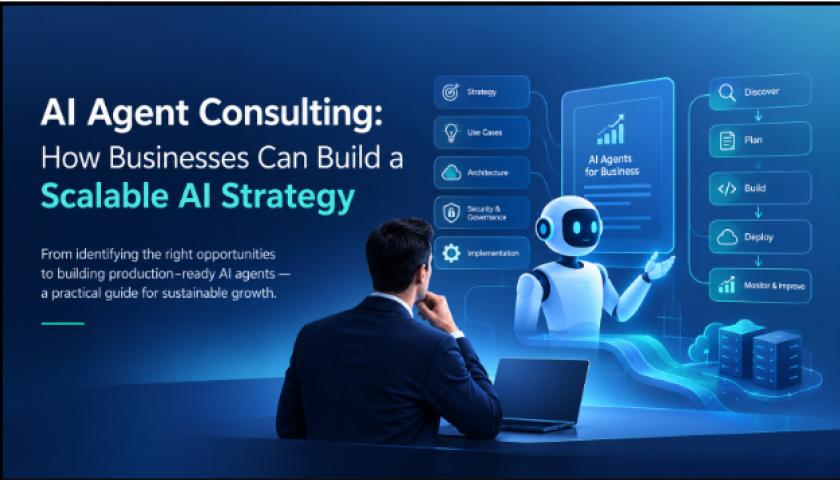
A real AI strategy roadmap has three phases. This isn't arbitrary; it's the order that actually works.
Phase 1: Discover and Map
Start by asking questions, not building things. This phase is about understanding: What business problems could AI actually solve? (Not "what's trendy," but "what matters to our bottom line?") Which problems have the best chance of success? (Quick wins build momentum.) What do we need to prepare before we build?
This typically takes 4-8 weeks and results in a prioritized list of AI opportunities, each with a rough timeline and resource estimate.
Phase 2: Strategize and Plan
Once you know what you're building, now you plan how. This is where your artificial intelligence strategy becomes more specific: Create detailed AI roadmaps for the top 3-5 opportunities Build a KPI framework: how will you measure success? (Not just "does it work," but "is it making us money?") Develop an implementation strategy with real timelines Plan for data engineering, MLOps infrastructure, governance, and security upfront
This is where you get specific about budget, team structure, and what success actually looks like. This phase takes 6-12 weeks.
Phase 3: Execute and Optimize
Now you build. But unlike projects without strategy, you know: Why you're building this (it was prioritized in Discover) How it needs to work (requirements were defined in Strategize) How to measure it (KPIs are clear)
You start with rapid prototyping (rapid POCs), validate with real users or data, then integrate with production systems. You monitor performance, iterate, and optimize continuously.
A typical first AI project takes 3-6 months to production using this approach. Without strategy, the same project takes 9-18 months.
Key Components of a Winning AI Strategy
Once you have your roadmap, focus on these five things:
Data Governance and Security Who can access what data, and why? How do you keep customer data private? What happens if an AI model makes a biased decision?
Set these rules at the start. It's cheaper to build with governance than to bolt it on later.
MLOps and Infrastructure Readiness How will you update and retrain models over time? What happens when data changes and model performance drops? How do you monitor model health in production?
Bad MLOps kills AI projects. You need automated pipelines, not manual processes.
AI Governance Frameworks How do you ensure models are transparent and explainable? What's your process for catching and fixing model bias? Who reviews AI decisions before they affect customers?
Governance isn't bureaucracy; it's how you keep AI systems trustworthy and compliant.
Talent and Organizational Structure Who owns AI decisions? How do AI teams work with business teams? Do you need to hire, train, or reorganize?
AI works best when there's clear ownership, and teams communicate across silos.
Budget Allocation and ROI Metrics How much should you invest in each AI project? When do you expect to see returns? How do you know if a project was worth the money?
This is where business strategy and AI business solutions overlap. Every dollar spent on AI should connect to expected returns.
Overcoming Common AI Strategy Challenges
Even with a solid strategy, organizations hit speed bumps. Here's how to handle the big ones:
Challenge: Data Quality and Availability Problem: Your data is messy, incomplete, or locked away in systems you can't access Solution: Start with a data audit. Prioritize cleaning the data for your top AI opportunities first. Use this as fuel to build better data practices across the company
Challenge: Skills Shortage Problem: You can't find or hire experienced AI talent Solution: Hire for potential, not just experience. Partner with consultants for expertise while you build internal capabilities. Focus on training existing strong people
Challenge: Legacy System Integration Problem: Your AI needs to work with systems built 10+ years ago Solution: Don't rip and replace. Plan for hybrid architectures. APIs and integration layers can connect new AI to old systems without breaking them
Challenge: Governance and Compliance Problem: Your industry has strict regulations (finance, healthcare, etc.), and you're worried about AI creating compliance problems Solution: Build governance into the strategy from day one. Document decisions. Make models explainable. Work with legal and compliance teams upfront, not after you've built something
Conclusion
Building an AI strategy consulting approach to artificial intelligence isn't optional for enterprises anymore. The companies winning with AI aren't the ones with the fanciest technology. They're the ones with clarity, clear goals, clear processes, clear accountability.
A real AI business consulting engagement helps you create that clarity. It's the difference between AI projects that feel like expensive experiments and AI systems that consistently deliver measurable business value.
The best time to start is now. Not because AI is trendy, but because your competitors are already moving. A structured strategy puts you ahead, reduces your risk, and makes sure every dollar spent on AI actually counts.
Ready to build your AI strategy? The first step is simple: assess where you stand, identify your best opportunities, and create a prioritized roadmap. That's what separates companies that succeed with AI from those that waste time and budget on projects that never matter.