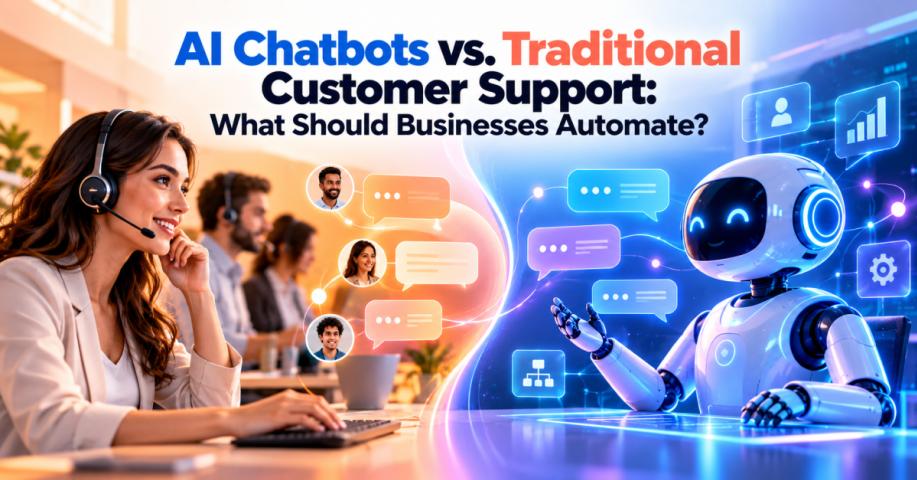
Customer expectations have changed significantly. People want quick answers, convenient self-service, and support that is available beyond standard business hours. At the same time, businesses cannot keep expanding support teams simply to handle repetitive questions.
This has made AI chatbots an increasingly practical option for customer service. Modern chatbots can answer questions, retrieve information, qualify requests, and support specific workflows. However, they are not a complete replacement for human agents. The better approach is to determine which customer interactions should be automated and which require human judgment.
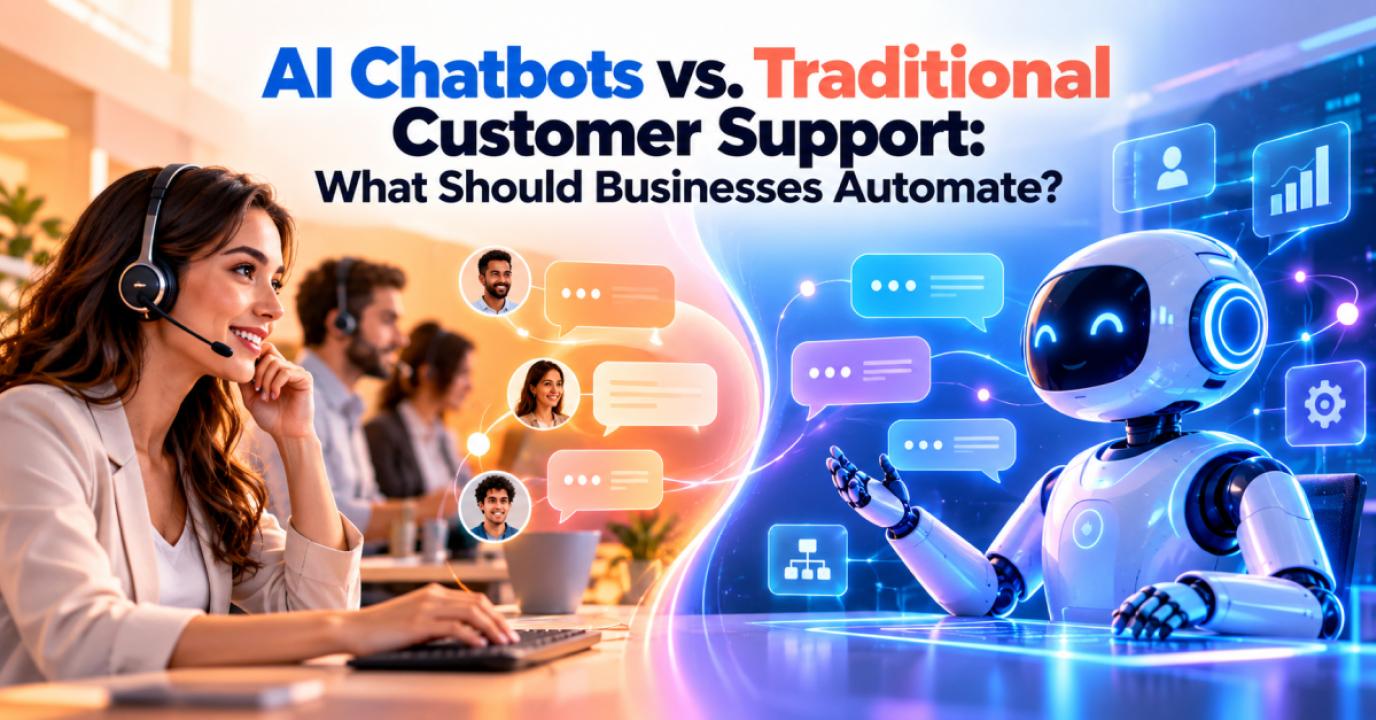
AI Chatbots vs. Traditional Customer Support: What's the Difference?
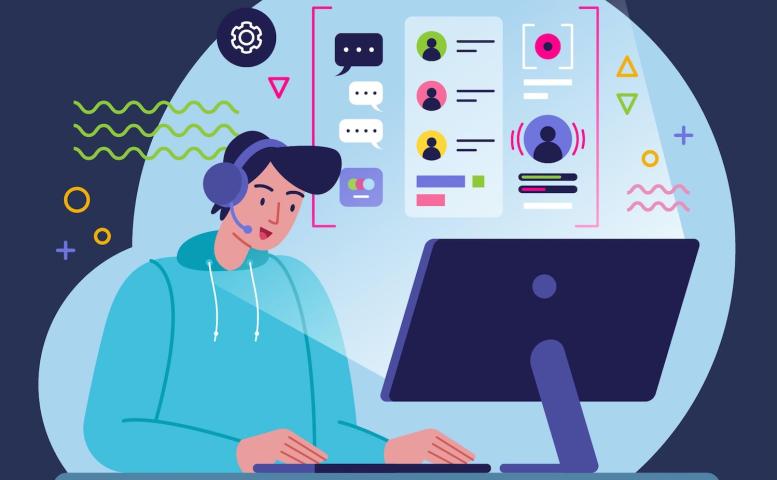
Traditional customer support relies primarily on human agents to understand customer requests, investigate problems, and provide solutions. This approach works particularly well when customers have complex, sensitive, or unusual issues.
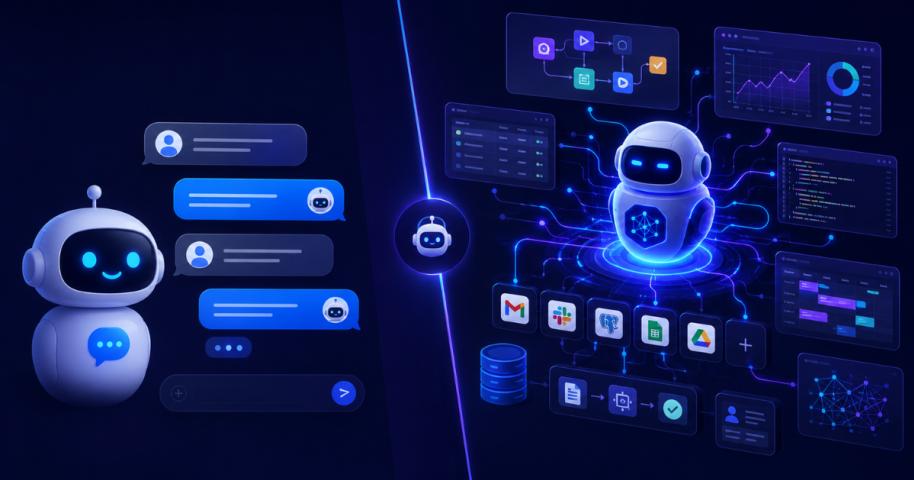
AI chatbots, on the other hand, automate conversations using artificial intelligence. They can handle multiple interactions simultaneously, provide immediate responses, and remain available around the clock. When connected to business systems and trusted knowledge sources, they can also perform specific support tasks instead of simply answering FAQs.
The choice is therefore not necessarily between AI and humans. It is about assigning the right type of interaction to the right support channel.
What Should Businesses Automate With AI Chatbots?
The best candidates for automation are usually repetitive, predictable, and relatively low-risk interactions.
Frequently Asked Questions
Questions about pricing, policies, product specifications, operating hours, return policies, or basic account information can often be handled without human intervention. A chatbot can provide instant answers while reducing the number of repetitive requests reaching support agents.
Order and Delivery Updates
Customers frequently contact businesses to ask where an order is or when it will arrive. When connected to relevant backend systems, an AI chatbot can retrieve order information and provide status updates without requiring an agent to manually investigate each request.
Appointment and Booking Requests
Scheduling appointments, confirming bookings, handling cancellations, and answering availability questions are also strong automation candidates. These workflows typically follow defined rules and can be integrated with calendars or booking systems.
Initial Troubleshooting
AI chatbots can guide customers through common troubleshooting steps. They can ask diagnostic questions, recommend approved solutions, and escalate the conversation if the problem cannot be resolved.
Lead Qualification
Chatbots can collect information from prospects, understand their requirements, and identify high-intent leads before transferring them to a sales representative. This allows sales teams to spend more time on qualified opportunities.
Ticket Creation and Routing
A chatbot can collect the customer's issue, gather relevant details, classify the request, and route it to the appropriate department. This reduces manual triage and gives human agents useful context before they begin working on the issue.
What Should Businesses Keep With Human Support Agents?
Automation has clear limits. Businesses should retain human involvement when an interaction requires empathy, judgment, negotiation, or detailed investigation.
Complex technical problems, billing disputes, sensitive complaints, account-related escalations, and high-value customer interactions are common examples.
Customers may also become frustrated when an automated system repeatedly fails to understand their situation. A well-designed support model should therefore provide an easy route to a human agent instead of forcing customers through endless automated responses.
Human agents can also handle situations where context, emotional intelligence, or negotiation is more important than speed. AI should support these teams rather than create additional barriers between customers and the people who can solve their problems.
When Should Businesses Invest in AI Chatbot Development?
Businesses should consider AI chatbot development when support teams handle large volumes of repetitive requests, response times are increasing, or customers expect assistance outside normal working hours.
Other indicators include growing support costs, multiple communication channels, inconsistent responses, and agents spending too much time answering questions that follow predictable patterns.
Organizations can use AI chatbot development services to create support experiences tailored to their workflows, knowledge sources, customer journeys, and existing business systems.
Instead of deploying a generic chatbot, businesses can design automation around specific objectives such as reducing support volume, improving response times, increasing self-service, qualifying leads, or helping customers navigate products and services.
How Custom AI Chatbots Handle Complex Support Workflows
Not every business can rely on a basic FAQ chatbot. Companies with specialized products, complex processes, or multiple internal systems may need more customized automation.
Custom chatbot development services can support integrations with CRM platforms, helpdesk systems, knowledge bases, ERP platforms, databases, and other business applications. These connections allow the chatbot to provide more relevant responses and assist with defined workflows.
For example, an ecommerce chatbot could identify a customer, retrieve an order, explain its status, and create a support ticket when an issue requires human intervention.
The goal is not simply to make the chatbot more conversational. It is to connect the conversation with the information and actions required to resolve the customer's problem.
How to Build a Balanced Human + AI Customer Support Model
A practical customer support workflow can follow this pattern:
Customer query → AI chatbot → Automated resolution → Complex issue identified → Human agent → Resolution
The chatbot handles routine interactions first. If the request falls outside its capabilities, it transfers the conversation to a human agent along with relevant context.
Before automating customer support, businesses should identify suitable use cases, establish automation boundaries, define success metrics, and evaluate the systems and data involved. AI strategy consulting can help organizations make these decisions before committing to implementation.
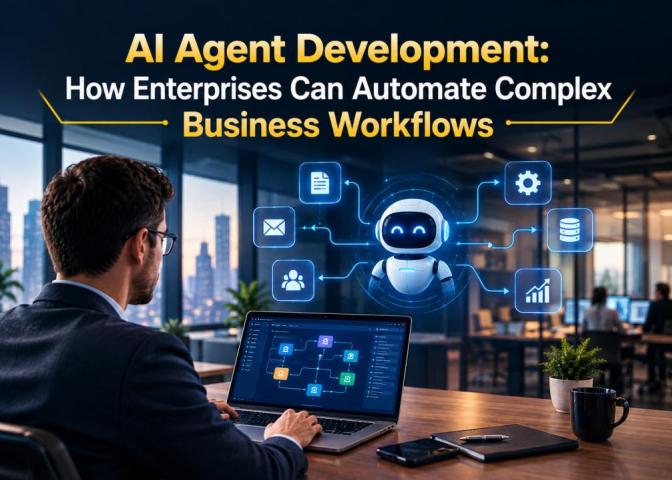
For businesses moving beyond basic conversational automation, AI-powered systems can also coordinate more complex tasks across applications and workflows. This is where AI agent development can complement chatbot-based support by enabling systems to perform multi-step actions rather than only respond to customer questions.
This approach makes it easier to expand automation gradually. Businesses can start with low-risk workflows, measure results, identify gaps, and then automate additional processes.
Best Practices for Automating Customer Support
Successful automation requires more than deploying an AI chatbot. Businesses should:
Start with repetitive, high-volume requests where automation can deliver measurable value.
Use reliable business data so responses remain accurate and relevant.
Define clear escalation rules for complex, sensitive, or uncertain requests.
Make human handoff easy and transfer conversation context whenever possible.
Monitor chatbot performance using metrics such as resolution rate, escalation rate, response time, and customer satisfaction.
Continuously improve the system based on failed conversations, customer feedback, and changing business requirements.
Businesses should evaluate automation based on customer outcomes rather than simply measuring how many conversations the chatbot handles. A high automation rate means little if customers still leave without a resolution.
Conclusion
The debate between AI chatbots and traditional customer support is ultimately the wrong question. Businesses do not have to choose one over the other.
AI chatbots are well suited to repetitive, predictable, and scalable interactions. Human agents remain essential for complex, sensitive, and relationship-driven situations.
The strongest customer support strategy combines both. Automate what technology can handle reliably, give customers a clear path to human assistance, and continuously improve the boundary between automation and human expertise.
For businesses planning AI adoption, the objective should not be to automate everything. It should be to automate the right interactions while making human support more effective where it matters most.