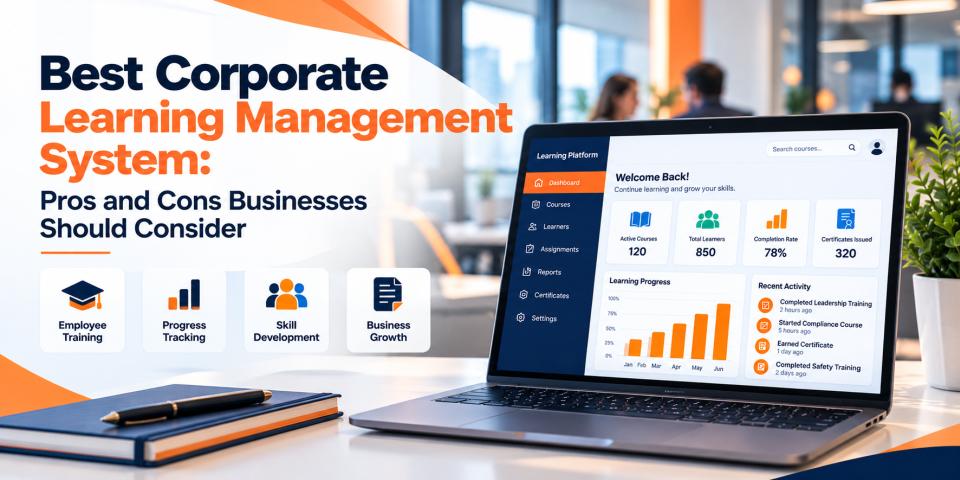
Managing employee training becomes more challenging as a business grows. New employees need onboarding, existing teams need opportunities to develop their skills, and managers need a reliable way to monitor learning progress. Without an organized process, training can become time-consuming and difficult to manage across different departments.
A corporate learning management system (LMS) helps
businesses bring training activities together in one place. It can support
course delivery, progress tracking, and employee development while reducing the
need for repetitive manual work. Understanding the benefits of a corporate LMS
can help organizations decide whether this type of platform fits their training
goals. Choosing the best
corporate LMS can help businesses identify a platform that matches
their training needs.
1. More Organized Employee Training
One major benefit of a corporate LMS is that it gives
businesses a central place to manage learning materials and training
activities. Instead of relying on separate documents, emails, and spreadsheets,
administrators can organize courses and assign them to the relevant employees.
This approach can make training easier to manage, especially
when different teams have different learning requirements.
2. Consistent Training Across Departments
Companies often need employees in different departments or
locations to complete the same essential training. A corporate LMS can help
deliver consistent learning materials and establish a more organized training
process.
For example, a business with multiple offices can use the
same onboarding courses to introduce new employees to company policies and
procedures.
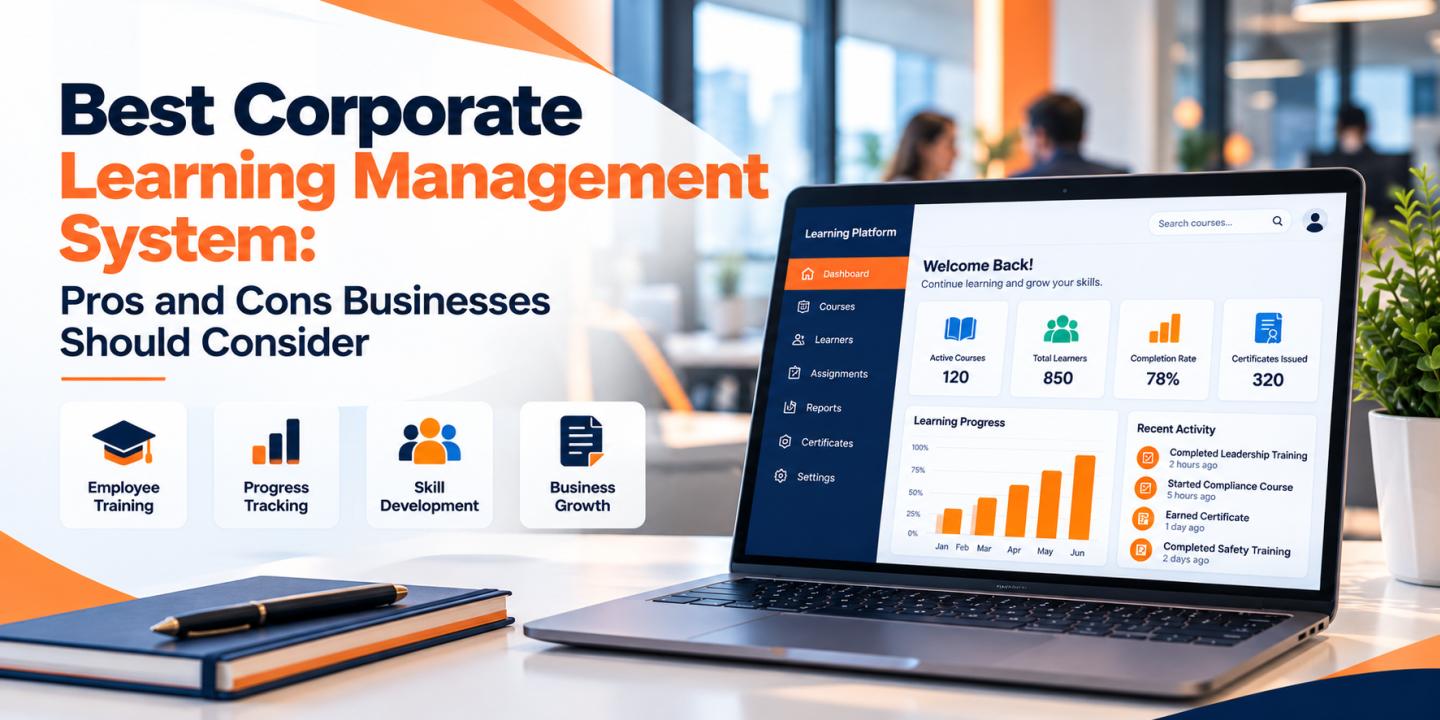
3. Better Progress Tracking and Reporting
Managers need to know whether employees are completing their
assigned training. LMS reporting tools can help them review course completion,
assessment results, and individual learning progress.
This visibility can make it easier to identify incomplete
training and determine where additional support may be needed.
4. Reduced Administrative Work
Managing training manually can involve repeated reminders,
course assignments, and progress updates. Many corporate LMS platforms offer
automation features that can reduce some of this repetitive work.
Automated assignments and reminders can help administrators
spend less time on routine tasks and more time improving training programs.
5. Flexible Learning Opportunities
Employees do not always have the same schedules or learning
needs. A corporate LMS can provide access to courses and learning materials
that employees can complete around their work responsibilities, depending on
the platform's capabilities.
Self-paced learning and mobile access can make training more
convenient for employees who work across different locations or schedules.
6. Support for Employee Development
A well-organized training program can help employees build
job-related skills and continue developing professionally. Businesses can use
an LMS to provide learning opportunities that align with specific roles,
responsibilities, and development goals.
Choosing the best
corporate LMS depends on the features employees need, the way managers
organize training, and the goals the business wants to achieve.
7. Easier Training Management as a Business Grows
As organizations expand, they may need to train more
employees, introduce new courses, and manage additional departments. A suitable
corporate LMS can help businesses organize these activities through a
centralized system.
Before selecting a platform, companies should consider
scalability, pricing, reporting, integrations, and ease of use to make sure the
system can support their changing requirements.
Final Thoughts
Corporate LMS benefits go beyond simply storing training
materials. The right platform can help businesses organize employee learning,
monitor progress, reduce repetitive administration, and support ongoing
professional development.
However, the results depend on choosing a system that
matches the organization's needs and making sure employees can use it
effectively. By comparing available features and defining clear training goals,
businesses can make a more informed decision about their learning management
system.