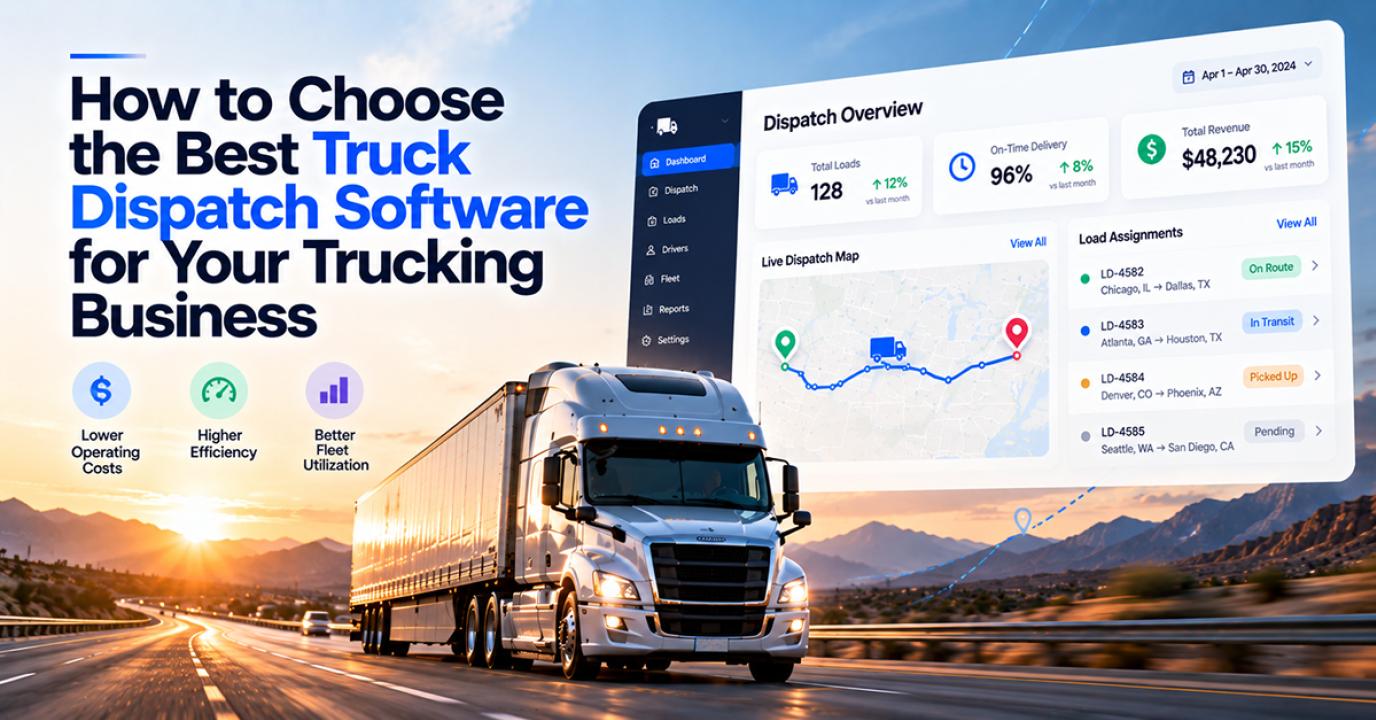
Choosing the right truck dispatch software helps trucking businesses manage loads, drivers, vehicles, routes, and deliveries efficiently. As fleets grow, spreadsheets and disconnected tools make dispatching harder. The right platform centralizes operations, improves visibility, reduces manual work, and supports faster decisions.
The best solution depends on your fleet size, workflow, technology stack, automation needs, and growth plans.
What Is Truck Dispatch Software?
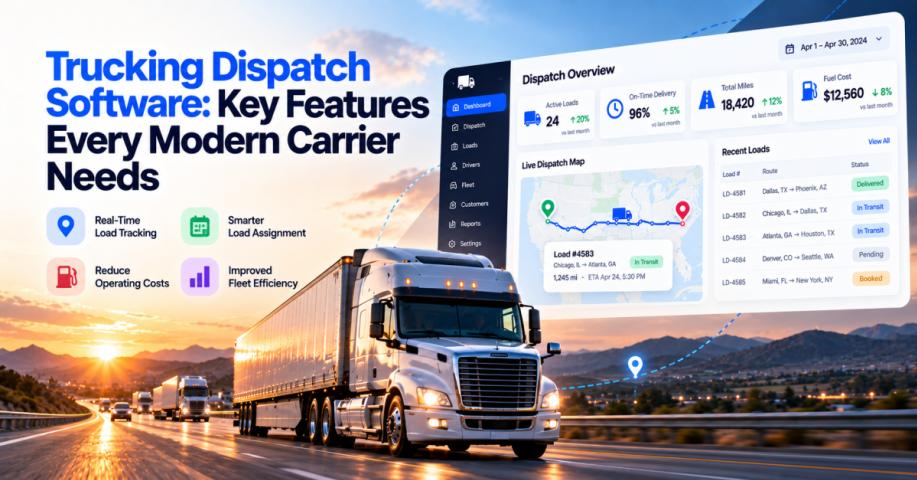
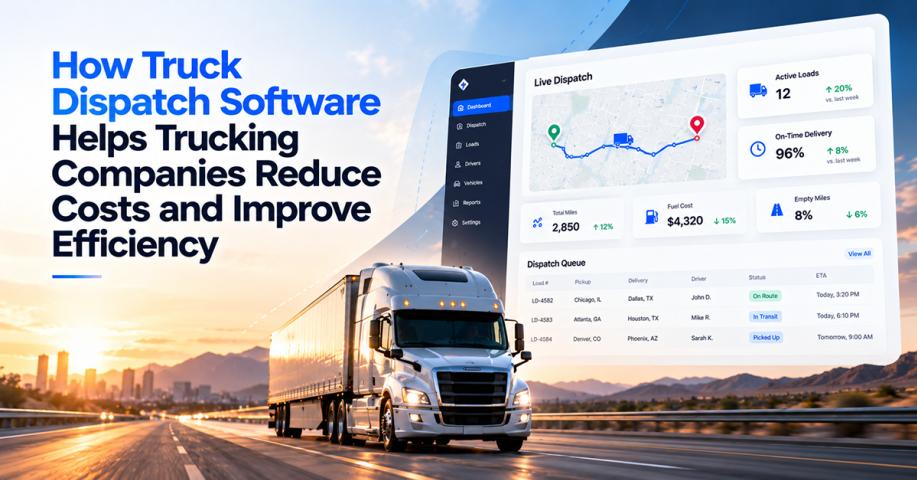
Truck dispatch software helps trucking companies manage loads, trucks, drivers, and deliveries through a centralized system.
Common capabilities include load assignment, scheduling, route planning, GPS tracking, driver communication, electronic documentation, proof of delivery, reporting, billing, and system integrations.
Its goal is to streamline dispatching and support informed operational decisions.
Why Choosing the Right Dispatch Software Matters
Dispatching affects driver utilization, fuel consumption, delivery schedules, customer satisfaction, and revenue. The right truck dispatch management software can improve load assignments, reduce empty miles, monitor trips, organize shipment information, and scale operations with less administrative work.
10 Factors to Consider When Choosing Truck Dispatch Software
1. Evaluate Your Current Dispatch Workflow
Review how you receive loads, assign drivers, track vehicles, communicate updates, and manage documents. If dispatchers spend hours requesting location updates, prioritize GPS tracking. If they rely on spreadsheets, prioritize centralized load management.
Choose software based on your operational challenges, not just its feature list.
2. Look for Comprehensive Load Management
Your platform should simplify load creation, shipment details, driver assignments, status updates, and progress tracking. Dispatchers should quickly identify available and assigned loads, available trucks, driver locations, delayed deliveries, and completed trips.
3. Prioritize Real-Time Fleet Visibility
GPS tracking helps dispatchers monitor trips, respond to delays, and provide customer updates. Integrating dispatch with Fleet Management Software offers broader visibility into vehicles, drivers, maintenance, and operational activities.
4. Check Driver and Dispatcher Usability
Choose software with simple navigation, mobile accessibility, clear notifications, easy document uploads, and minimal duplicate data entry. Request a demonstration and let dispatchers and drivers test the workflows before purchasing.
5. Review ELD and Compliance Integration
US trucking businesses subject to applicable ELD requirements should verify compatibility with existing devices. Ask vendors how their platform handles hours-of-service (HOS) data, driver status, vehicle information, and registered ELD integrations.
As of October 2026, carriers should also verify that their ELD devices remain registered with the FMCSA and meet applicable requirements.
6. Assess Route Planning and Dispatch Optimization
A modern trucking management software platform should help optimize routes and assignments using vehicle location, driver availability, delivery windows, load requirements, capacity, route distance, and trip status.
The objective is to identify practical routes and assignments that improve fuel efficiency, delivery performance, and vehicle utilization.
7. Check Integration Capabilities
Your dispatch software should connect with accounting, fleet tracking, ELD, customer management, freight management, and maintenance systems.
Ask vendors about supported integrations, APIs, data synchronization, integration costs, development responsibilities, and failure handling. Strong integrations reduce data silos and duplicate work.
8. Consider Freight and Load-Matching Capabilities
If your business regularly sources freight, evaluate how the platform supports load matching and freight workflows. A Freight Bidding Marketplace can help manage freight bidding and matching activities.
Ideally, freight opportunities should move efficiently from identification to load assignment and dispatch.
9. Examine Reporting and Analytics
Look for reports covering load performance, driver and vehicle utilization, empty miles, on-time delivery, trip performance, dispatch activity, operational delays, revenue-related metrics, and fleet productivity.
Choose customizable reports and real-time dashboards that turn operational data into actionable insights.
10. Evaluate Scalability and Total Cost
Ensure the platform can support future growth in trucks, drivers, customers, lanes, and locations without requiring a complete technology replacement.
Evaluate the total cost, including implementation, user and device fees, integrations, customization, training, support, data migration, and upgrades. A lower-priced platform may cost more if it requires additional tools.
Questions to Ask Before Buying Dispatch Software
Before signing an agreement, ask vendors:
Can the system scale with our fleet?
Does it support mobile workflows and real-time tracking?
Which ELD and telematics systems can it integrate with?
Can we customize reports and workflows?
What integrations and APIs are available?
What support, implementation time, and ongoing costs should we expect?
Can you demonstrate the platform using our actual workflow?
These questions help you evaluate operational fit rather than features alone.
Common Mistakes to Avoid When Choosing Dispatch Software
Choosing based only on price: Evaluate long-term value and operating costs.
Buying too many features: Prioritize capabilities that solve actual dispatch challenges.
Ignoring integration: Disconnected systems can increase manual work.
Overlooking driver adoption: Difficult mobile workflows can lead to incomplete or unreliable data.
Failing to plan for growth: Ensure the platform can accommodate your expected fleet size.
Skipping the product demonstration: Test usability, integrations, responsiveness, and reporting before committing.
How to Select the Best Truck Dispatch Software for Your Business
No single dispatch platform suits every trucking company. The right choice depends on fleet size, operating model, dispatch complexity, technology environment, budget, and growth objectives.
Evaluate five core areas:
Operational fit: Does it match your dispatch workflow?
Usability: Can dispatchers and drivers use it efficiently?
Connectivity: Can it integrate with existing systems?
Scalability: Can it support future growth?
Business value: Will it reduce manual work and improve visibility?
A platform that performs well across these areas is more likely to deliver long-term value than one chosen solely for its extensive feature list.
Conclusion
The best truck dispatch software connects dispatchers, drivers, vehicles, loads, routes, documents, and operational data in a scalable workflow.
Prioritize usability, real-time visibility, integrations, compliance support, reporting, scalability, and total cost. The right platform can reduce manual coordination, improve fleet visibility, accelerate dispatch decisions, and establish a stronger foundation for sustainable growth.