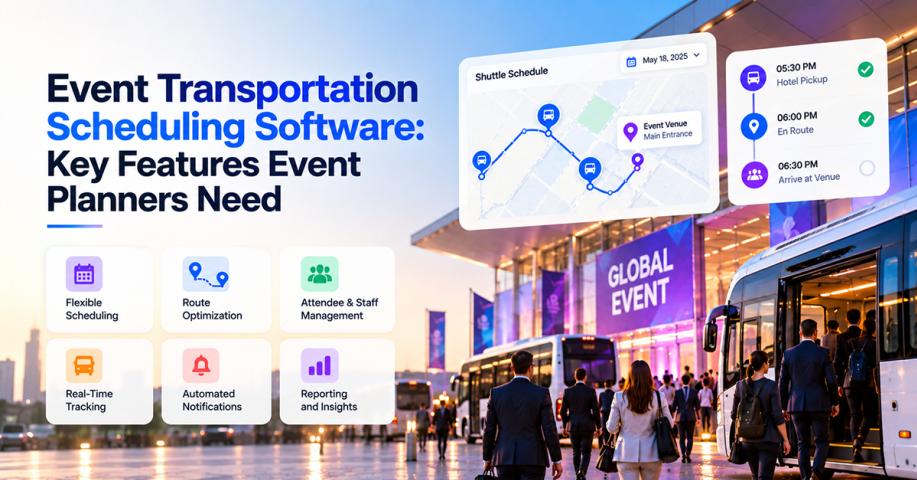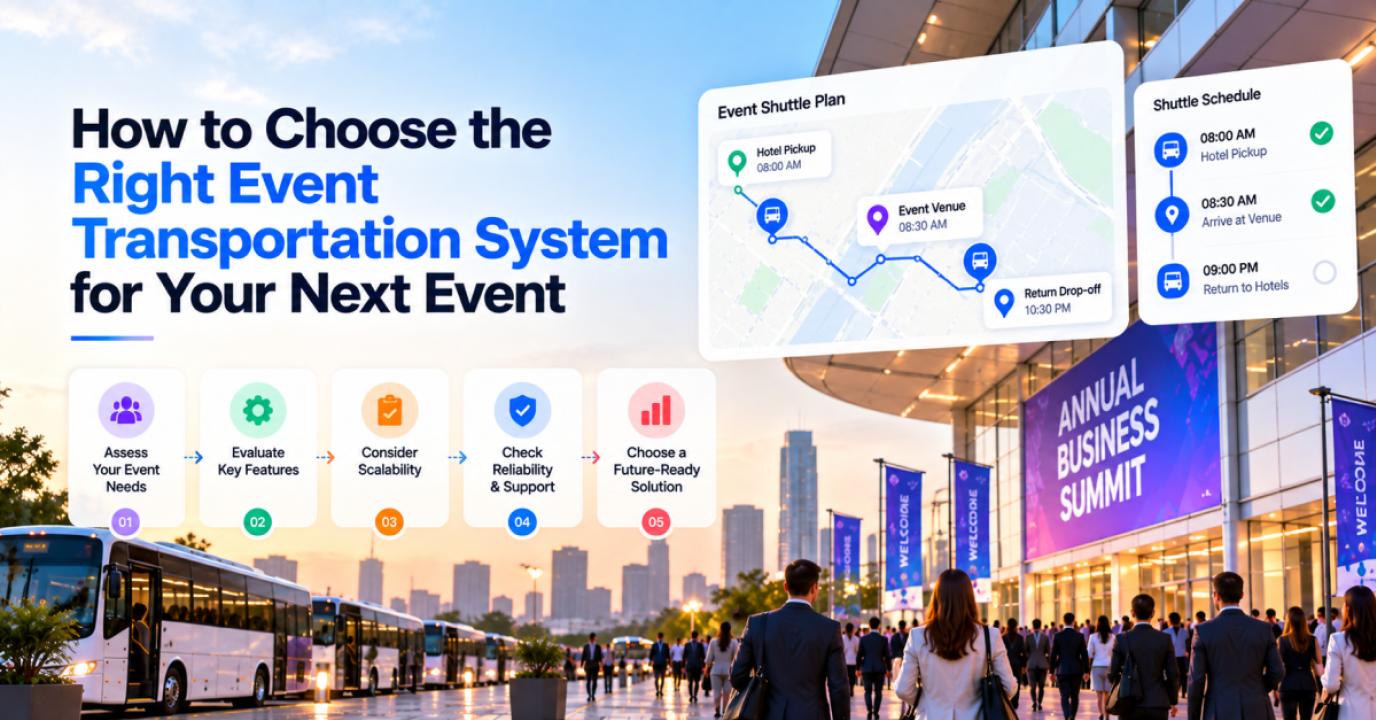
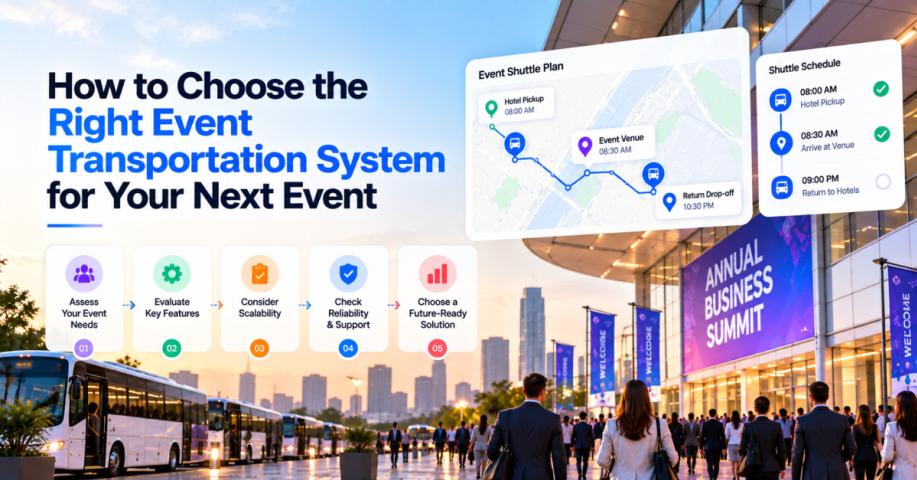
Choosing the right transportation technology can have a direct impact on how smoothly your event operates. When attendees, employees, VIPs, or guests need to move between hotels, venues, airports, parking areas, and event locations, relying on spreadsheets and disconnected communication can quickly become difficult. Modern event transportation systems help event organizers centralize scheduling, dispatch, fleet coordination, passenger management, and real-time transportation visibility in one platform. Event transportation systems can therefore help operations teams manage complex mobility requirements while delivering a more predictable experience for attendees.
The challenge is that not every transportation platform is designed for the same event requirements. A small corporate gathering may need simple shuttle scheduling, while a large conference or multi-day festival may require hundreds of trips, multiple vehicle types, real-time tracking, automated notifications, and dynamic dispatching.
Knowing what to evaluate before choosing a platform can help you select a solution that supports your current event and scales with future transportation requirements.
Why Choosing the Right Event Transportation System Matters
Event transportation is closely connected to the attendee experience and the operational performance of the event.
A transportation delay can cause attendees to miss sessions. Poor route planning can increase vehicle utilization and operating costs. Unclear pickup information can create congestion at transportation hubs. A lack of real-time visibility can also make it difficult for operations teams to respond when conditions change.
The right transportation platform should help event teams manage these challenges from planning through execution.
It should make it easier to:
Coordinate multiple transportation routes
Schedule vehicles and drivers
Monitor transportation activity
Manage passenger demand
Track vehicles in real time
Communicate schedule changes
Optimize fleet utilization
Respond to unexpected disruptions
Analyze transportation performance
The goal is not simply to digitize an existing spreadsheet. It is to create a more connected transportation operation.
1. Start With Your Event's Transportation Requirements
Before comparing technology providers, define what your event actually requires.
Consider the number of attendees, transportation locations, event duration, vehicle types, routes, expected passenger demand, and operational complexity.
For example, a conference with 2,000 attendees staying across 10 hotels will have very different transportation requirements from a 100-person corporate meeting.
Ask questions such as:
How many attendees require transportation?
How many pickup and drop-off locations are involved?
Will transportation operate continuously or at fixed times?
How many vehicles will be required?
Do you need different vehicle capacities?
Will VIP transportation require separate planning?
Do you need airport transfers?
Will attendees need hotel-to-venue shuttles?
How frequently are schedules likely to change?
Will multiple teams manage transportation operations?
Defining these requirements first makes it easier to identify which event transportation solutions can genuinely support your operation.
2. Evaluate Scheduling and Dispatch Capabilities
Scheduling is at the core of event transportation management.
Your selected platform should allow you to create trips, define routes, assign vehicles, schedule drivers, and manage pickup and drop-off times without excessive manual work.
Look for event transportation scheduling software that can handle both planned and changing transportation requirements.
Useful scheduling capabilities include:
Trip creation and management
Vehicle assignment
Driver assignment
Recurring trips
Multiple pickup points
Route scheduling
Capacity-based assignment
Schedule modifications
Dispatch management
The system should also make it easy to identify conflicts. For example, if the same vehicle or driver is accidentally assigned to overlapping trips, the platform should help your team identify the issue before it affects event-day operations.
3. Look for Real-Time Transportation Visibility
A schedule tells you what should happen. Real-time visibility tells you what is actually happening.
Traffic congestion, delayed sessions, unexpected stops, vehicle issues, and changes in passenger demand can all affect transportation performance.
Real-time vehicle tracking can help operations managers monitor active trips, identify delays, and make decisions based on current transportation conditions.
When evaluating a platform, determine whether it provides:
Live vehicle locations
Estimated arrival times
Trip status
Route visibility
Driver activity
Delay monitoring
Real-time operational alerts
This visibility becomes particularly important for large events where several routes may operate simultaneously.
4. Check Whether the Platform Supports Shuttle Operations
Shuttle transportation is common at conferences, exhibitions, festivals, sports events, and corporate gatherings.
If your event involves recurring shuttle routes, the transportation platform should provide the tools needed to manage stops, schedules, vehicles, and passenger movement.
Dedicated Event Shuttle Software can help event teams coordinate shuttle operations across multiple locations while maintaining visibility into scheduled and active trips.
When assessing a platform, check whether it can support:
Fixed shuttle routes
Multiple pickup and drop-off points
Recurring departures
Vehicle capacity management
Shuttle tracking
Passenger notifications
Schedule changes
Real-time route updates
The more complex your shuttle network becomes, the more important centralized management becomes.
5. Consider Fleet Management Integration
Your transportation platform should account for the vehicles that actually execute the event plan.
A system that manages scheduling without providing adequate fleet visibility may leave operations teams with gaps between planning and execution.
Look for capabilities that help you understand:
Vehicle availability
Vehicle capacity
Vehicle assignments
Fleet utilization
Driver assignments
Vehicle status
Maintenance-related information
Integration with Event Hospitality & Tourism Solutions can also be valuable for events where transportation is closely connected with hotels, hospitality operations, tourism services, and guest mobility.
For larger operations, connecting scheduling with fleet management can help teams make better decisions about which vehicles should serve specific routes.
6. Assess Passenger and Attendee Management
Transportation planning should not focus only on vehicles and drivers.
You also need to understand who is traveling, where they are traveling from, when they need transportation, and whether they have special requirements.
Depending on your event, passenger management may include:
Attendee groups
Hotel assignments
Pickup locations
Registration information
VIP transportation
Accessibility requirements
Group transportation
Airport transfers
A centralized platform can help event organizers align passenger demand with vehicle capacity and scheduled transportation.
This is especially useful when attendees are distributed across multiple hotels or locations.
Event Transportation Systems Should Adapt to Your Operation
There is no single transportation setup that works for every event.
A corporate conference may prioritize hotel shuttle scheduling and executive transportation. A festival may require continuous shuttle loops and high-volume passenger movement. A multi-venue exhibition may need coordinated transfers between several locations.