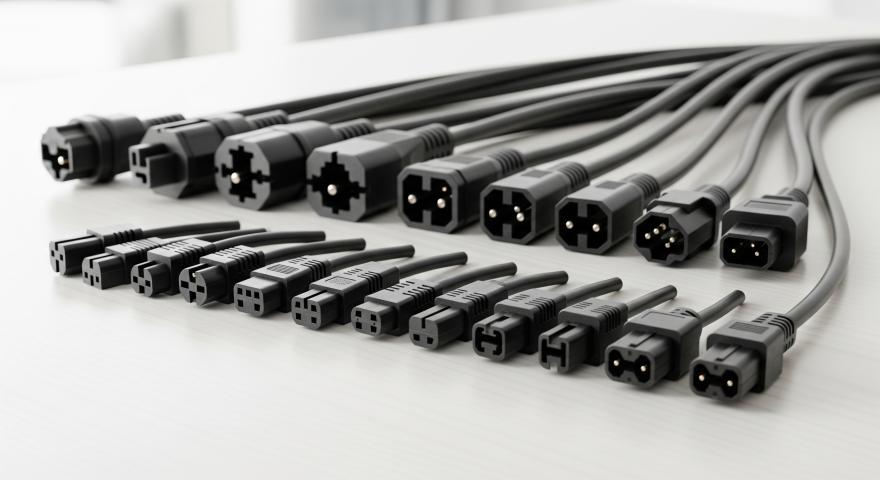
Power cords are everywhere, quietly doing an important job: bringing electricity safely to your devices. One of the most common types you’ll find in offices, data centers, and homes is the C13 to C14 power cord. If you’ve ever wondered what this strange name means or how it works, you’re in the right place!
Today, we’ll break down what a C13 to C14 power cord is, what IEC cables are, and why this cable is so popular—all explained simply, like telling it to a 12-year-old.
What is an IEC Cable?
Before we dive into the C13 and C14 connectors, let’s understand what an IEC cable is.
IEC cables are power cords made according to international rules set by the International Electrotechnical Commission (IEC). These rules make sure cables fit safely, carry the right amount of power, and work well all around the world.
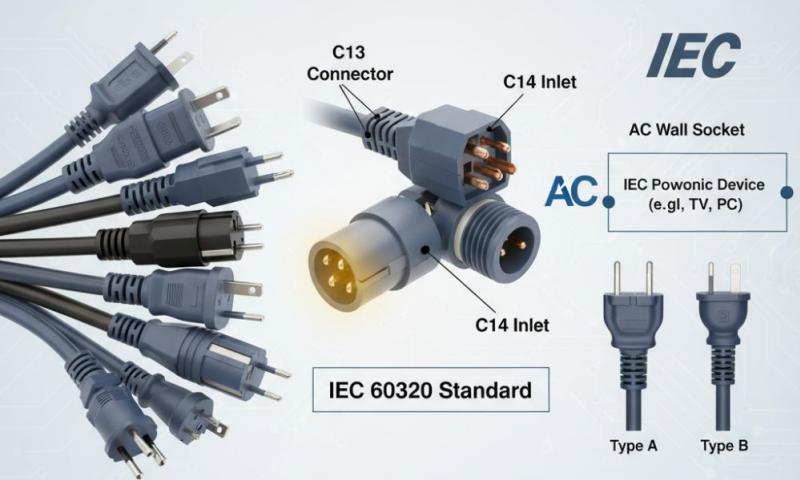
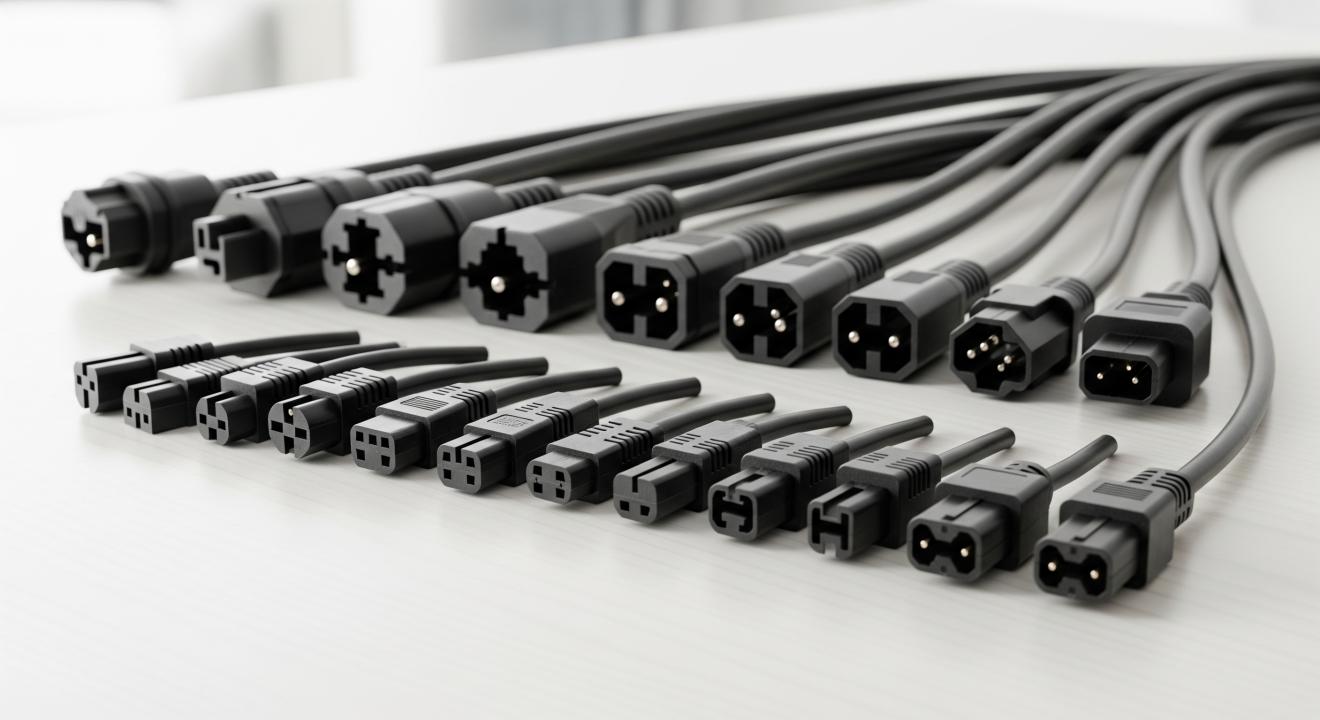
You’ll often see IEC cables with standard connectors named like C13, C14, C5, and many more. These names describe the shape and size of the plugs and sockets on the cable and devices.
What Does C13 and C14 Mean?
The C13 connector is a female plug. That means it has three slots or holes.
The C14 connector is a male plug. It has three pins that fit into the C13’s slots.
These two connectors are designed to work perfectly together. The C13 end usually goes on the power cord, and the C14 end is plugged into a device or equipment.
Both C13 and C14 connectors follow the IEC 60320 standard. They are typically rated to handle up to 10 amps of current and up to 250 volts of electricity, making them safe for most computers, monitors, printers, and other office equipment.
The Exact Answer: What is a C13 to C14 Power Cord?
A C13 to C14 power cord is a type of IEC cable that has a C13 female connector on one end and a C14 male connector on the other end. It is used mainly to connect power between devices that have C14 inlets and power sources with C13 outlets.
In simpler words, this cord often acts like an extension. You can use it to connect a server, computer, or monitor (which usually has a C14 inlet) to a power distribution unit (PDU) or an uninterruptible power supply (UPS) with a C13 outlet.
How Does a C13 to C14 Cord Work?
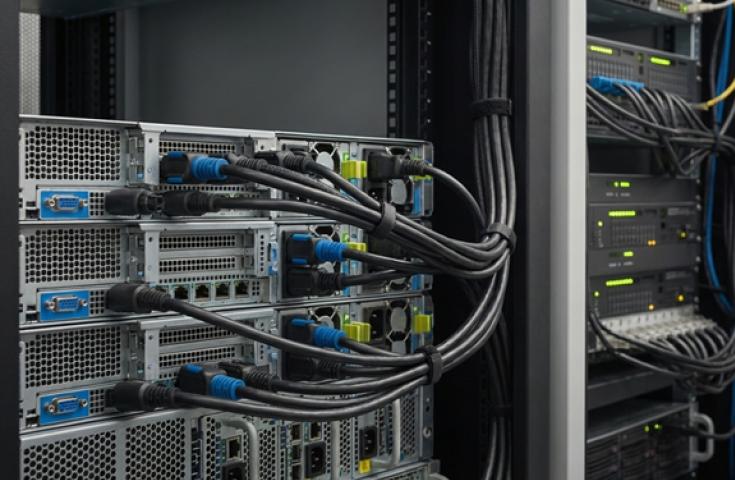
Imagine you have two devices, like a server and a power strip in a data center. The server wants power, but the power strip has a C13 plug socket. The power cord with C13 on one side and C14 on the other plugs into both, linking them safely.
The C14 end fits into the device’s power inlet. The C13 end connects to the power source or another device’s power outlet.
This setup lets you extend power or connect multiple devices easily without unplugging everything.
Why is the C13 to C14 Power Cord Common?
Universal Use: Most servers, computers, and networking devices use the C14 inlet, so this power cord fits a wide range of devices.
Safety Certified: Rated for up to 10 amps and 250 volts, it’s safe for normal office and data center power needs.
Modular Design: Allows swapping and replacing cables without moving heavy equipment.
Reliable Connection: The connectors secure snugly to avoid accidental unplugging.
Flexibility: Comes in different lengths to help you place your devices where you want.
Common Uses of C13 to C14 Power Cords
Connecting servers to PDUs in data centers.
Powering network switches or storage devices.
Extending power cables when your equipment is far from the outlet.
Connecting rack-mount devices to power sources.
Linking UPS units to devices for backup power.
What Does a C13 to C14 Power Cord Look Like?
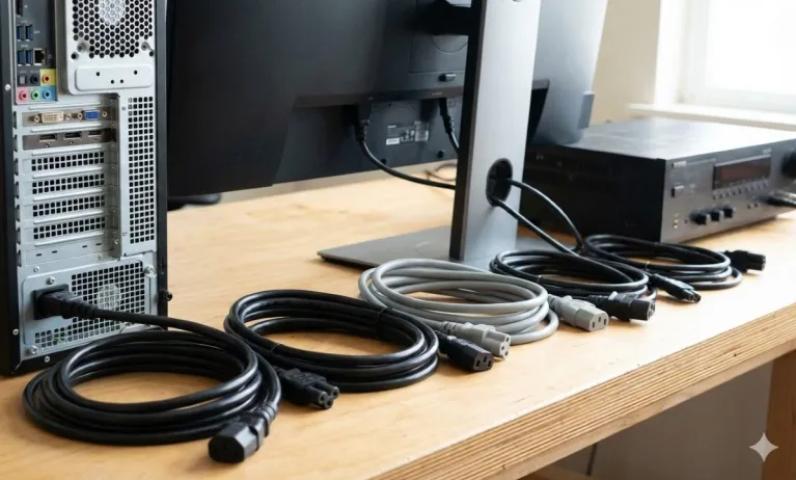
The C13 connector looks like a rectangular plug with three slots.
The C14 connector is a matching rectangular plug with three pins.
Both connectors are usually black and sturdy, made to handle constant plugging and unplugging.
The cable itself can vary in length from a few inches to several feet, depending on your needs.
How to Identify a C13 to C14 Power Cord?
Check the connector shapes: female (holes) for C13 and male (pins) for C14.
Look for markings or labels showing "C13" or "C14."
The cable can have ratings printed on it like “10A 250V.”
Often sold as "C13 to C14 power cord" or "IEC 320 C13 to C14 cable."
Safety Tips When Using IEC Cables
Always use cables that match your device’s power requirements.
Avoid using damaged or frayed cables.
Don’t force connectors into the wrong sockets—they only fit one way.
Use cables with proper certifications for your region.
Replace cables if they show visible wear or if they heat up excessively during use.
Conclusion
A C13 to C14 power cord is a special type of IEC power cable designed to connect devices with C14 inlets to power sources with C13 outlets. It’s a very common cable in offices and data centers, used to provide safe, reliable power to computers, servers, monitors, and networking gear.
Thanks to the international IEC standard, these cables are trusted worldwide, ensuring your devices get the power they need without worry. Whether you’re setting up a server rack or just powering your desktop computer, the C13 to C14 power cord is likely part of the solution.
Next time you see such a cable, you’ll know it’s not just a random wire—it’s a carefully designed power link helping your machines run safely and smoothly.
If you want safe, dependable power, choose the right IEC cable with C13 and C14 connectors!
Sources: https://skytechgeek.com/2025/07/iec-power-cable-types/https://newyorktimesnow.com/blog/what-is-the-rating-of-iec-power-cable
https://nycityus.com/view/is-iec-ac-or-dc