A Blockchain Development Company is a specialized firm that creates and maintains digital systems using blockchain technology. These experts design secure, decentralized ledgers where information is recorded and verified across many computers, making the data transparent, permanent, and highly resistant to tampering. By building these robust digital infrastructures, they help businesses across all sectors establish greater operational trust, automate agreements, and improve the speed and security of their most critical data processes.
Modern business relies on the integrity of its data and the trustworthiness of its operations. As organizations seek ways to move beyond single-point-of-failure systems, the demand for verifiable, decentralized solutions has become a necessity. This movement is powered by blockchain development companies, which stand as the builders of tomorrow's enterprise digital backbone. They apply deep technical skill in cryptography and distributed computing to solve real-world business challenges, ensuring that every piece of information and every transaction is secured by a shared, immutable digital record. For any enterprise seeking to maintain a competitive edge and verifiable security, partnering with a competent blockchain development service provider is the logical next step.
Secure Your Data, Scale Your Business – Launch Blockchain Today!
Defining the Expertise of a Blockchain Development Firm
A blockchain development firm is not a generic software developer; it is a specialist that deals with creating and managing distributed ledger technology (DLT). Their core value lies in their ability to conceptualize a business need and translate it into a mathematically secured, decentralized network protocol. They are the architects of trust systems in a digital economy built on transparency.
What an Enterprise Blockchain Developer Delivers
The primary product of an enterprise blockchain developer is a complete, functioning decentralized system. This goes beyond simple coding; it involves strategic planning, security analysis, and the creation of a system that can sustain itself without centralized control. Key deliverables include:
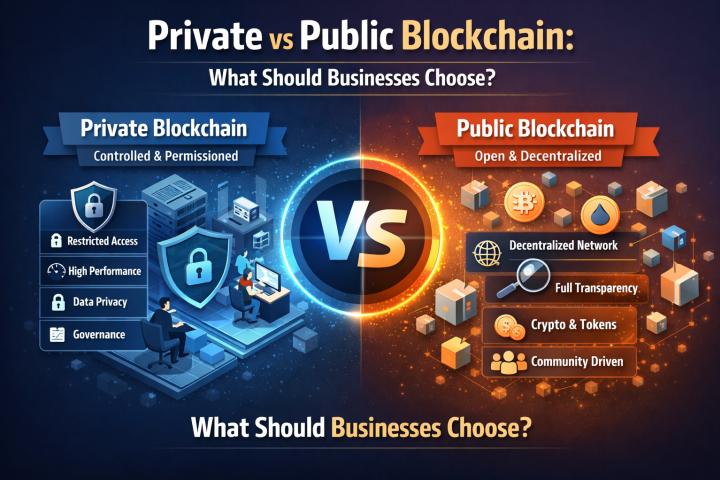
Network Architecture: Deciding on the appropriate type of ledger—public, private, or consortium—to meet the client’s needs for access and privacy.
Protocol Development: Creating the underlying rules (the protocol) that govern how data is added, validated, and shared among participants.
Security Layer Implementation: Integrating advanced cryptographic techniques to ensure data remains confidential, yet verifiable.
Integration Mechanisms: Building the necessary interfaces for the new decentralized system to communicate effectively with the company’s existing legacy software.
The expertise needed to manage this complete scope is why specialized companies are essential for successful blockchain adoption for businesses.
Foundational Technical Skills for Decentralized Solutions
The required skills within a blockchain development company merge computer science with advanced mathematics. These capabilities are crucial for building a secure and reliable decentralized system for data integrity.
Distributed Ledger Expertise: Deep knowledge of how distributed systems operate, including replication, fault tolerance, and consensus in peer-to-peer networks.
Cryptography and Security: Proficiency in asymmetric encryption, hashing functions, and digital signatures—the core elements that ensure data immutability and transaction security.
Smart Contract Languages: Fluent command of programming languages like Solidity, Rust, or Go, which are used to write self-executing business logic onto the ledger.
Consensus Algorithm Design: The ability to select, configure, or create the mechanism (like Proof-of-Work, Proof-of-Stake, or Proof-of-Authority) that allows all computers in the network to agree on the single truth.
The combination of these elements allows the firm to build the trusted digital infrastructure for businesses that many industries now demand.
Core Offerings in Blockchain Development Services
The services provided by these development firms cover the entire lifecycle of a decentralized project, from initial concept to long-term operation. These offerings are structured to provide businesses with real, usable decentralized solutions for business processes.
Developing Custom Enterprise Blockchain Platforms
For most large organizations, a generic public network is unsuitable due to privacy and throughput requirements. Developing custom enterprise blockchain platforms involves creating a permissioned ledger that offers speed and controlled access. This typically means building a private or consortium blockchain development service where participants are verified and transactions are processed quickly and privately. This service focuses on high-performance infrastructure capable of handling thousands of transactions per second, ensuring the solution scales with the business’s needs. The firm designs the platform to be fully compliant with industry regulations from the beginning, creating a secure ledger for private data sharing.
Smart Contract Auditing and Implementation Services
Smart contracts are the engine of business process automation on a blockchain. Smart contract auditing and implementation services are necessary to ensure this code is flawless, as errors in a deployed contract can be irreversible. The process involves:
Writing Secure Code: Developers write the logic that automatically executes business rules when conditions are met (e.g., funds are released when a shipment is verified).
Rigorous Testing: Comprehensive simulation of all possible scenarios, including failure points, to ensure the contract behaves exactly as intended.
Independent Auditing: External review of the contract code by security experts to identify vulnerabilities before deployment, guaranteeing the automated digital agreements are safe and reliable.
This attention to detail in decentralized application development is paramount because of the immutability of the deployed code.
Decentralized Application (DApp) Creation and UI/UX
A Blockchain Development Company is also responsible for building the user-facing software, or Decentralized Application (DApp). DApp creation and UI/UX focuses on making the complex, secure backend accessible and easy to use. The DApp acts as the bridge, allowing employees, partners, or customers to interact with the underlying smart contracts and data without needing to understand the technical details of the ledger itself. This development ensures that the user-friendly interface for blockchain technology delivers maximum efficiency and a smooth experience, facilitating widespread internal and external adoption.
Enterprise System Integration with DLT
A significant challenge for companies adopting blockchain is making it work with existing software. Enterprise system integration with DLT involves creating middleware that translates data securely between the centralized ERP (Enterprise Resource Planning) or CRM (Customer Relationship Management) systems and the new decentralized ledger. This service ensures that companies can gradually incorporate blockchain without a costly and disruptive overhaul of their entire IT stack. It’s a key step in ensuring seamless legacy system compatibility with blockchain.
Industry-Specific Blockchain Applications and Use Cases
The application of decentralized systems by a blockchain development service provider is broad, bringing verifiable trust and efficiency to sectors where these qualities are most needed. The versatility of the technology makes it applicable in nearly every area of commerce.
Supply Chain Traceability and Security
In global logistics, verifying the origin and handling of goods is crucial. Supply chain traceability and security solutions use blockchain to create a verifiable digital chain of custody for every item. Each step—from sourcing of raw materials to final delivery—is recorded as an immutable transaction. This allows:
Proof of Authenticity: Consumers can scan a code to see the product's full history, combatting counterfeiting, especially for luxury items or pharmaceuticals.
Rapid Recall: In case of contamination, the source can be identified instantly, limiting exposure and minimizing damage.
A blockchain development firm designs the system to integrate with physical sensors and IoT devices, ensuring that data like temperature logs and location are automatically and securely recorded.
Financial Services and Asset Tokenization
The finance industry is one of the earliest adopters, seeking to eliminate costly intermediaries. Financial services and asset tokenization platforms built by these companies allow for:
Faster Settlement: Reducing the time it takes for high-value transactions to finalize from days to minutes.
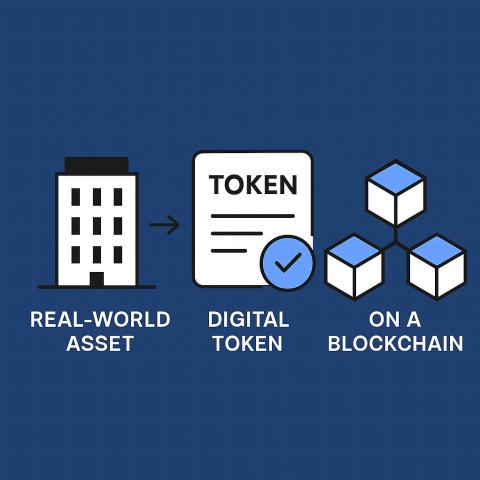
Digital Assets and Securities: The tokenization of real-world assets, such as real estate, fine art, or corporate bonds, which are then represented by digital tokens on a ledger, allowing for fractional ownership and easier trading.
These solutions improve liquidity and security while automating compliance through smart contracts, significantly improving the speed and security of cross-border payments.
Decentralized Identity Management Solutions (DID)
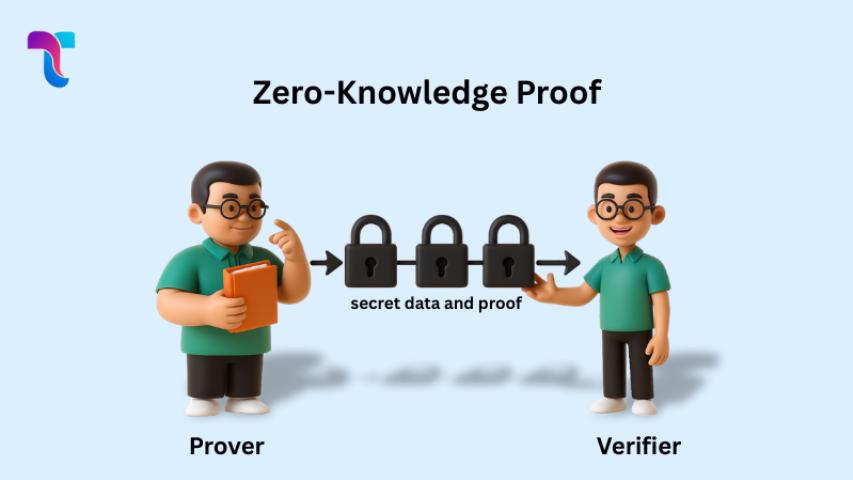
Traditional identity systems are centralized targets for hackers. Decentralized Identity Management Solutions (DID) put individuals in charge of their own data. A blockchain development company builds systems where identity credentials (like a driver’s license or educational degree) are issued by a trusted entity and stored securely by the user.
User Control: The individual can selectively share proof of an attribute (e.g., "I am over 21") without revealing unnecessary personal details.
Enhanced Privacy: Since no central authority stores all the data, the risk of a massive data breach is greatly reduced, making this a highly secure digital identity solution.
This system streamlines KYC (Know Your Customer) processes for businesses while dramatically improving privacy for users.
Healthcare Data Security and Patient Records
The need for secure, private, and verifiable patient data is absolute in healthcare. Healthcare data security and patient records on a blockchain allow for:
Controlled Access: Only authorized users (doctors, insurers, or the patient themselves) can access or update medical records, with every access logged immutably.
Pharmaceutical Tracking: Securely recording the journey of medicines to counter the widespread issue of counterfeit drugs.
By building a verifiable medical data management system, blockchain solutions for healthcare ensure privacy while improving the efficiency of data sharing between different hospital networks.
The Future Trajectory of Blockchain Development
As the technology matures, blockchain development companies are continuously pushing the limits of what is possible, focusing on efficiency, speed, and cross-platform compatibility. The future of enterprise technology is intrinsically linked to these advancements.
Focusing on Scalability and Transaction Speed
The issue of throughput—the ability to handle millions of transactions quickly—was once a major hurdle. Focusing on scalability and transaction speed is now central to advanced development. Solutions include:
Layer 2 Solutions: Building secondary networks atop major blockchains to handle the bulk of transactions off-chain, thereby speeding things up and reducing fees.
Advanced Consensus Mechanisms: Implementing newer, faster, and more energy-efficient algorithms that dramatically increase the number of transactions per second a network can process, making high-throughput blockchain for enterprise a standard feature.
These optimizations are crucial for wide-scale decentralized application development in high-frequency environments like global finance and gaming.
Interoperability Across Decentralized Networks
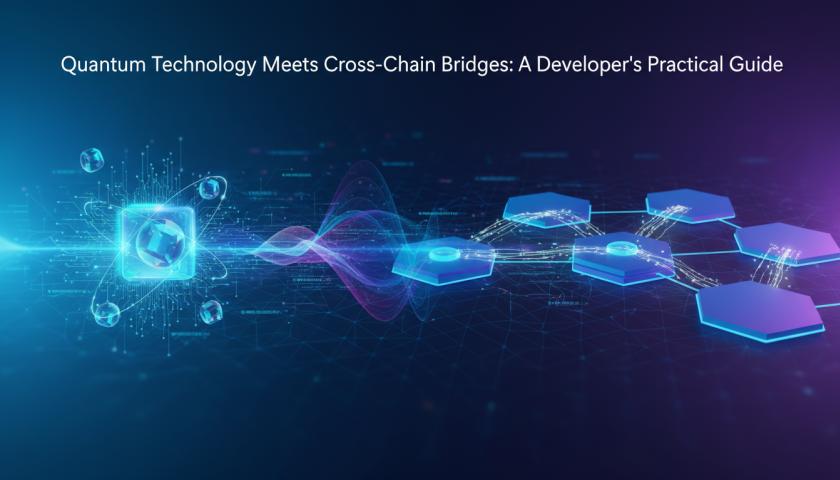
With many different private and public ledgers in existence, the ability for them to communicate is paramount. Interoperability across decentralized networks is the process of building "bridges" and protocols that allow data and assets to move securely between separate blockchains. This is the next stage in creating a truly connected decentralized web (Web3). A blockchain development firm builds these cross-chain communication protocols to ensure that an asset tracked on a supply chain ledger (Chain A) can be instantly used to trigger a payment on a finance ledger (Chain B) without intermediaries, creating more unified business processes.
Integrating with AI and IoT Devices
The combination of technologies promises a new level of machine-driven trust. Integrating with AI and IoT devices allows for data from physical sources to be logged directly onto the ledger securely and automatically.
Automated Audit Trails: An IoT sensor can record the temperature of a food shipment, and that data is instantly logged as an immutable record on the blockchain.
Smart Automation: An Artificial Intelligence (AI) system can analyze the immutable data and automatically trigger a smart contract—for example, releasing an insurance claim if the temperature was recorded as too high.
This integration creates secure, machine-to-machine data recording that removes human error and guarantees the authenticity of the input data used in automated processes.
Why Professional Partnership is Essential for DLT Adoption
For any major enterprise, adopting decentralized technology is a massive undertaking. Working with a dedicated Blockchain Development Company is the most direct path to success, as these firms provide specialized knowledge that is difficult to find elsewhere.
Strategic Consulting for DLT Implementation
The initial step in any project is knowing where blockchain actually helps the business. Strategic consulting for DLT implementation ensures the technology is applied to genuine pain points where centralization or lack of trust is the issue, rather than forcing the technology where it is not needed. A development firm provides expert guidance for blockchain use cases, helping businesses define the scope, expected outcome, and necessary technical architecture before a single line of code is written, ensuring that the project aligns perfectly with long-term business goals.
Ensuring Regulatory Compliance and Auditing
The regulatory environment for DLT is always shifting. Ensuring regulatory compliance and auditing is a non-negotiable service. A blockchain development firm has the expertise to build a system that is both decentralized and auditable, meeting specific geographic regulations (like data residency or privacy laws). They design the governance layer of the blockchain to allow for necessary access by regulators, while still maintaining the integrity and security of the data, providing a secure, auditable blockchain infrastructure.
Continuous System Support and Maintenance
A decentralized network is a living system that requires constant care. Continuous system support and maintenance from the development firm involves:
Threat Monitoring: Constantly checking the network for security weaknesses and quickly patching any vulnerabilities.
Upgrades and Patching: Updating the underlying protocols and smart contracts as new standards and security practices emerge.
Technical Troubleshooting: Providing high-level technical support for all nodes and participants in the network to ensure maximum uptime and performance.
This ongoing commitment ensures the long-term viability of decentralized systems, allowing the client business to focus on its core operations while the experts manage the technology. The Blockchain Development Company is thus more than a vendor; it is an indispensable technical partner in shaping a more secure and efficient digital future.