A lot of startups still think about SEO the old way: publish pages, improve rankings, get more traffic.
That still matters. But it is no longer the whole picture.
More people now search through AI tools that generate answers instead of just showing a list of links. And that changes what visibility actually means.
A page can rank well on Google and still be missing from the answer layer.
That is the shift more founders need to pay attention to.
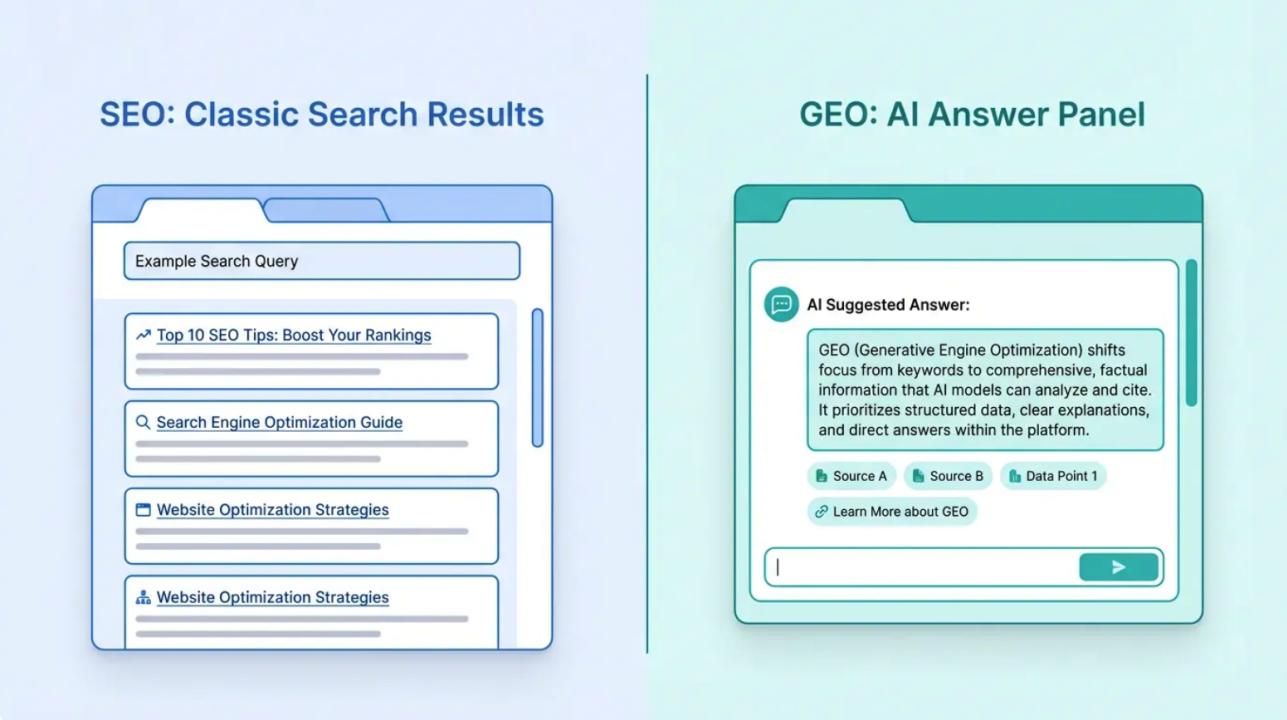
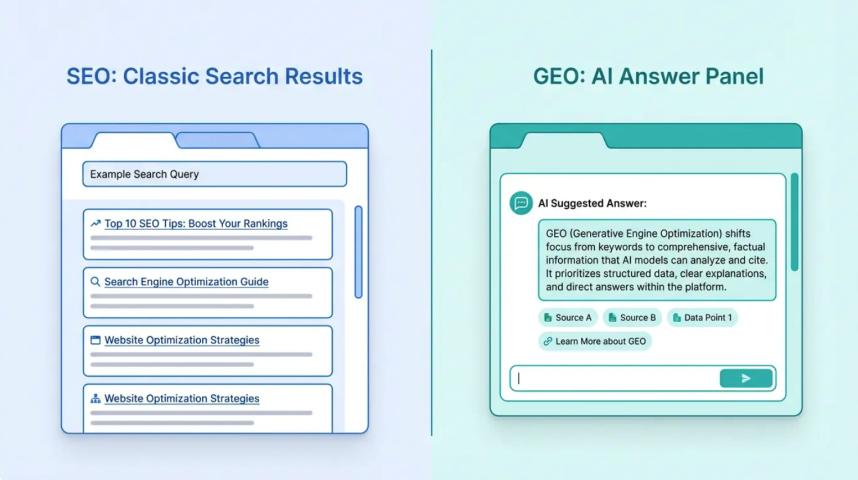
Traditional SEO helps your pages get crawled, indexed, and ranked. GEO helps your content get selected, cited, and recommended inside AI-generated answers. SeekLab covered this in more detail recently, but the core idea is simple: ranking is still valuable, yet ranking alone is no longer enough if users are discovering products and services through AI interfaces.
For startups, this matters more than it might seem.
Early-stage teams often do not have massive brand recognition, giant ad budgets, or years of accumulated authority. They rely on discoverability. If AI systems summarize your category and never mention your company, your visibility can shrink even when your SEO dashboard looks decent.
This is where many teams get stuck. They keep producing content, but the content is not structured in a way that makes it easy to quote, cite, or trust.
Usually, the problem is not effort. It is format.
Pages that are easier to surface in AI answers tend to be clearer, more structured, and more direct. They explain things cleanly. They answer obvious questions. They make entities and relationships easier to understand. They reduce ambiguity instead of adding more noise. SeekLab’s AI citation article makes the same point from another angle: if a page is hard for machines to parse, it is harder to cite.
For a startup, that means a few practical shifts:
- build pages around real questions buyers ask
- make product and service pages easier to extract information from
- tighten structure, headings, and internal linking
- add schema where it genuinely improves clarity
- stop thinking only in terms of “ranking for a keyword” and start thinking about “being the source”
This does not mean abandoning SEO. It means updating what SEO is supposed to achieve.
In 2026, a startup with strong visibility is not just ranking on Google. It is also being pulled into AI answers, comparison flows, and recommendation->
The startups that move earlier on this will likely have an easier time than the ones that wait until AI visibility becomes crowded and expensive.
If you want the longer breakdown, the original SeekLab article is here:
https://seeklab.io/blog/from-seo-to-geo-adapting-content-for-ai-search/