A decade ago, enterprise technology was largely about digitization. Organizations invested in ERP systems, CRM platforms, analytics tools, and cloud infrastructure to streamline operations and improve efficiency. Today, a new transformation is underway—one that is fundamentally changing how businesses make decisions, serve customers, and operate at scale.
That transformation is powered by Artificial Intelligence.
From automating repetitive workflows to uncovering hidden business insights, AI is rapidly becoming the intelligence layer that sits across enterprise ecosystems. Organizations are no longer exploring AI as an experimental technology. Instead, they are actively investing in AI solutions for enterprise to improve productivity, reduce operational costs, accelerate innovation, and gain a competitive advantage.
The question is no longer whether enterprises should adopt AI. The real question is how they can implement the right AI solutions to create measurable business value.
In this guide, we'll explore the growing role of AI in enterprise environments, the most impactful AI solutions being adopted today, implementation strategies, and the future of enterprise intelligence.
Why Enterprises Are Accelerating AI Adoption
Modern enterprises generate enormous volumes of data every day. Customer interactions, operational records, supply chain information, financial transactions, and employee communications create a continuous stream of business intelligence.
The challenge is that most organizations struggle to transform this information into actionable insights.
Traditional software systems can store and process data, but they often require human intervention to identify patterns, make decisions, and execute actions.
AI changes that equation.
Instead of simply managing information, AI systems can analyze, predict, recommend, and automate. They help organizations move from reactive decision-making to proactive intelligence.
This capability is particularly valuable for enterprises operating in competitive markets where speed, efficiency, and customer experience directly impact growth.
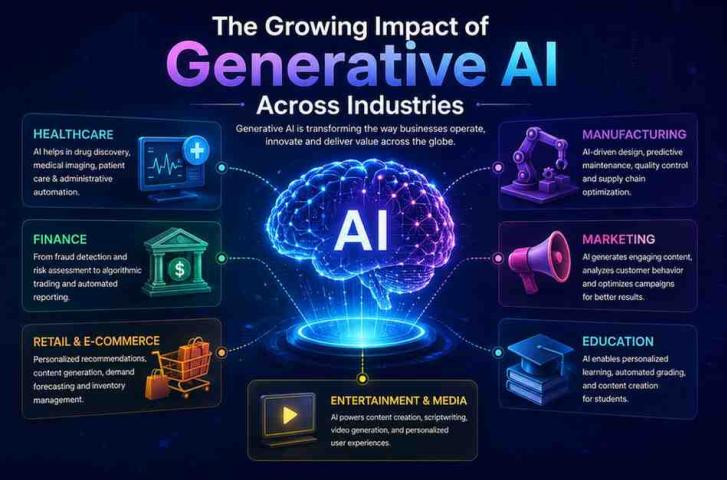
As a result, AI solutions are becoming a strategic priority across industries including healthcare, banking, manufacturing, retail, logistics, insurance, and telecommunications.
What Are AI Solutions for Enterprise?
AI solutions for enterprise refer to intelligent systems designed to solve complex business challenges using technologies such as machine learning, natural language processing, computer vision, generative AI, predictive analytics, and autonomous agents.
Unlike consumer AI applications, enterprise AI solutions are built to integrate with existing business systems, comply with regulatory requirements, and support large-scale operations.
These solutions can be deployed across multiple business functions, including:
- Customer service
- Human resources
- Finance
- Operations
- Supply chain management
- Sales and marketing
- Risk management
- IT support
Their primary goal is to enhance efficiency, improve decision-making, and unlock new business opportunities.
The Most Impactful AI Solutions Enterprises Are Using Today
AI-Powered Enterprise Assistants
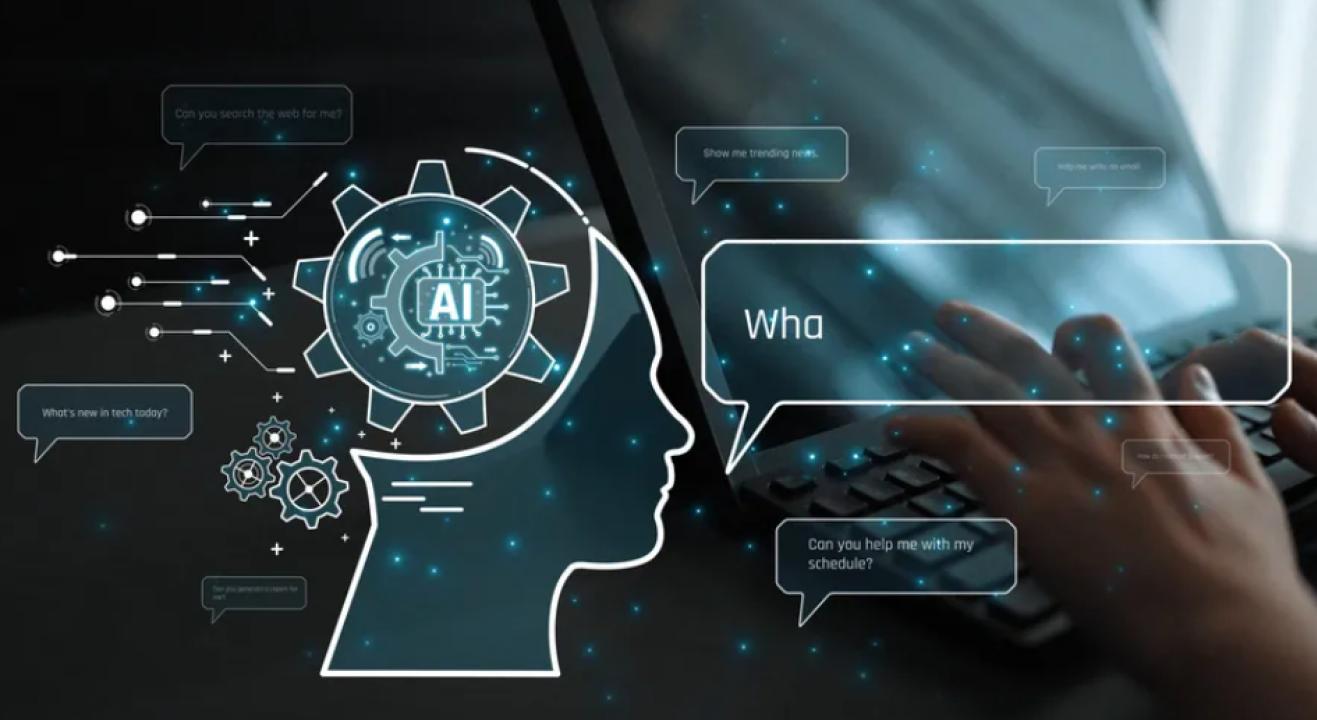
Enterprise AI assistants have emerged as one of the fastest-growing categories of AI adoption.
These systems act as intelligent workplace companions capable of answering employee questions, retrieving information from internal systems, summarizing documents, and automating routine tasks.
Instead of searching through multiple applications, employees can simply ask questions and receive contextual responses in seconds.
This improves productivity while reducing the time spent locating information.
Intelligent Document Processing
Many enterprises still rely heavily on documents such as invoices, contracts, claims forms, purchase orders, and compliance reports.
Manually processing these documents can be time-consuming and error-prone.
AI-powered document intelligence solutions use natural language processing and machine learning to extract information, classify documents, and automate workflows.
This significantly reduces processing time while improving accuracy.
Predictive Analytics Solutions
One of AI's greatest strengths is its ability to identify patterns that humans may overlook.
Predictive analytics solutions help enterprises forecast demand, anticipate customer behavior, identify risks, and optimize business operations.
For example, retailers can predict purchasing trends, manufacturers can forecast maintenance requirements, and financial institutions can assess credit risks more accurately.
AI Agents for Business Automation
AI agents represent the next evolution of enterprise automation.
Unlike traditional automation tools that follow predefined rules, AI agents can make decisions, adapt to changing conditions, and complete complex workflows.
These agents can:
- Create reports
- Schedule meetings
- Manage support tickets
- Update CRM records
- Monitor business processes
- Execute multi-step tasks
This enables enterprises to automate increasingly sophisticated operations.
Computer Vision Solutions
Computer vision allows machines to interpret and analyze visual information.
Enterprises use computer vision for:
- Quality inspections
- Inventory management
- Security monitoring
- Medical imaging analysis
- Retail analytics
By automating visual inspection processes, organizations can improve accuracy while reducing operational costs.
AI-Powered Customer Experience Solutions
Customer expectations continue to rise.
AI solutions help enterprises deliver personalized experiences through:
- Intelligent chatbots
- Voice agents
- Recommendation engines
- Customer sentiment analysis
- Automated support systems
These capabilities improve customer satisfaction while reducing service costs.
Key Benefits of Implementing AI Solutions for Enterprise
Increased Operational Efficiency
AI automates repetitive tasks, allowing employees to focus on higher-value activities.
This reduces manual effort, improves productivity, and accelerates business processes.
Better Decision-Making
AI can analyze vast datasets in real time, providing leaders with actionable insights that support faster and more informed decisions.
Reduced Costs
Automation reduces operational expenses by minimizing manual work, improving resource allocation, and optimizing workflows.
Enhanced Customer Experiences
AI enables personalized interactions, faster response times, and more effective support, leading to higher customer satisfaction.
Competitive Advantage
Organizations that successfully implement AI can innovate faster, respond to market changes more effectively, and create differentiated customer experiences.
How to Successfully Implement Enterprise AI Solutions
Many AI initiatives fail because organizations focus on technology rather than business outcomes.
Successful implementation begins with identifying specific business challenges where AI can create measurable impact.
Organizations should start by assessing existing processes, data availability, and operational bottlenecks.
The next step involves selecting the right AI use cases. High-impact opportunities often include customer service automation, predictive analytics, document processing, and knowledge management.
Once priorities are established, enterprises should build a scalable AI architecture that supports integration with existing systems.
Security, governance, and compliance must also be considered from the beginning to ensure responsible AI deployment.
Finally, continuous monitoring and optimization help maximize long-term value.
Challenges Enterprises Must Overcome
Despite its benefits, implementing AI at scale presents several challenges.
Data quality remains one of the most common obstacles. AI systems rely heavily on accurate and well-structured information.
Integration complexity can also create difficulties, particularly in organizations with legacy infrastructure.
Other challenges include:
- Data privacy concerns
- Regulatory compliance
- Change management
- User adoption
- Model governance
- Scalability requirements
Organizations that proactively address these challenges are more likely to achieve successful outcomes.
The Future of AI Solutions for Enterprise
Enterprise AI is evolving rapidly.
The next generation of solutions will move beyond automation and become autonomous decision-making systems capable of managing complex workflows with minimal human intervention.
Generative AI, AI agents, multimodal models, and industry-specific AI platforms will continue to reshape enterprise operations.
Organizations that invest in AI today are laying the foundation for future innovation, resilience, and growth.
Conclusion
AI is no longer a technology reserved for experimentation. It has become a strategic business capability that enables enterprises to operate more efficiently, make smarter decisions, and deliver superior customer experiences.
Whether it's intelligent document processing, predictive analytics, AI agents, enterprise assistants, or customer experience optimization, AI solutions for enterprise are transforming how organizations create value.
The businesses that embrace these solutions today will be better positioned to lead tomorrow's increasingly intelligent and data-driven economy.