Quick Overview
The sealing point where a mount penetrates the roof is usually the first place a system fails, not the panel or the rail.
Standard gaskets lose elasticity from UV exposure, freeze-thaw cycling, and repeated thermal expansion, which opens a path for water.
Newer sealing assemblies rely on multi-layer compression seals and elastomeric materials engineered to hold their shape across a wide temperature range.
Wind uplift and water-intrusion performance for these systems is measured against standards like ICC-ES AC428, UL 2703, and ASCE 7, not just manufacturer claims.
Installation quality (torque, washer compression, flashing sequence) matters as much as the seal material itself.
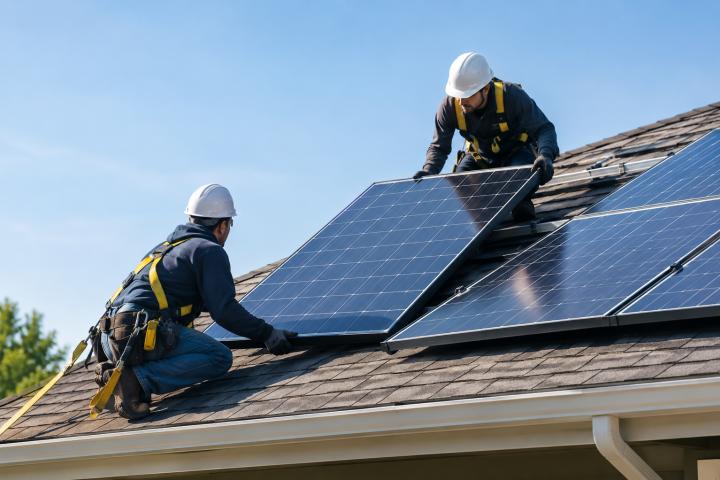
A homeowner in a hurricane zone notices a faint water stain spreading across a ceiling panel, right below where the solar array sits on the roof. The panels are intact. The rails haven't shifted. So where did the water get in?
In most cases, the answer isn't the roof covering itself. It's the small compression point where a mounting foot penetrates the roof deck, the spot where a lag bolt, a flashing, and a gasket all have to work together to stay watertight through wind, rain, and years of thermal cycling. That single junction carries more responsibility for long-term roof performance than almost any other component in the system, which is exactly why sealing technology has become a bigger engineering focus as storms get more frequent and more severe.
Why the Sealing Point Is the Weakest Link in a Mounting System
Every roof penetration is a compromise. You're creating a controlled opening in a waterproof membrane, then relying on a seal to keep it that way for the 25-to-30-year service life expected of most solar installations.
Three forces work against that seal continuously:
Thermal cycling. Aluminum rails and steel flashing expand and contract at different rates than the roofing material beneath them, and that differential movement stresses the seal every single day.
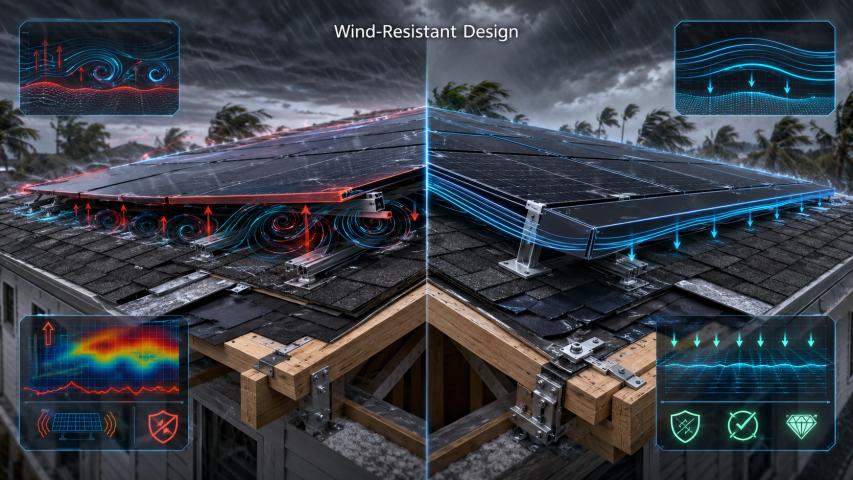
Wind uplift. During high-wind events, mounting feet experience cyclical loading that flexes the connection point repeatedly rather than just once.
UV and moisture exposure. Rubber and polymer components degrade faster on a south-facing roof than in a lab test, especially in regions with intense sun exposure.
A gasket that performs well in year one can lose 20 to 30 percent of its compression set within a decade if it's built from a lower-grade compound. That gradual loss is rarely visible from the ground, which is why it tends to show up as an interior leak long after the actual failure began.
How a Newer Generation of Sealing Design Handles Extreme Conditions
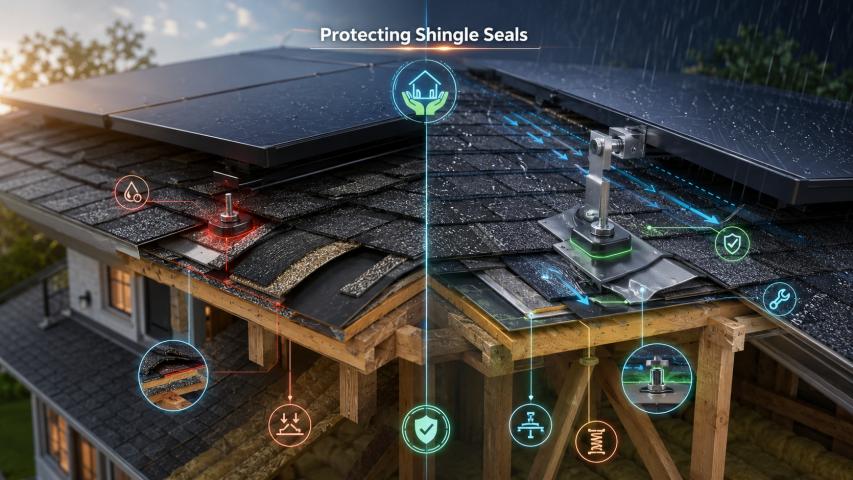
AlphaSeal technology for extreme weather is one example of this newer generation of sealing design, built specifically around the compounded stresses of wind-driven rain and freeze-thaw cycling rather than static water exposure alone. Instead of a single compression layer, the design uses a layered elastomeric barrier that maintains contact pressure even as the surrounding hardware expands and contracts with temperature swings.
The practical difference shows up in two areas. First, the material is formulated to stay flexible across a wider temperature band, so it doesn't stiffen and crack in a hard freeze the way some standard EPDM compounds can after repeated cycling. Second, the seal geometry is designed to shed water actively, using a slight taper that directs runoff away from the fastener rather than letting it pool against the compression point during a wind-driven storm.
It's worth noting that no sealing design, regardless of manufacturer, replaces correct installation. A well-engineered seal installed at the wrong torque or on a poorly prepared roof surface will still underperform.
Understanding Solar Mounting Sealing Technology
Solar mounting sealing technology refers to the combination of materials, geometry, and compression methods used to keep a roof penetration watertight under real-world structural and environmental stress, not just under a one-time water test.
Older systems often relied on a single flat washer or a basic EPDM (ethylene propylene diene monomer) pad compressed by a lag bolt. That approach can work fine in moderate climates, but it has a narrow margin for error. If the installer over-torques the fastener, the washer can extrude out from under the load. If they under-torque it, the seal never fully compresses in the first place.
Newer sealing assemblies address this with a few design changes:
Dual-durometer washers that pair a soft outer ring for conformability with a firmer inner core that resists long-term creep under load.
Multi-point compression across the mounting foot instead of a single central bolt, which spreads stress more evenly.
Bonded or pre-installed seals that reduce the chance of a misaligned or skipped gasket during installation.
These aren't cosmetic upgrades. Each one directly targets a specific failure mode that field data has linked to leaks around solar penetrations.
Structural and Code Considerations
Sealing performance isn't purely a materials question. It's also a structural one, and code bodies treat it that way.
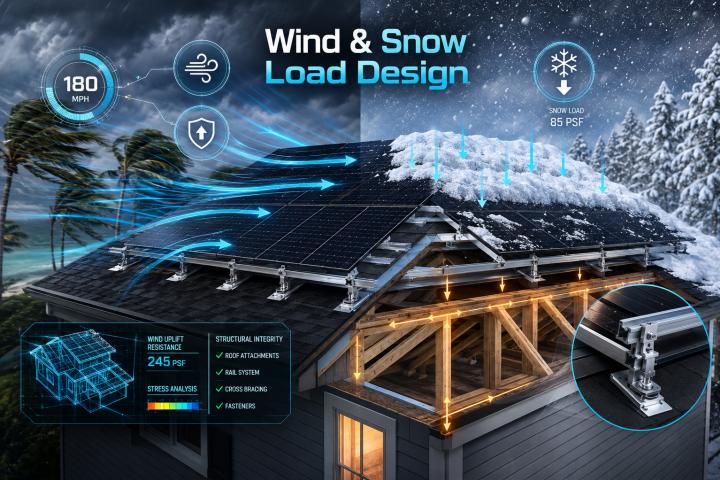
ASCE 7 governs the wind and snow load calculations that determine how much uplift and cyclical stress a mounting point needs to withstand in a given region.
ICC-ES AC428 is the acceptance criteria many rail and railless mounting systems are evaluated against for structural adequacy on residential roofs, including how the attachment interacts with the roof covering.
UL 2703 covers the mounting system's grounding, bonding, and mechanical integrity, which indirectly affects sealing because a system that shifts under load will eventually compromise its seal even if the material itself is sound.
A mounting system with a current ICC-ES evaluation report will typically document tested wind uplift resistance and water infiltration performance for its specific attachment and sealing method. That's the kind of verification worth checking rather than relying on generic durability language.
Installation Practices That Preserve Seal Integrity
Even the best sealing material depends on correct field installation. A few practices consistently separate durable installations from ones that leak within a few seasons:
Torque fasteners to the manufacturer's specified range rather than "snug," since both over- and under-compression reduce seal life.
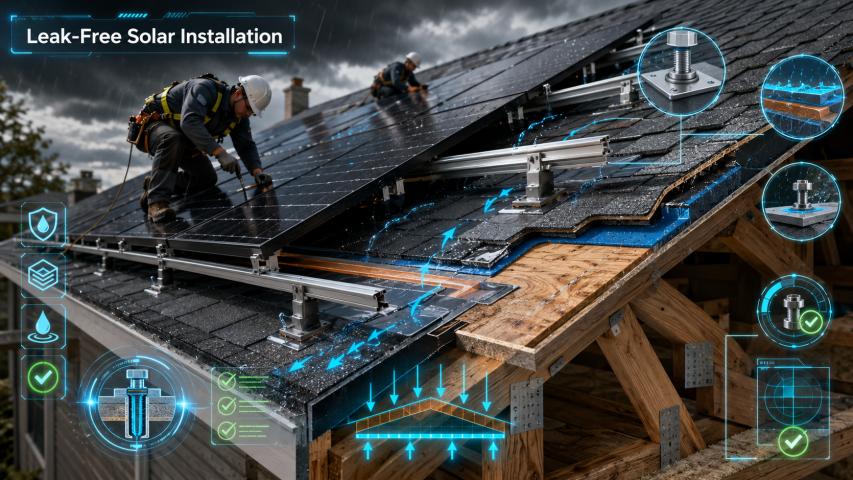
Sequence flashing correctly, with upper courses lapping over lower ones so water sheds naturally off the roof rather than into the penetration.
Inspect gaskets for nicks, debris, or misalignment before final compression, since a small tear in the seal defeats the entire assembly.
Confirm the roof deck surface is clean and free of granule buildup at the attachment point, particularly on asphalt shingle roofs where loose granules can prevent full gasket contact.
Installers who skip the torque spec in favor of visual "tightness" are one of the more common sources of early seal failure, largely because it's hard to judge compression by eye.
Common Mistakes That Compromise Sealing Performance
A few recurring issues show up across field inspections of underperforming installations. Reusing gaskets from a previous mounting point is one; even a lightly compressed EPDM seal has already taken a partial set and won't seal as effectively a second time. Mixing incompatible metals at the fastener without proper isolation is another, since galvanic corrosion between aluminum and uncoated steel hardware can slowly degrade the compression point from the inside.
Skipping manufacturer-specified underlayment or flashing components to save time is also common on tile and metal roofs, where the penetration detail is more complex than on standard shingles.
Conclusion
Extreme weather doesn't gradually test a solar mounting system's weakest component. It tests it all at once, during the storm that matters. Sealing technology at the penetration point is what determines whether that test ends in a dry ceiling or a claim call. As sealing materials and geometries continue to improve, from multi-layer compression designs to purpose-built solutions like AlphaSeal, the margin for installation error narrows. Understanding how these systems actually work, and installing them to spec, remains the most reliable way to keep a rooftop solar system watertight for its full service life.
Frequently Asked Questions
1. What is the most common cause of leaks around solar panel mounts?
Most leaks originate at the penetration point, not the panels, often due to gasket compression set, incorrect fastener torque, or improper flashing sequence that allows water to bypass the seal over time.
2. How long do solar mount seals typically last?
A well-installed elastomeric seal on a quality mounting system is designed to last 20-30 years, depending on material quality and climate, while lower-grade gaskets may need earlier inspection or replacement.
3. Do all solar mounting systems need ICC-ES or UL 2703 certification?
Certification rules differ by area and roof type, but many authorities and insurers require a current ICC-ES evaluation or UL 2703 listing as proof that a mounting and sealing system has been independently tested for structural and electrical performance.
4. Can a sealing system fail even if the mount is installed correctly?
Material degradation from UV, thermal cycling, or severe wind can damage even properly installed seals over time, so regular roof inspections after major storms are essential for maintenance.