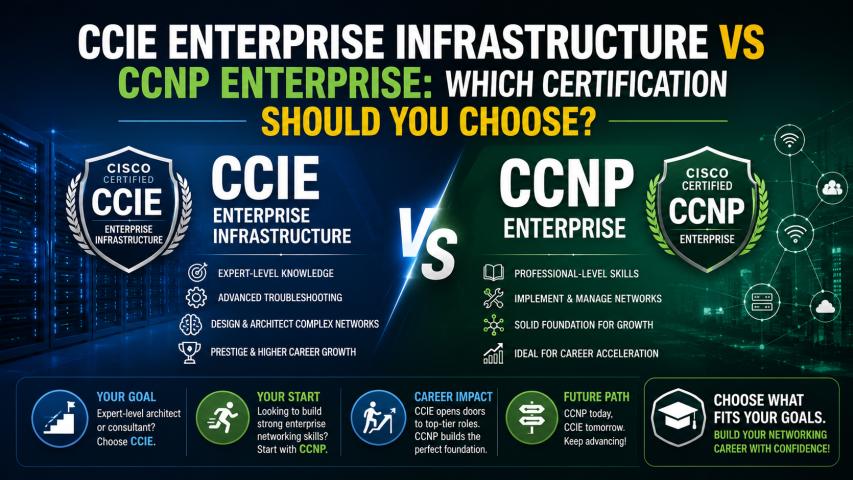
Choosing the right training program is one of the most important decisions for networking professionals pursuing expert-level Cisco certification. A high-quality CCIE Enterprise Infrastructure training program provides more than theoretical knowledge—it equips candidates with practical skills, real-world troubleshooting experience, and the confidence to handle complex enterprise networking environments. Since the certification is known for its challenging written and lab examinations, selecting a training provider with the right features can significantly improve your preparation and increase your chances of success.
Why Choosing the Right Training Program Matters
The CCIE Enterprise Infrastructure certification validates advanced expertise in designing, deploying, operating, and troubleshooting enterprise networks. Because of the certification's practical focus, candidates need structured learning supported by extensive hands-on practice.
A well-designed training program helps learners:
Understand complex networking concepts
Build practical implementation skills
Improve troubleshooting abilities
Prepare for real-world enterprise scenarios
Gain confidence for the certification exams
Develop skills valued by employers
Investing in the right training program can make the learning journey more effective and rewarding.
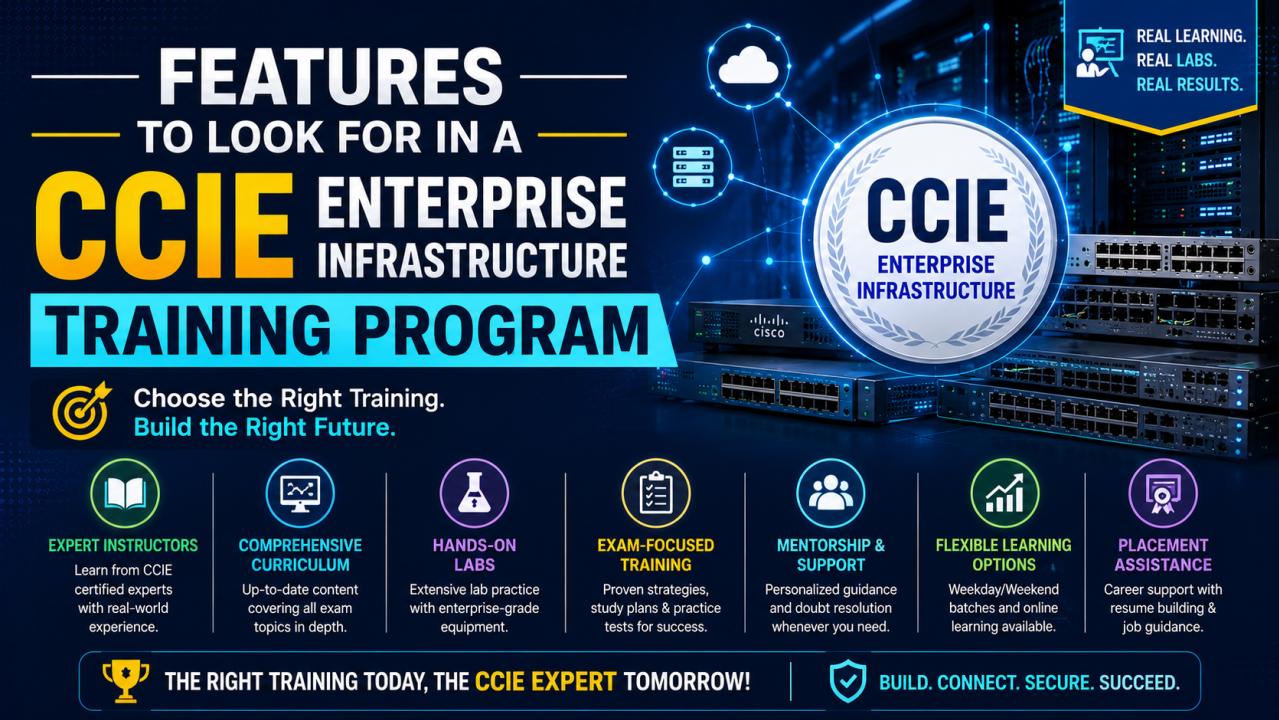
Comprehensive Curriculum Coverage
One of the first features to evaluate is whether the training program covers the complete CCIE Enterprise Infrastructure blueprint.
A comprehensive curriculum should include:
Enterprise routing
Enterprise switching
Software-Defined Access (SD-Access)
Cisco SD-WAN
Wireless networking
Infrastructure security
Network services
Automation and programmability
High availability
Network troubleshooting
Complete syllabus coverage ensures candidates are well prepared for both theoretical and practical assessments.
Experienced and Certified Instructors
The quality of instruction plays a major role in certification success.
Why Instructor Experience Matters
Experienced trainers provide valuable insights based on real-world enterprise deployments rather than relying solely on textbook knowledge.
Qualified instructors should have:
Enterprise networking experience
Cisco certification expertise
Practical implementation knowledge
Strong troubleshooting skills
Experience with complex production environments
Learning from industry professionals helps candidates better understand real business scenarios.
Extensive Hands-On Lab Practice
Practical experience is one of the most important aspects of expert-level certification preparation.
Features of a Good Lab Environment
A quality training program should provide access to enterprise-grade labs that allow candidates to:
Configure routers and switches
Deploy Cisco SD-WAN
Implement SD-Access
Configure wireless networks
Practice automation
Troubleshoot enterprise environments
Hands-on practice strengthens technical confidence and prepares candidates for the practical lab examination.
Updated Course Content
Enterprise networking technologies continue to evolve rapidly.
Training materials should reflect the latest Cisco technologies and certification objectives.
An updated program typically includes:
Modern enterprise networking
Network automation
Software-defined networking
Cloud integration
Infrastructure security
Current Cisco best practices
Studying updated content helps candidates stay aligned with current industry requirements.
Real-World Enterprise Scenarios
The best training programs move beyond theoretical explanations by incorporating practical enterprise scenarios.
Practical Learning Examples
Candidates should work on scenarios involving:
Branch office connectivity
Campus network deployment
Enterprise routing optimization
Network redundancy
High availability
Security implementation
Wireless deployments
Network troubleshooting
Real-world examples improve problem-solving skills and prepare learners for professional responsibilities.
Strong Focus on Troubleshooting
Troubleshooting is one of the most important competencies evaluated during expert-level certification.
Skills Candidates Should Develop
Training should emphasize:
Network fault isolation
Root cause analysis
Configuration validation
Performance optimization
Service restoration
Protocol analysis
Conclusion
A well-structured CCIE Enterprise Infrastructure training program should combine comprehensive curriculum coverage, experienced instructors, enterprise-grade lab environments, practical troubleshooting exercises, automation training, and certification-focused preparation. These features help candidates build the advanced networking skills required to design, implement, manage, and troubleshoot modern enterprise infrastructures with confidence. Beyond preparing learners for the certification exams, quality training also develops practical expertise that is highly valued by employers across industries. For networking professionals seeking expert-level knowledge and long-term career growth, enrolling in CCIE Enterprise Training provides the hands-on experience, technical guidance, and industry-relevant skills needed to succeed in today's rapidly evolving enterprise networking landscape.
Developing systematic troubleshooting skills prepares candidates for both certification exams and enterprise environments.