Here's something a lot of women don't realise until it happens to them: a receding hairline doesn't announce itself overnight. It creeps in. A wider part here, a bit more scalp showing at the temples there, and one day you're standing in front of the mirror wondering when exactly your hairline started looking like this.
For years, the surgical options weren't great. Techniques were mostly designed with men in mind, and results often ended up looking, well, obviously done. That's changed. A female hairline transplant now can be planned in a way that actually respects how a woman's hair grows in the first place, not just where it's missing. This piece digs into what actually makes that possible.
Why Women Lose Hair Differently Than Men Do
Ask any surgeon and they'll tell you: male and female hair loss barely resemble each other once you look closely.
Men tend to recede in a fairly predictable way, moving back from the temples in a symmetrical pattern. Women's hair loss is messier than that. You'll often see the part line slowly widening, general thinning spread across the whole scalp rather than one obvious bald spot, and a front hairline that retreats gradually, particularly near the temples. Hormones play a role. So can postpartum shedding, years of tight ponytails and buns pulling at the roots, and straightforward genetics.
Because the pattern doesn't match the male version, borrowing a male hairline design and shrinking it down doesn't work. It just looks wrong, even if the density is fine.
What Actually Makes a Hairline Look Female
There's a reason surgeons spend so much time studying anatomy before a female hairline transplant even reaches the graft stage.
The Shape Isn't a Straight Line
A real female hairline is uneven. It curves gently, with small peaks and dips scattered across it, nothing symmetrical or mathematically perfect. That's actually the point. Too straight and it looks fake. Too much of a peak in the centre and it starts reading as masculine instead.
Temples Matter More Than People Think
Women typically hold onto more hair around the temples than men, even once the front line has thinned considerably. Rebuild that badly, or skip it altogether, and the whole face-to-hairline transition looks off, even if the front itself is dense.
Direction and Angle, Not Just Density
Hair right at the very front grows at a shallow angle and doesn't all point the same way. It's a bit chaotic, honestly. Copying that irregularity graft by graft, instead of lining everything up neatly, is one of the harder parts of the job, and it's also what tricks the eye into thinking nothing was ever transplanted.
The Techniques Behind a Result You Can't Spot
Single Hairs Along the Very Front
The first couple of rows almost never use grafts with two or three hairs bundled together. Single-hair follicular units go in first, mimicking the fine, wispy strands that naturally sit right at the hairline's edge. Skip this step and you get a harder, more obvious line than nature ever produces.
Getting the Angle Right, Every Single Time
This is where a lot of results go wrong, honestly. Hair near the temples sits at a much flatter angle than hair further back on the scalp, and matching that, follicle after follicle, is slow, meticulous work. There's no shortcut for it.
FUE Without the Linear Scar
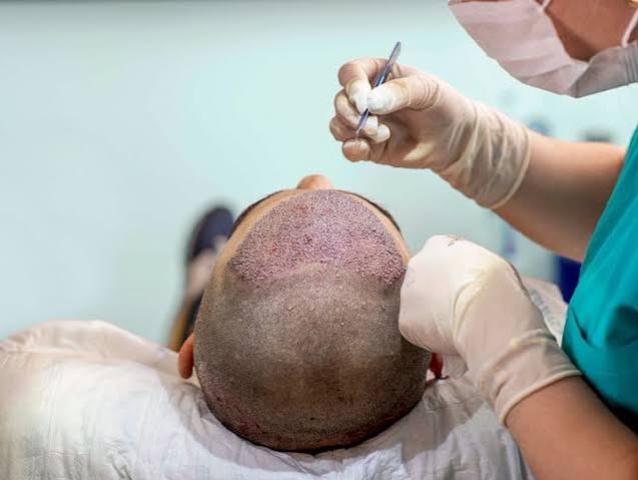
Most restoration work in this area now uses Follicular Unit Extraction, taking individual follicles from a donor site rather than a strip of scalp. For women who tie their hair back, wear it up, or just don't want to worry about a scar showing, this matters more than people assume going in.
Working With Limited Donor Hair
Women rarely go fully bald the way men can, so the donor area tends to have less to work with, and finer hair to boot. Over-harvest it and you've solved one problem by creating another at the back of the head. Getting this balance right takes judgement, not just a formula.
"Natural Looking" Isn't a Feeling - It's Measurable
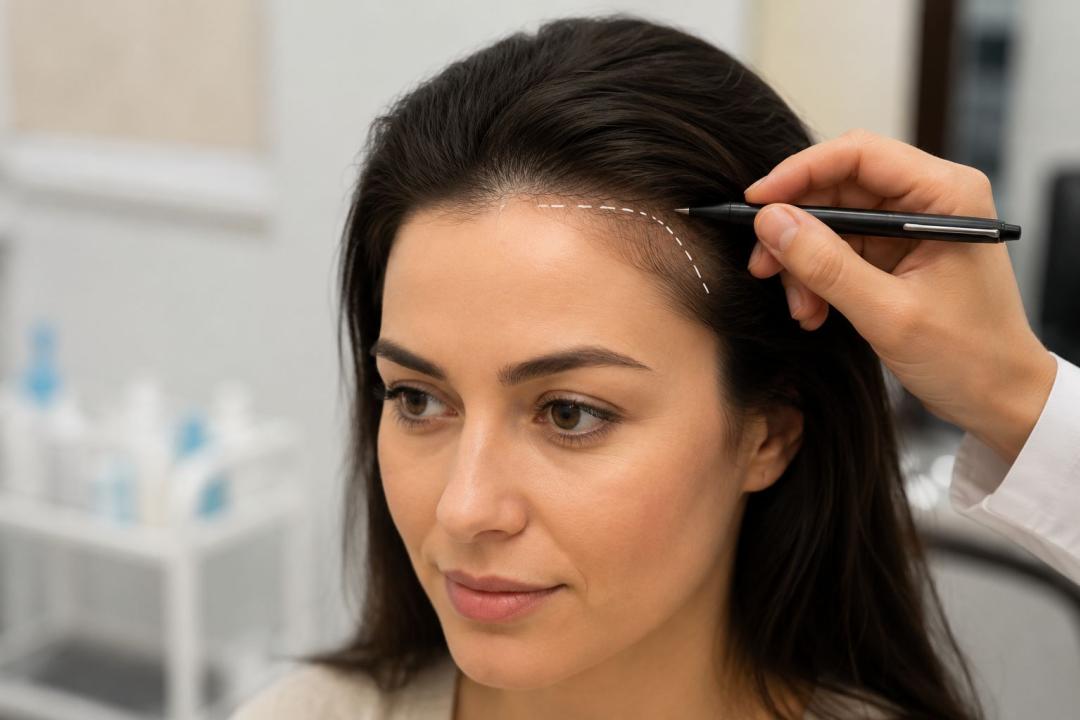
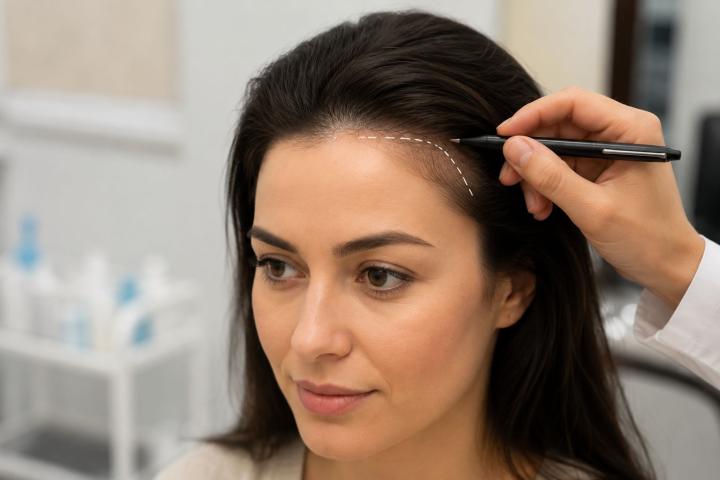
Graft angle. Distribution density. Hair calibre. The slightly irregular geometry of a real hairline. These are the things that separate a convincing result from one that just looks like hair was added. Before a single graft goes in, the hairline usually gets mapped against facial proportions, marking temple points and the natural curve first.
Did you know? A healthy scalp carries roughly 1,000 to 1,100 hair follicles per square inch, and the first few rows of a natural-looking hairline are made up almost entirely of single-hair grafts rather than the thicker bundles used further back.
After years of seeing women come in for hairline work, one thing stands out: the technical side is only half of it. How someone wears their hair day to day, whether it's up in a bun every morning or worn loose, genuinely changes how the hairline needs to be designed for them.
Mistakes That Give the Result Away
Copying a male hairline template onto a female patient, which usually sits too low or peaks too sharply
Over-harvesting the donor area, leaving the back of the scalp visibly thinner
Skipping the facial proportion assessment entirely and just "eyeballing" the shape
Using thicker, multi-hair grafts right at the front edge instead of single hairs
What to Look For in a Clinic
Ask to see before-and-afters from actual female patients, not general hair transplant cases
Confirm single-hair grafts are used for that critical front row
Check the surgical team is GMC-registered and the clinic itself is CQC-regulated
Ask how they'll assess your donor area, since most women simply have less hair to draw from
Take the First Step Toward a Natural Hairline
If your hairline has been thinning and you'd like a result that genuinely looks untouched, the team at The Skin and Hair Clinic in Liverpool can talk you through your options. Our GMC-registered surgeons design each hairline around your natural facial shape, not a template, using precise graft placement built specifically for female hair restoration.
Book a free, no-obligation consultation and find out what a personalised female hairline transplant could actually look like for you.
Frequently Asked Questions
1. How long does a female hairline restoration take to heal?
Most patients see initial healing within 10 to 14 days, though the transplanted hair sheds first and regrows over the following months. Full, mature results typically show around 10 to 12 months after the procedure.
2. Will a hairline restoration procedure for women leave a visible scar?
FUE techniques extract individual follicles rather than a strip of scalp, so there is no linear scar. Tiny extraction points heal quickly and are easily hidden even with hair worn up or pulled back.
3. How many grafts are needed for a female hairline restoration?
This depends on the extent of thinning and the width of the area being treated, but many hairline-focused procedures use anywhere from 800 to 2,000 grafts to rebuild density and shape.
4. Is a hairline transplant suitable for diffuse thinning?
It depends on the individual case. A thorough scalp and donor area assessment is needed first, since diffuse thinning across the whole scalp sometimes requires a combined approach with non-surgical treatments.
5. At what age can a woman get a hairline transplant?
There is no strict age limit, but most surgeons prefer to confirm that hair loss has stabilised before planning surgery, since ongoing shedding can affect long-term results.