Engineers working on electric two-wheelers, three-wheelers, or hybrid agricultural machinery have likely run into this scenario: the battery's capacity spec checks every box, but during real riding — hard acceleration, hill climbs, repeated stop-and-go — power output goes soft. The dashboard still shows plenty of charge, but the vehicle just can't keep up.
The root cause usually isn't the motor or controller. It's the cell. Many high-energy-density pouch cells look great under light-load, slow-discharge lab conditions, but once they're asked to repeatedly handle acceleration current and frequent start-stop cycles — a heavy-load, fast-tempo real-world riding pattern — voltage sag and heat buildup follow, showing up as power degradation and, eventually, a shorter cell replacement cycle.
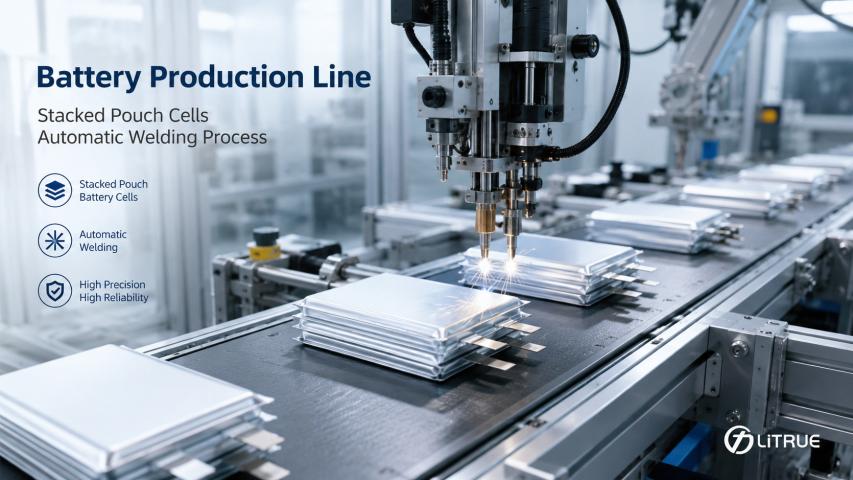
LiTrue Power Technologies Co., Ltd.'s approach to its electric two-wheeler cell lineup is built directly around this real-world pain point.
Two Technology Paths for Two Different "Power Anxieties"
For electric motorcycles and hybrid agricultural machinery that demand both high energy capacity and extreme durability, LiTrue offers two parallel cell solutions:
If range is the top priority, the PE36N-EE is a 36Ah semi-solid state NMC pouch cell delivering 321Wh/kg energy density and operating across -43°C to 55°C. Semi-solid-state electrolyte technology retains high energy density while adding a layer of stability beyond what conventional liquid-electrolyte cells offer — well suited to vehicles built around going farther on a single charge.
If instantaneous power is the top priority, the PR30N-P is a 30Ah, 3.7V NMC pouch cell supporting 10C continuous discharge and 20C pulse discharge, also rated down to -43°C. For vehicles that demand frequent hard acceleration, hill climbing, or loaded starts, that discharge rate keeps voltage sag within a much tighter range, delivering power output that feels more linear and responsive.
Behind both cells sits the same underlying logic: figure out whether the vehicle's real power demand is sustained steady discharge or repeated high-current bursts, then work backward to the cell spec — rather than applying one general-purpose cell to every scenario.