Most conversations about forklift electrification in logistics and warehousing circle around one question: is switching from lead-acid to lithium worth the cost? But for warehouses that actually run 24/7 and hit capacity during peak season, a more urgent question sits underneath that one — can this battery hold up under real conditions?
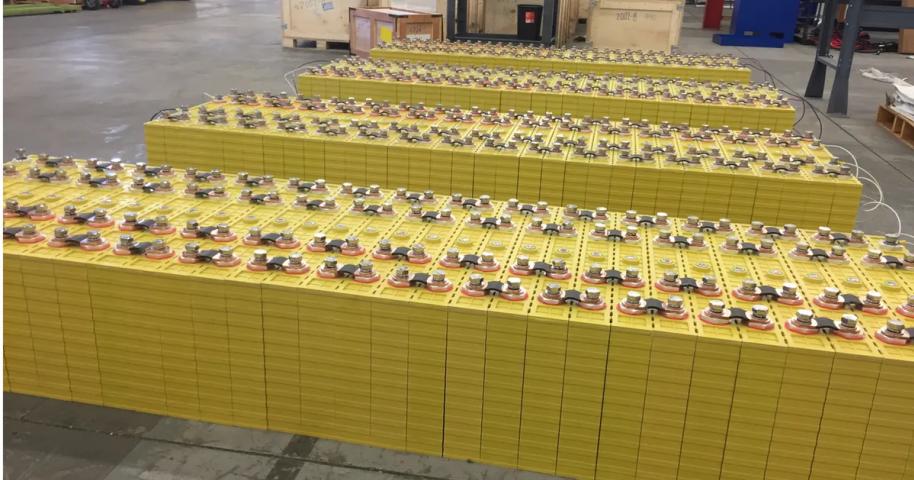
LiTrue Power Technologies Co., Ltd. recently delivered three sets of custom forklift lithium battery samples to a long-term logistics partner in Turkey, and the project is a clean example of exactly that question in practice. Full details are covered in the company's case study, Custom 83.2V Forklift Lithium Battery Delivered to Turkey.
The Customer Didn't Need "It Works" — They Needed "It Doesn't Skip a Beat, Ever"
The Turkish customer's operating environment was straightforward but unforgiving: heavy-duty racking, round-the-clock operation, and once the warehouse hits its busy season, forklift batteries have to keep pace without a break. LiTrue's team custom-built this batch of 83.2V forklift battery samples specifically for that scenario, running the full custom development process — from solution design and schematic redrawing through to final assembly. That's a point LiTrue repeats often when talking about the difference between OEM and true custom development: forklifts, as heavy-load, long-duty-cycle equipment, are never well served by simply packaging an off-the-shelf cell into a generic housing. They need to be engineered around the customer's actual load pattern from the start.
This batch was built specifically for the customer's 24/7 heavy-duty racking operation, with the goal of letting the customer stop worrying about battery performance entirely once peak-season usage kicks in.
Cold Storage and AGVs Are Harder to Serve Than Standard Warehouses
If a standard warehouse forklift battery is tested on durability, cold storage and AGV (automated guided vehicle) environments test something tougher: whether the battery still performs under genuinely extreme operating conditions. Compared to conventional forklifts, AGVs impose stricter requirements — opportunity charging windows are shorter, temperature swings in cold storage facilities are more extreme, and tolerance for downtime is close to zero.
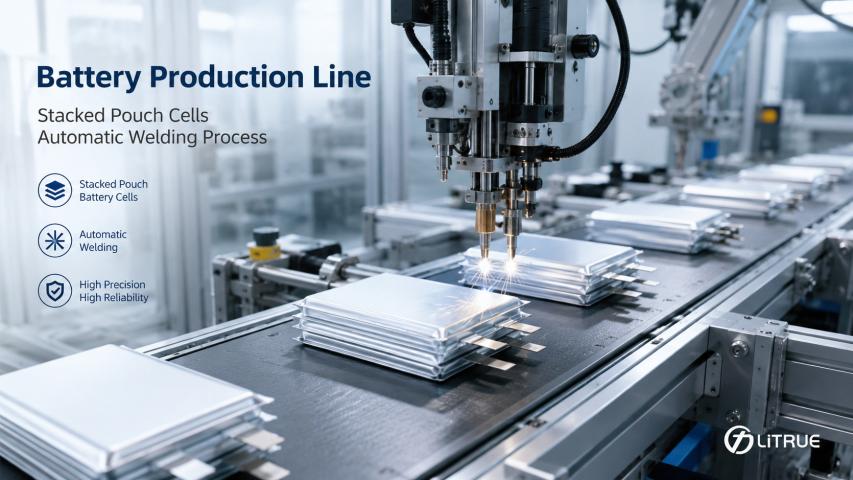
That's exactly why wide-temperature-range cells capable of stable discharge from -43°C to 55°C, combined with high C-rate discharge capability, are increasingly specified by AGV integrators as a baseline requirement rather than a premium upgrade. LiTrue built its 30Ah/33Ah low-temperature LFP pouch cell series specifically for this class of application, using cold-optimized material systems and rigorous stacked-pouch manufacturing. Every batch goes through full-process quality control, including low-temperature performance and life testing, to ensure low-temperature capability, structural durability, and safety are all met at once — rather than trading one off against another.
What Actually Determines Satisfaction After the Switch
Based on LiTrue's ongoing tracking of customer feedback, warehouse operators who complete a lithium transition generally report positive outcomes — but the path there is rarely frictionless. Real-world feedback clusters around three consistent themes: productivity gains are real, the transition period carries genuine risk, and long-term satisfaction depends heavily on how well the initial specification was matched to actual operating conditions — a pattern that shows up consistently across LiTrue's proven deployments.
That's also why LiTrue never approaches a forklift battery project as "selling a cell." Every project runs through Tier-1 grade cell selection, a smart BMS with CAN/RS485 communication, and structural cold-weather thermal design — treating the battery as a system that needs to be engineered around the customer's equipment, not bolted onto it. LiTrue's forklift lithium battery line and broader 24V industrial power guide cover this approach in more detail.
The Bottom Line
Forklift electrification isn't primarily a finance question about whether lithium is "worth it." It's an engineering question about whether the battery can survive your warehouse's actual operating conditions — especially in cold storage and AGV environments where there's almost no room for error, and the cost of a wrong battery choice is peak-season downtime, not just a line-item price difference.
If your warehouse is evaluating a lithium conversion for forklifts or AGVs, LiTrue's engineering team can review your voltage platform, operating temperature, and duty cycle directly — request a custom quote here.