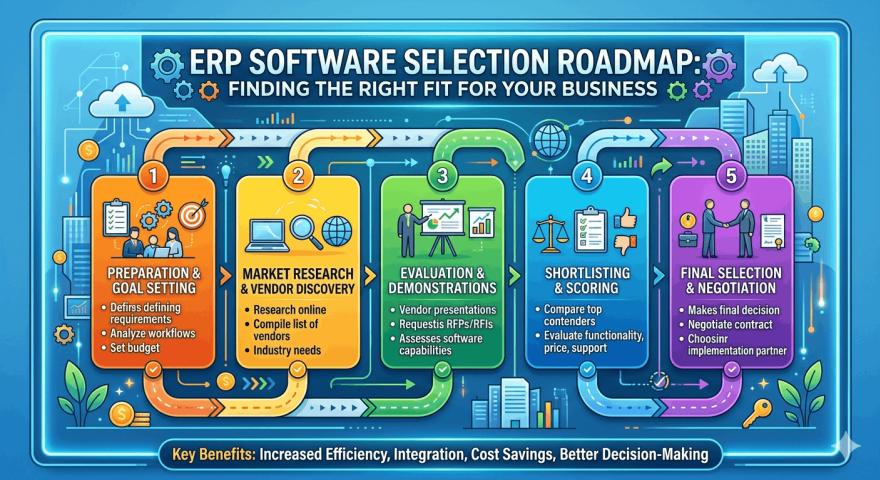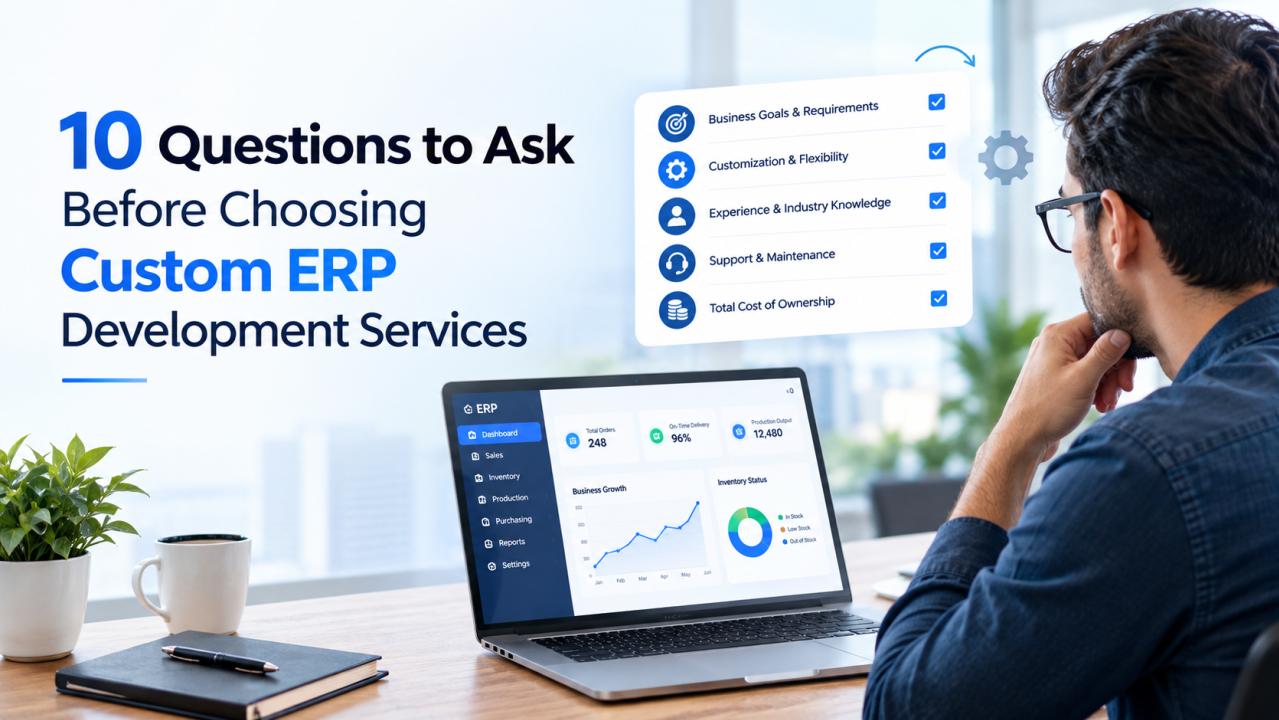
Picking the wrong ERP partner is an expensive mistake to walk back. Before you sign anything, a short list of direct questions can save you months of rework and a budget overrun nobody planned for.
Why These Questions Matter Before You Commit
Most ERP projects don't fail because of bad code. They fail because expectations weren't aligned from day one — on scope, timeline, data handling, or what happens after launch.
Asking the right questions upfront forces clarity on both sides. If an erp development company can't answer these clearly, that itself is useful information.
The 10 Questions to Ask
1. How do you handle requirements gathering?
A provider who jumps straight to development without mapping your actual workflows first is a warning sign. Requirements gathering should involve the people who'll use the system daily, not just leadership.
2. What does your data migration process look like?
Old records moved carelessly cause problems that surface weeks after launch. Ask how they validate data accuracy during migration, not just how they move it.
3. Can you share examples of similar projects?
Industry-specific experience matters. A system built for manufacturing doesn't translate directly to retail or logistics workflows.
4. Who owns the code and documentation?
This should be written into the contract, not assumed. You want clean documentation and full ownership, not a black box you're locked into.
5. How do you handle scope changes mid-project?
Requirements shift. Ask how change requests are priced and timelined before you're mid-build and surprised by a quote.
6. What's your testing process before go-live?
Rushed QA is one of the most common reasons systems launch with bugs that should've been caught earlier.
7. What kind of support is included after launch?
Custom erp development services should include a post-launch period, not just a handoff email. Ask specifically what's covered and for how long.
8. How do you handle integrations with our existing tools?
Your ERP rarely works in isolation. Confirm they've handled integrations with the specific tools your business already runs on — accounting software, CRM, inventory systems.
9. What's a realistic timeline, and what could delay it?
Vague timelines are a red flag. A provider with real experience can name common delay points — scope creep, data cleanup, approval bottlenecks — before they happen.
10. How does the system scale as our business grows?
Custom erp software should be built to handle growth, not just today's headcount and transaction volume. Ask how the architecture accommodates future modules or users.
What Good Answers Sound Like
A provider worth hiring won't dodge these questions or answer in vague generalities. Clear, specific answers — with examples — usually indicate a team that's done this enough times to know where projects typically go wrong.
Vague answers, rushed timelines promised without context, or reluctance to discuss documentation and ownership are worth treating as caution signs.
Making the Final Decision
There's no perfect checklist that guarantees success, but asking these ten questions puts you in a much stronger position than going in blind. The goal isn't to catch a provider out — it's to make sure you're both working from the same understanding before real money and time are committed.
If you're currently evaluating partners, it's worth having a direct conversation about these points before any contract is signed.
FAQs
- How long should ERP requirements gathering take?
It depends on company size and complexity, but a rushed process of a few days is usually a sign corners are being cut. Several weeks of structured discovery is more typical for mid-sized businesses. - Should I choose a provider based on price alone?
No. The cheapest quote often excludes post-launch support, proper documentation, or thorough testing — costs that surface later as separate charges or rework. - What's the biggest red flag when evaluating an ERP partner?
Reluctance to discuss code ownership, documentation, or post-launch support usually signals a provider focused on shipping fast rather than building something that lasts.