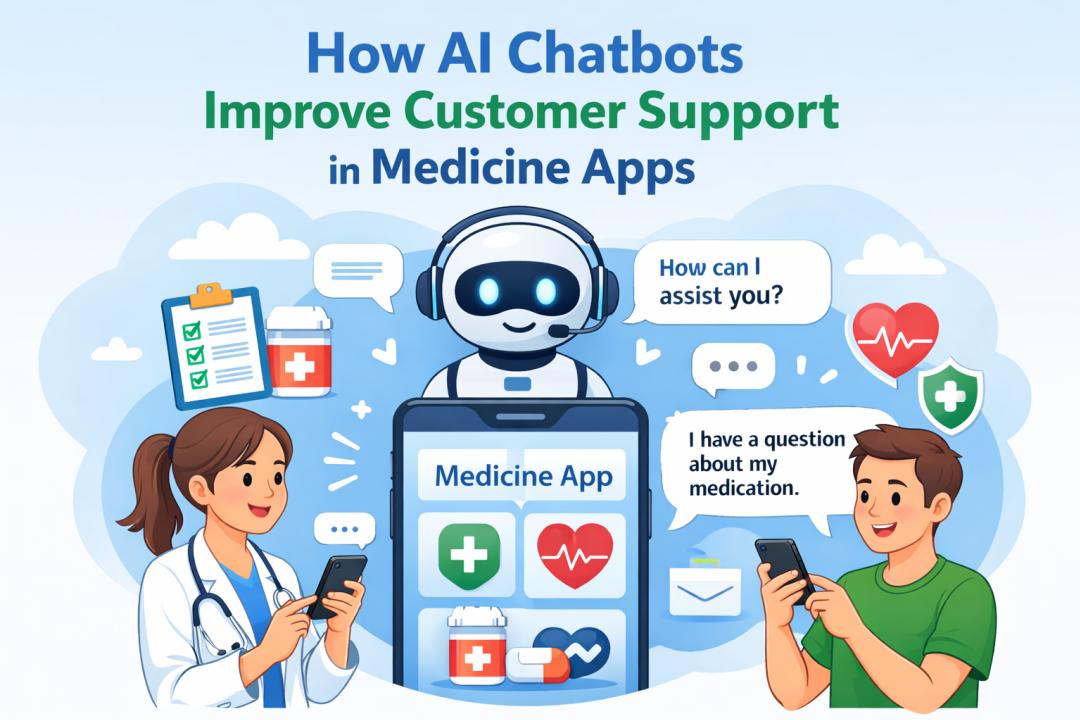
The healthcare industry is undergoing a quiet revolution — not in operating theaters or research labs, but in the palm of your hand. Medicine delivery apps have become a lifeline for millions of patients who need prescriptions, over-the-counter medications, and health consultations without leaving their homes. But as demand grows, so does the pressure on customer support teams. Enter AI chatbots: intelligent, always-available assistants that are fundamentally changing how medicine apps serve their users.
The Customer Support Challenge in Medicine Apps
Anyone who has used a medicine delivery app knows the anxiety that comes with it. Did my order go through? Is this medication in stock? Can I substitute this generic for the branded version my doctor prescribed? These questions are time-sensitive in ways that few other industries match. A delayed response about a food delivery is frustrating; a delayed response about blood pressure medication can be dangerous.
Traditional customer support models — phone lines, email tickets, live chat agents — struggle to keep up. Support teams face high volumes of repetitive queries, round-the-clock demand, and the challenge of handling medically sensitive conversations with precision. This is exactly the problem that AI chatbots are built to solve.
What AI Chatbots Bring to the Table
AI chatbots in medicine apps are not simple FAQ bots reading from a script. Modern chatbots are powered by natural language processing (NLP) and machine learning, which means they can understand context, interpret intent, and hold multi-turn conversations that feel genuinely responsive. Here is how they are making a difference:
Instant, 24/7 Availability
Health concerns do not follow business hours. A patient who realizes at midnight that they are running low on insulin cannot afford to wait until 9 AM for a support agent. AI chatbots are available around the clock, 365 days a year, responding to queries in seconds. This alone dramatically improves the user experience and reduces the anxiety that often accompanies medication management.
Handling High Query Volumes
Every medicine delivery app development company faces the same scaling problem: as the user base grows, the number of support queries grows proportionally, but hiring support agents is expensive and slow. AI chatbots can handle thousands of simultaneous conversations without any degradation in response quality. Routine queries — order status, delivery timelines, refund policies, medication availability — are answered instantly, freeing human agents to focus on genuinely complex or sensitive cases.
Prescription Verification and Guidance
One of the most critical functions in medicine apps is ensuring that prescription medications are dispensed correctly. AI chatbots can guide users through the process of uploading prescriptions, flag common errors, and explain what documentation is required. They can also alert users if a medication requires a fresh prescription or if a dosage query needs to be escalated to a pharmacist. This layer of intelligent guidance reduces errors and builds user trust.
Personalized Medication Reminders
Beyond reactive support, AI chatbots serve a proactive role. They can send personalized reminders to users about refill schedules, alert them when a frequently ordered medication is running low in their area, and follow up after delivery to confirm receipt. This kind of proactive engagement turns a chatbot from a problem-solver into a health partner.
Symptom Triage and First-Level Health Guidance
Some medicine apps are integrating chatbots that can perform basic symptom triage. While these bots are careful to emphasize that they do not replace medical professionals, they can help users understand whether their symptoms warrant an urgent care visit, direct them to appropriate over-the-counter solutions, or connect them with a licensed teleconsultation service within the app. This feature adds enormous value, particularly in underserved regions where access to doctors is limited.
The Role of AI Chatbot Development in Healthcare
The sophistication of what these chatbots can do depends heavily on the quality of their development. AI chatbots development for healthcare is a specialized field that goes far beyond general-purpose chatbot building. Healthcare chatbots must be trained on medical terminologies, drug databases, regulatory guidelines, and compliance frameworks like HIPAA in the United States or similar data protection laws in other regions.
Developers building chatbots for medicine apps must also design for empathy. A user reaching out because their medication did not arrive and they are in pain is not simply submitting a ticket — they are stressed and vulnerable. The best healthcare chatbots are designed to recognize emotional cues in language and respond with warmth and urgency rather than robotic efficiency.
Security is another non-negotiable dimension. Medical data is among the most sensitive information a person can share. Reputable AI chatbots development teams build in end-to-end encryption, strict access controls, and audit trails that ensure user data is protected at every touchpoint.
Why Medicine Delivery Apps Need to Invest Now
The competitive landscape for medicine delivery apps is intensifying. Users increasingly expect the same seamless, personalized digital experiences from their pharmacy apps that they get from e-commerce and banking apps. A clunky, slow customer support experience is no longer acceptable — and in healthcare, it can cost you not just a customer, but their health outcome.
Every forward-thinking medicine delivery app development company is recognizing that AI chatbots are not a luxury add-on but a core infrastructure investment. The return on investment is measurable and significant: reduced support costs, faster resolution times, higher user satisfaction scores, and lower churn rates. More importantly, well-implemented chatbots contribute to better medication adherence, fewer prescription errors, and a more informed patient population.
Looking Ahead
The future of AI chatbots in medicine apps is even more promising. As large language models become more capable and integration with electronic health records becomes more seamless, chatbots will be able to provide increasingly personalized, contextually aware support. Imagine a chatbot that knows your full medication history, understands your insurance coverage, and can proactively flag a dangerous drug interaction before you even place an order.
That future is closer than most people realize — and the medicine delivery apps that invest in robust AI chatbot infrastructure today will be the ones that earn patient trust and lead the market tomorrow.
The prescription for better customer support has been written. AI chatbots are the medicine.